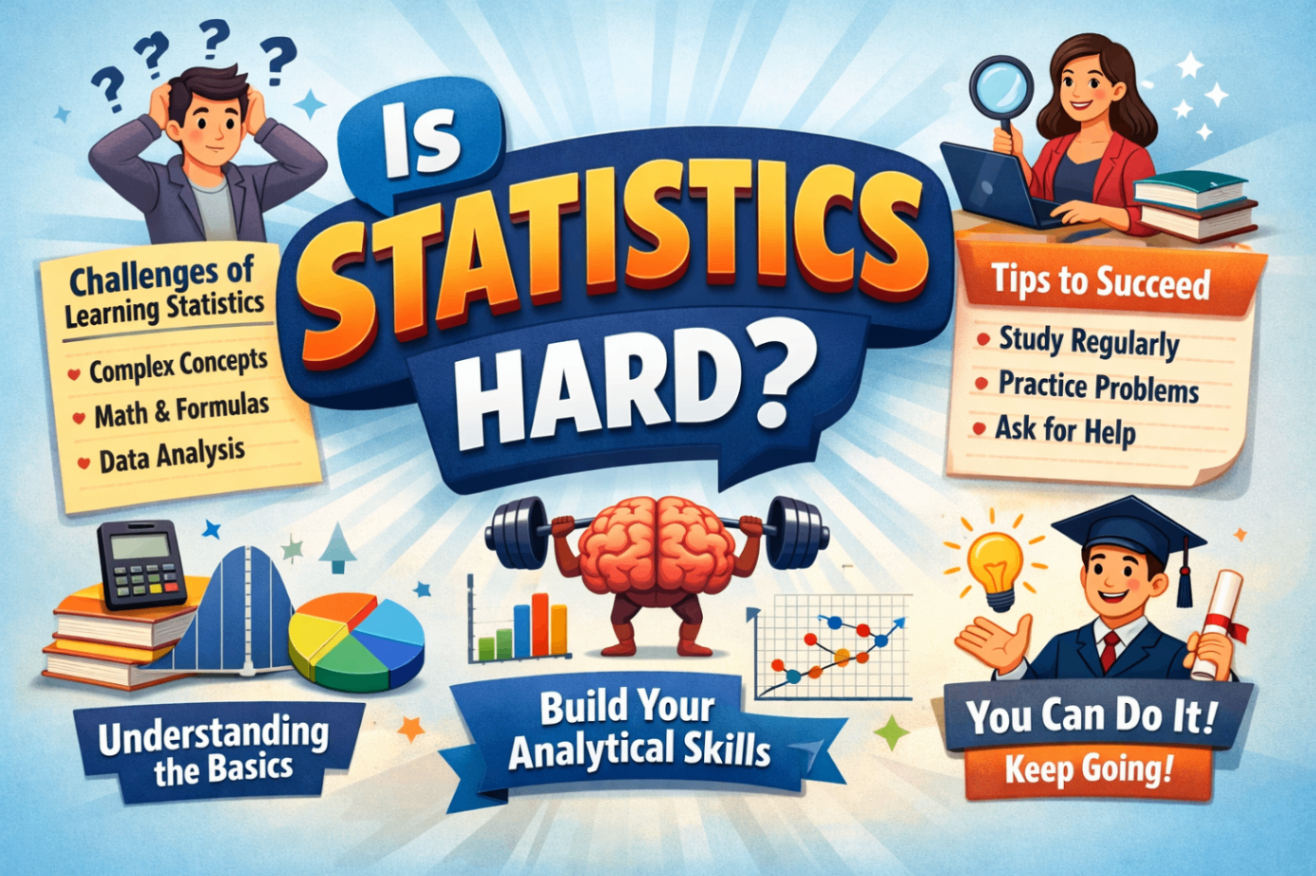
Statistics has earned a reputation as one of the most challenging courses students encounter during their academic journey. Whether you are preparing for AP Statistics in high school or enrolling in college statistics, understanding what makes this subject difficult helps you prepare for success. The answer to is statistics hard depends largely on your background, learning style, and approach to the material. Unlike traditional math courses that follow predictable formulas, statistics requires you to think critically about data, interpret results, and draw meaningful conclusions. This combination of mathematical computation and analytical reasoning creates unique challenges for many students. This guide explores why statistics is so hard for many learners, compares difficulty levels across different statistics courses, and provides actionable strategies to help you succeed regardless of your current skill level.
Why Is Statistics So Hard for Students?
Understanding why statistics challenges students helps you prepare for and overcome common obstacles.
Abstract Concepts Are Difficult to Visualize
Statistics deals with abstract concepts like probability distributions, confidence intervals, and hypothesis testing that many students find hard to picture mentally. Unlike algebra where you can visualize equations on a graph, statistical concepts often describe theoretical scenarios that require deeper conceptual understanding. The abstract nature of these ideas makes them harder to grasp intuitively, especially for visual learners who benefit from concrete representations. Many instructors try to use real-world examples to make these concepts more tangible, but the underlying theory remains challenging. Students often struggle because they cannot see randomness or probability the way they can see geometric shapes or algebraic curves.
The Vocabulary Creates Barriers
Statistical terminology includes unfamiliar words like variance, standard deviation, null hypothesis, and p-value that students rarely encounter in everyday conversation. This specialized vocabulary creates an additional learning barrier beyond the mathematical concepts themselves. Students must simultaneously learn new terms while understanding how to apply them, which doubles the cognitive load during initial learning phases. The terminology problem worsens because some statistical terms have different meanings than their everyday usage. For example, the word "significant" in statistics has a precise technical meaning that differs from how people use it casually.
Interpretation Matters More Than Calculation
Unlike traditional math where getting the right number means you solved the problem correctly, statistics requires interpreting what those numbers actually mean. A student might correctly calculate a p-value but completely misunderstand what that value tells them about their hypothesis. This interpretation requirement catches many students off guard, especially those accustomed to straightforward right-or-wrong answers in other math subjects. Statistics forces students to think beyond computation and consider context, sample size, and real-world implications. The gap between calculating correctly and interpreting correctly represents where most students lose points on exams.
How Hard Is Statistics Compared to Other Math?
Statistics differs fundamentally from other mathematics courses in ways that affect its difficulty.
Statistics vs Algebra
Both statistics and algebra introduce abstract concepts, but statistics concepts are often harder to visualize than algebraic ones. Algebra focuses on equations with definite solutions, while statistics deals with uncertainty and probability. Students who excel at finding exact answers may struggle when statistics requires them to think in terms of likelihood and estimation rather than precision. Algebra provides clear rules that always work the same way, but statistics requires judgment calls about which method applies to each situation. This shift from certainty to uncertainty frustrates students who prefer clear-cut mathematical procedures.
Statistics vs Calculus
Many students find statistics harder than calculus because calculus follows more predictable patterns once you learn the rules. Statistics requires constant decision-making about which test to use and how to interpret results. However, statistics typically requires less advanced mathematical computation, making it accessible to students who struggle with calculus-level math. Calculus builds systematically from derivatives to integrals with clear progression, while statistics can feel like learning disconnected topics. Students who mastered calculus through practice and pattern recognition may need different strategies for statistics success.
The Unique Challenge of Statistical Thinking
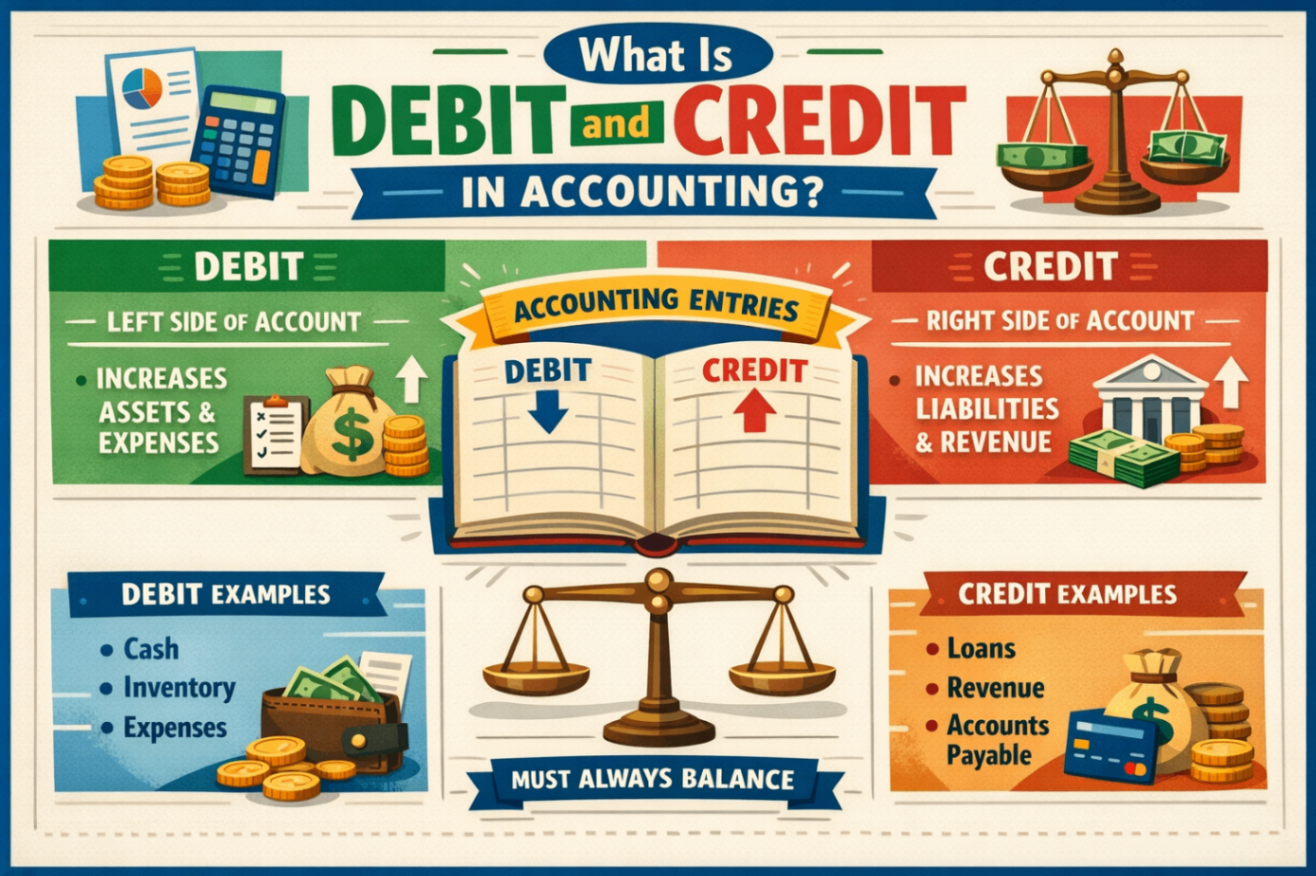
Statistical thinking differs from mathematical thinking in fundamental ways. Understanding what is debit and credit in accounting follows logical rules that stay consistent, but statistical conclusions always carry uncertainty. This probabilistic mindset does not come naturally to most people and requires significant practice to develop. Humans naturally seek patterns and certainty, which conflicts with statistical reasoning that embraces randomness and variation. Learning to think statistically means accepting that correct answers come with confidence levels rather than absolute truth.
Is AP Statistics Hard?
High school students often wonder how hard AP statistics is compared to other advanced placement courses.
AP Statistics Course Content
AP Statistics covers descriptive statistics, probability, statistical inference, and experimental design over one academic year. The course emphasizes understanding concepts and applying them to real-world scenarios rather than memorizing formulas. Students must interpret computer output, design experiments, and communicate statistical findings clearly in written form. The curriculum expects students to explain their reasoning in complete sentences, which differs from other math courses where showing calculations suffices. Free response questions require students to justify their choices and connect statistical methods to practical contexts.
Difficulty Compared to Other AP Courses
Most students consider AP Statistics easier than AP Calculus in terms of mathematical complexity. However, AP Statistics requires more reading comprehension and written explanation skills. Students who struggle with word problems or explaining their reasoning may find AP Statistics surprisingly challenging despite its reputation as an easier math alternative. The exam includes multiple choice and free response sections that test conceptual understanding over computational speed. Students comfortable with writing and analysis often outperform those who excel only at calculations.
Success Strategies for AP Statistics
Success in AP Statistics requires consistent practice with interpreting data and explaining conclusions. Students should focus on understanding why statistical methods work rather than just memorizing procedures. Practice exams help students become familiar with the specific question formats used on the AP exam. Reviewing grading rubrics shows students exactly what examiners expect in free response answers. Working through released exams under timed conditions builds confidence and identifies weak areas before the actual test date.
Is College Statistics Hard?
College statistics courses vary in difficulty depending on your major and the specific course level.
Elementary Statistics Courses
Is elementary statistics hard? For most students, elementary statistics presents moderate difficulty when approached with proper preparation. These introductory courses cover basic concepts like mean, median, standard deviation, and simple hypothesis testing. Students with solid algebra foundations typically manage these courses successfully with regular study habits. Elementary statistics focuses on building intuition rather than mathematical rigor, making concepts accessible to students from various backgrounds. The pace allows time to absorb each concept before moving to the next, unlike accelerated courses that rush through material.
Business Statistics Requirements
Is business statistics hard compared to general statistics? Business statistics courses apply statistical concepts to business scenarios like market research, quality control, and financial analysis. The mathematical content remains similar to elementary statistics, but students must also understand business applications. Students who connect statistics to their business interests often find this context helps rather than hurts their learning. Real-world business cases make abstract concepts more meaningful and memorable for students pursuing business degrees. The practical focus motivates students who wondered why they needed statistics in the first place.
Advanced Statistics Challenges
Upper-level statistics courses introduce complex topics like multivariate analysis and regression modeling that require stronger mathematical backgrounds. These courses assume familiarity with basic statistical concepts and build toward more sophisticated analytical techniques. Students planning to take advanced statistics should ensure they fully understand introductory material first. Advanced courses move quickly and expect students to apply foundational knowledge independently without extensive review. Graduate-level statistics often requires calculus and linear algebra prerequisites that undergraduate courses skip.
Common Mistakes That Make Statistics Harder
Avoiding common pitfalls helps reduce unnecessary difficulty in statistics courses.
Falling Behind on Foundational Concepts
Statistics builds on earlier concepts more than most subjects. Missing or misunderstanding basic probability concepts creates problems when learning about distributions and hypothesis testing later. Students should address confusion immediately rather than hoping it resolves itself as the course progresses. Each chapter assumes mastery of previous material, so gaps compound quickly over the semester. Tutoring or office hours early in the course prevent small misunderstandings from becoming major obstacles later.
Memorizing Without Understanding
Many students try to memorize statistical formulas without understanding what they represent or when to use them. This approach fails because statistics problems rarely look identical to textbook examples. Understanding the reasoning behind each method helps students recognize which approach fits each new situation they encounter. Memorization might help pass a quiz but leaves students unable to apply statistics in research or professional settings. Deep understanding takes more initial effort but pays off when facing unfamiliar problems on exams or in careers.
Neglecting Practice Problems
Statistics requires practice to develop intuition for choosing appropriate methods and interpreting results correctly. Reading the textbook without working through problems leaves students unprepared for exams where they must apply concepts independently. Regular practice with varied problem types builds the pattern recognition skills statistics demands. Working through problems reveals gaps in understanding that passive reading misses entirely. Students who practice daily retain concepts better than those who cram before exams.
Tips to Succeed in Statistics
Practical strategies help students overcome statistics challenges regardless of their starting point.
Build Strong Foundations First
Review prerequisite algebra concepts before your statistics course begins. Understanding basic mathematical operations, fractions, and percentages ensures you can focus on statistical concepts rather than struggling with underlying calculations. Just as mastering an Accounting AI Solver requires understanding basic principles first, statistics success depends on solid foundational knowledge. Brush up on graphing, basic probability, and reading data tables before classes start. Students who arrive prepared spend their energy on new material instead of catching up on prerequisites.
Connect Statistics to Real Applications
Statistics become easier when you understand how it applies to real situations. Look for examples in news articles, research studies, or your own field of interest. Seeing statistics in action helps abstract concepts become concrete and memorable, transforming theoretical knowledge into practical understanding. Sports statistics, medical research, and political polling all use concepts from introductory statistics courses. Finding applications you care about makes studying feel purposeful rather than arbitrary.
Seek Help Early and Often
Students who struggle silently often fall too far behind to recover. Ask questions in class, visit office hours, form study groups, and use tutoring resources as soon as confusion arises. Statistics instructors expect questions because they know the material challenges most students initially. Many universities offer free tutoring centers specifically for statistics because demand is so high. Online resources, video tutorials, and practice websites supplement classroom instruction for students who need extra support.
Conclusion
Is statistics hard? Yes, statistics presents genuine challenges that differ from other math courses. The combination of abstract concepts, specialized vocabulary, and interpretation requirements creates obstacles that trip up many students initially. However, statistics is absolutely learnable with the right approach and adequate preparation. Understanding why statistics challenges students helps you prepare mentally for the course requirements. Building strong foundations, practicing regularly, and connecting concepts to real applications transforms statistics from an intimidating subject into a manageable one. Students who approach statistics with patience and consistent effort typically find success regardless of their previous math experiences. The analytical thinking skills you develop in statistics prove valuable far beyond the classroom, making the effort worthwhile for your academic and professional future.
Frequently Asked Questions
Is statistics hard for most students?
Statistics challenges many students because it combines mathematical calculations with interpretation and critical thinking skills. The subject requires understanding abstract concepts like probability and making judgments about data rather than simply finding correct numerical answers. However, students who practice regularly and seek help when needed typically succeed in statistics courses with moderate effort.
Is AP statistics hard compared to other AP classes?
AP Statistics is generally considered less mathematically demanding than AP Calculus but requires strong reading comprehension and written communication skills. Students must interpret data, explain reasoning, and apply concepts to unfamiliar scenarios. Success depends more on understanding statistical thinking than on computational ability, which some students find easier while others find more challenging.
Is college statistics hard if I struggled with high school math?
College statistics difficulty depends on which specific math concepts gave you trouble previously. Statistics uses basic algebra but does not require advanced calculus or trigonometry knowledge. Students who struggle with abstract mathematical proofs may actually find statistics more accessible because it focuses on practical applications and real-world data analysis.
Why is statistics so hard to understand?
Statistics proves difficult because the concepts are abstract, the vocabulary is unfamiliar, and correct interpretation matters as much as correct calculation. Unlike other math subjects where answers are definitively right or wrong, statistical conclusions involve uncertainty and probability. This fundamentally different way of thinking requires time and practice to develop.
How can I make statistics easier to learn?
Make statistics easier by building strong algebra foundations before starting, practicing problems regularly rather than just reading, and connecting concepts to real-world applications you care about. Seek help immediately when confused rather than falling behind. Using visual aids, study groups, and online resources also helps reinforce understanding of challenging statistical concepts.