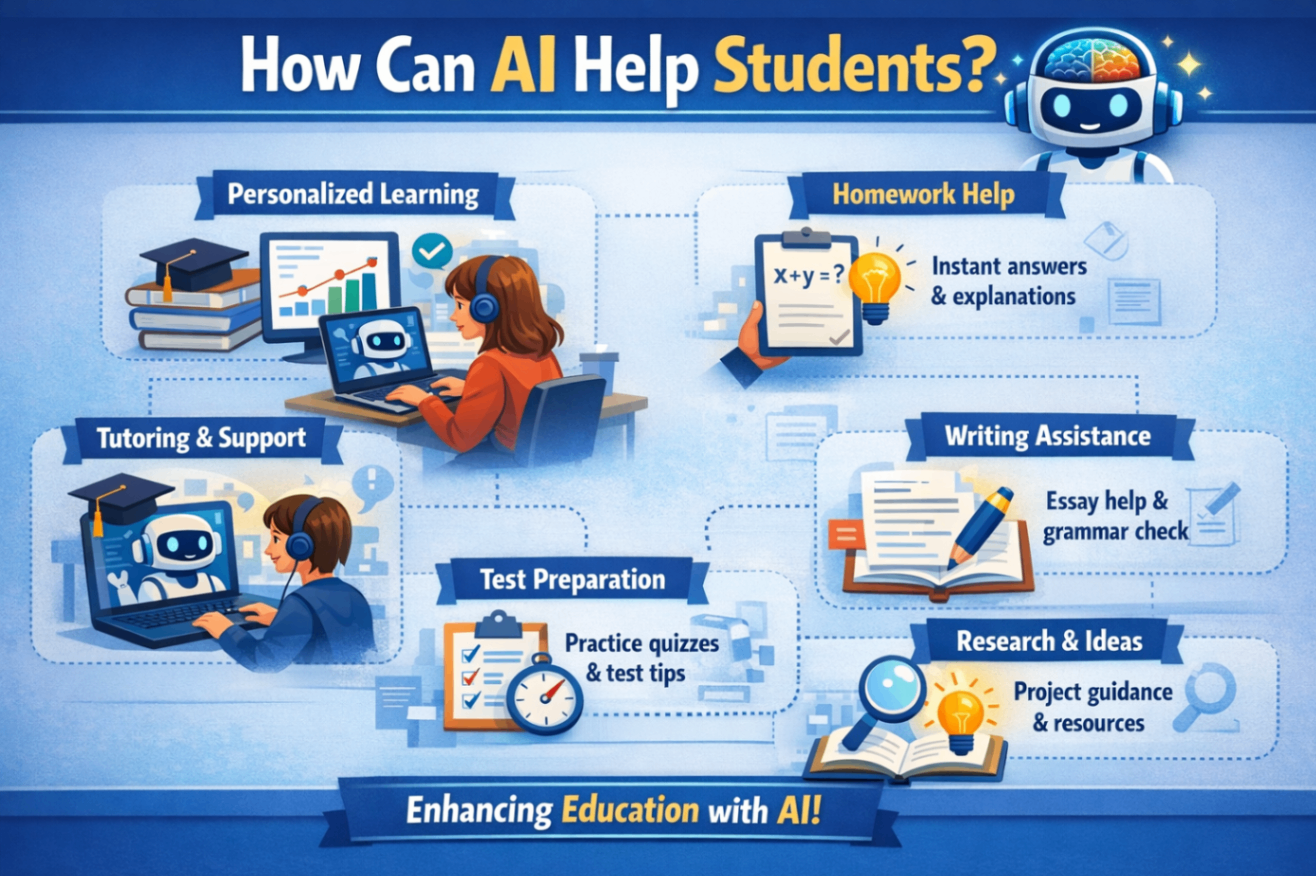
Artificial intelligence is revolutionizing education in ways that seemed impossible just a few years ago. Understanding how AI can help students has become essential for parents, educators, and learners seeking to maximize academic potential. From personalized tutoring to instant feedback systems, AI technologies are creating unprecedented opportunities for student success. The question of how AI can help students extends far beyond simple automation. Modern AI tools adapt to individual learning styles, identify knowledge gaps, and provide support that was once available only through expensive private tutoring. This comprehensive guide explores the transformative ways artificial intelligence is reshaping education and helping students achieve their academic goals. Whether you're a student looking to improve your grades, a parent seeking educational resources, or an educator exploring new teaching tools, understanding how can AI help students in their studies will prepare you for the future of learning. These technologies are not replacing teachers but empowering both educators and learners to achieve more together.
Personalized Learning Experiences
AI's ability to customize education represents one of its most significant contributions to student success.
Adaptive Curriculum Design
AI-powered platforms analyze each student's performance data to create customized learning paths. These systems identify strengths and weaknesses, adjusting content difficulty and pace to match individual needs. Students receive materials that challenge them appropriately without causing frustration or boredom.
Learning Style Recognition
Different students absorb information through different methods. AI systems can identify whether a student learns best through visual content, audio explanations, hands-on activities, or reading. This recognition allows the technology to present information in formats that maximize comprehension and retention.
Real-Time Content Adjustment
Unlike static textbooks, AI-powered learning platforms continuously adjust based on student interactions. If a student struggles with a concept, the system provides additional explanations, examples, or practice problems. When mastery is demonstrated, the student advances without unnecessary repetition.
Zone of Proximal Development
AI ensures students learn within their optimal challenge zone. Research shows students learn best when material is slightly above their current level but still achievable. AI algorithms identify this sweet spot for each student, keeping them engaged and motivated throughout their learning journey.
Progress Tracking and Analytics
Students and parents gain access to detailed progress reports generated by AI systems. These analytics show exactly which concepts have been mastered and which need additional work, enabling focused study sessions that maximize learning efficiency.
Intelligent Tutoring Systems
AI tutoring represents a breakthrough in how can AI help students learn complex subjects.
24/7 Availability
Unlike human tutors with limited schedules, AI tutoring systems are available around the clock. Students can access help at midnight before an exam or early morning before school. This constant availability ensures support is always there when students need it most.
Patient and Judgment-Free Support
AI tutors never become frustrated with repeated questions or slow progress. Students who might feel embarrassed asking a teacher the same question multiple times can freely explore concepts with AI until they achieve understanding. This judgment-free environment encourages deeper learning.
Natural Language Interaction
Modern AI tutors use natural language processing to engage in conversational learning. Students can ask questions in their own words and receive explanations tailored to their level of understanding. This interaction mimics the experience of working with a personal tutor.
Concept Explanation Variations
When a student doesn't understand an explanation, AI tutors can present the same concept in multiple ways. They might use different analogies, examples, or approaches until finding one that clicks with the student's way of thinking.
Targeted Practice Generation
AI tutoring systems generate practice problems specifically targeting areas where students need improvement. Rather than completing generic worksheets, students work on exercises designed to address their specific knowledge gaps, making study time more productive.
Instant Feedback and Assessment
Understanding how can AI help students in the classroom starts with revolutionizing feedback systems.
Immediate Assignment Feedback
AI-powered grading systems provide instant feedback on assignments, quizzes, and practice problems. Students learn from mistakes immediately rather than waiting days for graded work to return. This rapid feedback loop accelerates learning and prevents incorrect understanding from becoming ingrained.
Detailed Error Analysis
Beyond simple right or wrong answers, AI systems explain why answers are incorrect. They identify the specific misconception or error in reasoning, helping students understand and correct their thinking rather than simply memorizing correct answers.
Writing Improvement Suggestions
AI writing assistants analyze student essays and provide suggestions for grammar, style, structure, and clarity. Students receive personalized guidance on improving their written communication skills, a capability previously requiring extensive teacher time. Using a Study AI Tool can help students refine their writing and study materials effectively.
Formative Assessment Integration
AI enables continuous formative assessment throughout the learning process. Rather than relying solely on high-stakes tests, teachers gain ongoing insight into student understanding, allowing timely interventions before small gaps become significant problems.
Self-Assessment Capabilities
AI tools help students develop metacognitive skills by tracking their own progress and understanding. Students learn to identify areas needing attention and take ownership of their learning journey through AI-generated self-assessment reports.
Early Intervention and Support
AI excels at identifying struggling students before they fall too far behind.
Predictive Analytics for At-Risk Students
AI systems analyze patterns in student behavior and performance to predict which students may be at risk of failing. These early warnings allow educators to intervene with targeted support before students become discouraged or disengaged.
Learning Pattern Recognition
By processing vast amounts of data on how students interact with educational software, AI identifies concerning patterns such as procrastination, cramming, or sudden drops in performance. Teachers receive alerts enabling proactive outreach to struggling students.
Customized Intervention Recommendations
When AI identifies a struggling student, it can recommend specific interventions based on the student's unique situation. These data-driven recommendations help teachers provide effective support rather than relying on one-size-fits-all approaches.
Progress Monitoring Over Time
AI tracks student progress across entire academic careers, identifying long-term trends and patterns. This longitudinal view helps educators understand each student's growth trajectory and adjust support accordingly.
Parent Communication Support
AI systems can generate progress reports and alerts for parents, keeping families informed about their child's academic performance. This improved communication helps create a support network around each student.
Enhanced Accessibility
How can AI help students with diverse learning needs? Through powerful accessibility features.
Speech-to-Text and Text-to-Speech
AI-powered speech recognition and synthesis help students with visual impairments, dyslexia, or other challenges access educational content. Students can listen to written materials or dictate their work, removing barriers to learning.
Real-Time Translation
For students learning in a second language, AI provides real-time translation of educational materials. This support helps English language learners access grade-level content while developing their language skills.
Adaptive Interfaces
AI systems can adjust interface elements like font size, color contrast, and layout based on individual student needs. These adaptations ensure all students can comfortably engage with digital learning materials.
Alternative Content Formats
AI can automatically generate alternative formats for educational content, including audio descriptions for images, simplified text versions, or visual representations of verbal explanations. This flexibility ensures content accessibility for students with various learning differences.
Assistive Technology Integration
AI powers increasingly sophisticated assistive technologies that help students with disabilities participate fully in educational experiences. From predictive text to eye-tracking controls, AI enables new possibilities for learners who might otherwise face significant barriers.
Efficient Study Methods
Learning how can AI help students in their studies involves leveraging AI for smarter preparation.
Intelligent Flashcard Systems
AI-powered flashcard applications use spaced repetition algorithms to optimize review timing. Students spend less time studying while retaining more information, as the system determines exactly when each concept needs review to prevent forgetting.
Study Schedule Optimization
AI analyzes student schedules, energy levels, and subject difficulty to recommend optimal study times. These personalized recommendations help students make the most of their available study hours.
Content Summarization
AI can summarize lengthy readings, highlighting key concepts and main ideas. Students gain efficient overviews before diving into detailed study, improving comprehension and retention of complex materials. Combining AI tools with proven techniques like the 7 secret methods for studying creates a powerful learning system.
Practice Test Generation
AI generates practice tests tailored to upcoming exams, including question types and difficulty levels matching the actual assessment. This targeted practice builds confidence and identifies areas needing last-minute review.
Knowledge Gap Identification
AI assessment tools pinpoint exactly which concepts students haven't mastered, allowing focused study on areas that will have the greatest impact on performance rather than reviewing already-known material.
Creativity and Critical Thinking Support
AI tools can spark innovation and deeper thinking in students.
Brainstorming Assistance
When students face creative blocks, AI can suggest ideas, themes, or approaches to inspire original thinking. These suggestions serve as starting points for student creativity rather than finished products.
Research Support
AI helps students locate relevant sources, identify key themes in research, and organize information logically. This support streamlines the research process, allowing students to focus on analysis and synthesis rather than information gathering.
Debate and Discussion Preparation
AI can present multiple perspectives on complex issues, helping students understand various viewpoints and prepare thoughtful arguments. This exposure to diverse perspectives develops critical thinking and argumentation skills.
Project Planning Guidance
AI assists students in breaking large projects into manageable tasks, creating timelines, and identifying potential challenges. This project management support helps students develop organizational skills while completing assignments successfully.
Feedback on Creative Work
AI can provide initial feedback on creative projects, identifying strengths and suggesting areas for improvement. While human evaluation remains essential for creative work, AI feedback gives students immediate guidance during the creative process.
Closing Achievement Gaps
How can AI help personalize learning for students from all backgrounds? Through democratizing access to quality education.
Affordable Tutoring Access
AI tutoring systems provide personalized academic support at a fraction of the cost of human tutors. Students from lower-income families gain access to the kind of individualized instruction previously available only to those who could afford private tutoring.
Consistent Quality Across Schools
AI-powered educational tools deliver the same high-quality instruction regardless of school funding levels or geographic location. Students in under-resourced schools can access world-class educational content and support.
Language Barrier Reduction
AI translation and language support help students who speak languages other than English at home fully participate in their education. These tools ensure language differences don't become barriers to academic achievement.
Personalized Remediation
When students enter a grade level with gaps in foundational knowledge, AI can provide personalized remediation alongside grade-level instruction. This approach helps students catch up without falling further behind their peers.
Data-Driven Resource Allocation
AI analytics help schools identify where additional resources will have the greatest impact on student achievement. This data-driven approach ensures limited educational resources reach students who need them most.
Preparing Students for the Future
Understanding how can AI help students in school includes preparing them for AI-integrated careers.
Digital Literacy Development
Working with AI tools develops essential digital literacy skills students will need throughout their careers. Familiarity with AI interfaces and capabilities prepares students for workplaces increasingly reliant on artificial intelligence.
Critical Evaluation Skills
Learning to work with AI teaches students to critically evaluate AI-generated content and understand AI limitations. These skills become increasingly important as AI becomes more prevalent in society.
Human-AI Collaboration
Students learn to leverage AI as a tool while recognizing tasks requiring human creativity, judgment, and empathy. This understanding of effective human-AI collaboration prepares students for future work environments.
Adaptability and Lifelong Learning
Experience with rapidly evolving AI tools teaches students to adapt to new technologies throughout their lives. This adaptability mindset prepares them for careers in which continuous learning is essential.
Ethical AI Understanding
Exposure to AI in educational contexts provides opportunities to discuss AI ethics, bias, and responsible use. Students develop frameworks for thinking about AI's role in society and their responsibilities as AI users.
Conclusion
The question of how can AI help students has never had more exciting answers. From personalized learning paths to intelligent tutoring systems, AI technologies are transforming education in ways that benefit learners of all backgrounds and abilities. These tools make high-quality educational support accessible to students who previously lacked resources while freeing teachers to focus on the human connections that remain at the heart of effective education. As AI continues to evolve, students who learn to leverage these tools effectively will have significant advantages in their academic and professional lives. The key is using AI as a complement to traditional learning rather than a replacement for genuine understanding and critical thinking. When used thoughtfully, AI empowers students to learn more efficiently, identify and address their weaknesses, and develop skills essential for success in an increasingly technology-driven world. The future of education lies in the partnership between human educators and AI tools. Students who embrace this partnership while maintaining their curiosity, creativity, and commitment to genuine learning will be best positioned to thrive in whatever challenges and opportunities lie ahead.
Frequently asked questions
How can AI help students learn more effectively?
AI helps students learn more effectively by personalizing instruction to individual needs, providing instant feedback on assignments, and identifying knowledge gaps that need attention. AI-powered tutoring systems offer 24/7 support, while adaptive learning platforms adjust content difficulty based on student performance. These technologies ensure students spend time on concepts they need to master rather than reviewing material they already understand.
How can AI help students in the classroom?
In the classroom, AI assists by automating routine tasks like grading, providing teachers with insights into student progress, and enabling personalized instruction at scale. AI tools help teachers identify struggling students early, generate customized practice materials, and create more engaging learning experiences. This technology supports rather than replaces teachers, allowing educators to focus on mentoring and relationship-building.
How can AI help personalize learning for students?
AI personalizes learning by analyzing individual student data to create customized learning paths, adjusting content difficulty in real-time, and presenting information in formats matching each student's learning style. These systems identify exactly which concepts each student has mastered and which need additional work, ensuring every minute of study time is productive and targeted to individual needs.
Is AI tutoring as effective as human tutoring?
AI tutoring offers unique advantages including 24/7 availability, infinite patience, and consistent quality, though it complements rather than fully replaces human tutoring. AI excels at providing practice opportunities, instant feedback, and personalized content delivery. Human tutors remain valuable for complex problem-solving, emotional support, and adapting to nuanced student needs. The most effective approach often combines both AI and human support.
How can AI help students prepare for exams?
AI helps students prepare for exams by generating personalized practice tests, identifying specific topics needing review, and optimizing study schedules based on individual learning patterns. AI-powered flashcard systems use spaced repetition to maximize retention, while intelligent tutoring systems provide targeted practice on weak areas. These tools help students study smarter rather than longer, improving exam performance while reducing stress.