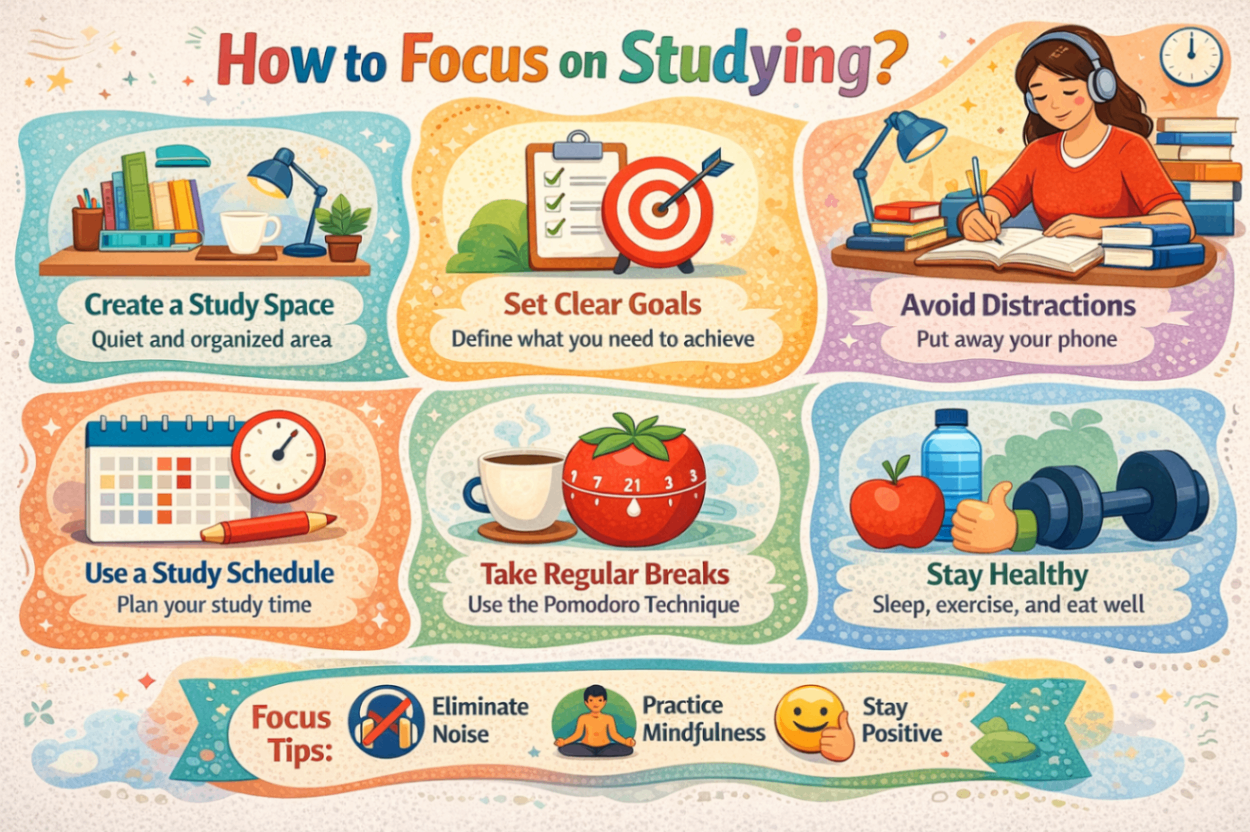
Learning how to focus on studying is one of the most valuable skills you can develop as a student. Whether you are preparing for exams, completing assignments, or learning new material, your ability to concentrate directly impacts your academic success and the quality of your learning experience. Many students struggle with maintaining focus during study sessions due to constant distractions from phones, social media, and busy environments. The good news is that focus is not an innate talent reserved for a select few but rather a skill that anyone can develop with the right strategies and consistent practice. This comprehensive guide explores how to focus on studying tips that actually work, covering everything from creating the ideal study environment to preparing for exams with maximum concentration. By implementing these techniques, you can transform your study sessions from frustrating battles with distraction into productive learning experiences.
Why Students Struggle to Focus on Studying
Understanding the root causes of concentration problems helps you address them effectively.
Digital Distractions Are Everywhere
Smartphones, social media notifications, and constant internet access create unprecedented challenges for student focus. The average student checks their phone dozens of times per hour, and each interruption breaks concentration and requires time to refocus. Studies show that the human brain cannot truly multitask, meaning every notification pulls your attention away from learning. This constant switching exhausts mental resources and reduces the quality of your studying significantly.
Physical Factors Affect Concentration
Hunger, fatigue, dehydration, and lack of exercise significantly impact your ability to concentrate on academic material. Your brain requires proper fuel, rest, and blood flow to function at its best during demanding cognitive tasks. Students who skip meals, stay up late cramming, or remain sedentary often find their concentration suffering despite their best intentions. Addressing these physical factors creates the foundation for better mental focus.
Study Environment Matters More Than You Think
A cluttered desk, noisy surroundings, or uncomfortable seating can sabotage your focus before you even begin reviewing material. Your brain constantly processes environmental stimuli, and distracting environments drain mental energy that should go toward learning. Creating a dedicated study space signals to your brain that it is time to concentrate. The difference between studying in bed versus at a proper desk can dramatically affect your productivity.
How to Focus on Studying at Home
Home environments present unique challenges and opportunities for focused studying.
Create a Dedicated Study Space
Designate a specific area in your home exclusively for studying and academic work. This space should be separate from areas where you relax or sleep so your brain associates it with concentration and productivity. A proper desk with good lighting and comfortable seating helps you maintain focus for extended periods. Keep all necessary supplies within reach so you do not need to interrupt your study session.
Communicate Boundaries with Family Members
Let everyone in your household know when you are studying and ask them not to disturb you during these times. Post your study schedule on your door or in a common area so family members know when to leave you alone. Setting clear boundaries prevents interruptions that break your concentration and force you to restart your mental focus. Even brief interruptions can derail productive study sessions for much longer than expected.
Eliminate Digital Temptations
Turn off your phone completely or place it in another room during study sessions. If you need your computer for studying, use website-blocking apps like Freedom or StayFocusd to prevent access to distracting sites. The temptation to check social media becomes much easier to resist when these options are physically unavailable. Removing digital distractions is one of the most effective ways to improve your concentration immediately.
How to Focus on Studying for Exams
Exam preparation requires sustained concentration over longer periods than regular studying.
Start Preparation Early to Reduce Stress
Begin reviewing material well before your exam date so you can study in manageable chunks rather than cramming. Stress and anxiety significantly impair concentration, and last-minute cramming creates conditions where focus becomes nearly impossible. Starting early allows you to approach each study session calmly and maintain clear-headed focus. Spaced repetition over multiple sessions also improves long-term retention compared to intensive cramming.
Use Active Recall Techniques
Active recall forces your brain to engage deeply with material rather than passively reading through notes. Test yourself with flashcards, practice problems, or by explaining concepts aloud without looking at your materials. These techniques demand concentrated attention and prevent your mind from wandering during study sessions. Combining active recall with the 7 secret methods for studying can dramatically improve your exam performance.
Practice with Past Exams Under Test Conditions
Complete practice exams in conditions that simulate the actual test environment, including time limits and minimal distractions. This practice trains your brain to maintain focus under pressure and builds confidence in your ability to concentrate. Timed practice also helps you identify areas where you struggle to maintain focus. Regular practice under exam conditions makes the actual test feel familiar rather than stressful.
How to Make Yourself Focus on Studying
Sometimes you need specific techniques to overcome resistance and get started.
Use the Pomodoro Technique
The Pomodoro Technique breaks study time into focused 25-minute intervals followed by short 5-minute breaks. After completing four intervals, take a longer break of 15 to 30 minutes. This structure makes focusing feel manageable because you only need to concentrate for a short period before earning a rest. Many students find that knowing a break is coming helps them resist distractions during work periods.
Start with Your Most Challenging Tasks
Schedule your most difficult or important study tasks during your peak energy hours when concentration comes more easily. Tackling challenging material when you are mentally fresh prevents the frustration of trying to focus on hard concepts when tired. Completing difficult tasks first also creates momentum and a sense of accomplishment that carries through your session. Save easier review tasks for times when your mental energy naturally dips.
Set Specific Goals for Each Session
Before beginning to study, write down exactly what you want to accomplish during that session. Vague goals like "study biology" make it easy to lose focus, while specific goals give you clear direction. Specific goals also allow you to recognize when you have finished, preventing sessions from dragging on unproductively. Tools like an AI Problem Solver can help you work through challenging problems efficiently.
How to Focus Better on Studying
These additional strategies help strengthen your concentration abilities over time.
Train Your Brain with Focus Exercises
Regular meditation and mindfulness practice strengthen your brain's ability to maintain attention on a single task. Even 10 minutes of daily meditation can improve concentration by training your brain to notice when attention wanders. Brain-training activities like puzzles, chess, and memory games also help develop cognitive skills that support better focus. Consider these activities investments in your long-term ability to concentrate.
Optimize Your Physical State
Ensure you get adequate sleep before study sessions, as fatigue dramatically impairs concentration and memory formation. Eat nutritious meals and snacks that provide steady energy rather than sugar spikes that lead to crashes. Stay hydrated by keeping water nearby while you study, since even mild dehydration can reduce cognitive performance. Regular exercise improves blood flow to the brain and helps release physical tension.
Use Music Strategically
Some students focus better with background music while others need complete silence. If music helps you concentrate, choose instrumental tracks without lyrics that might capture your attention. Classical music, ambient sounds, or lo-fi beats often work well for studying because they block out environmental noise. Experiment to discover what works best for your particular learning style and preferences.
Reward Yourself for Completing Tasks
Create a reward system that motivates you to maintain focus throughout your study sessions. Promise yourself small rewards like a favorite snack, short video, or quick walk after completing specific study goals. These rewards give you something to look forward to and make pushing through difficult material easier. Larger rewards for completing major milestones like finishing a chapter or exam prep help sustain motivation over time.
Common Focus Mistakes to Avoid
Recognizing counterproductive habits helps you eliminate them from your study routine.
Attempting to Multitask
Your brain cannot effectively focus on two cognitive tasks simultaneously, so trying to study while texting guarantees poor results. What feels like multitasking is actually rapid task-switching that exhausts your brain and reduces learning quality. Commit to single-tasking during study sessions by eliminating all competing demands for your attention. You will accomplish more in less time by focusing completely on one task at a time.
Studying in Bed or Comfortable Lounging Spots
Your brain associates your bed with sleep and relaxation, making it extremely difficult to maintain study focus there. The comfortable position also makes drowsiness more likely, further impairing concentration. Always study at a desk or table where you sit upright and alert, reserving comfortable spots for intentional relaxation. This separation helps your brain quickly shift into study mode when you sit at your workspace.
Ignoring the Need for Breaks
Attempting to study for hours without breaks leads to diminishing returns as mental fatigue accumulates and concentration deteriorates. Regular short breaks actually improve overall productivity by allowing your brain to rest and consolidate information. Plan breaks into your study schedule and use them for physical movement, snacks, or brief mental relaxation. Returning to your work after a break often brings renewed focus and fresh perspective.
Skipping the Planning Phase
Starting to study without a clear plan wastes valuable time and mental energy deciding what to do next. Students who skip planning often jump between subjects randomly or spend too long on easy material while neglecting harder topics. Take five minutes before each session to outline what you will cover and in what order. This simple planning step dramatically improves focus by giving your brain a clear roadmap to follow.
Conclusion
Learning how to focus on studying is a skill that improves with consistent practice and the right strategies. By creating a distraction-free environment, managing your physical state, and using proven techniques like the Pomodoro method, you can dramatically improve your concentration during study sessions. Remember that focus is not about willpower alone but about setting up conditions that support concentration. Eliminate distractions before they become temptations, schedule your hardest work during peak energy times, and take regular breaks to maintain mental freshness throughout longer sessions. With patience and practice, the focus techniques in this guide will become habits that serve you throughout your academic career and beyond. The ability to concentrate deeply on demanding tasks is valuable not just for studying but for success in virtually every professional and personal endeavor.
Frequently Asked Questions
How can I focus on studying when I keep getting distracted?
Remove distractions before you start by turning off your phone, using website blockers, and finding a quiet study space. Break your study time into short focused intervals using the Pomodoro Technique, and give yourself permission to check distractions only during scheduled breaks. Creating physical barriers between yourself and distractions makes resisting them much easier than relying on willpower alone.
How to focus on studying at home with family around?
Communicate your study schedule to family members and ask them to respect your focus time. Create a dedicated study space, ideally with a door you can close, and use headphones with instrumental music to block out household noise. Post your schedule visibly so others know when not to interrupt you.
What is the best time of day to study for maximum focus?
The best study time varies by individual, but most people concentrate best during morning hours when mental energy is highest. Pay attention to when you naturally feel most alert and schedule challenging study tasks during those peak periods. Avoid studying late at night when fatigue impairs concentration and memory formation.
How long should I study before taking a break?
Most students can maintain focused attention for 25 to 50 minutes before needing a short break. The Pomodoro Technique recommends 25-minute work intervals followed by 5-minute breaks, with longer 15-30 minute breaks after every four intervals. Experiment to find the interval length that works best for your concentration patterns.
Why do I lose focus when studying even when I want to concentrate?
Focus difficulties often stem from physical factors like hunger, fatigue, or dehydration rather than lack of motivation. Environmental distractions, unclear study goals, and attempting to multitask also impair concentration. Address these underlying causes by optimizing your physical state, eliminating distractions, and setting specific goals for each study session.