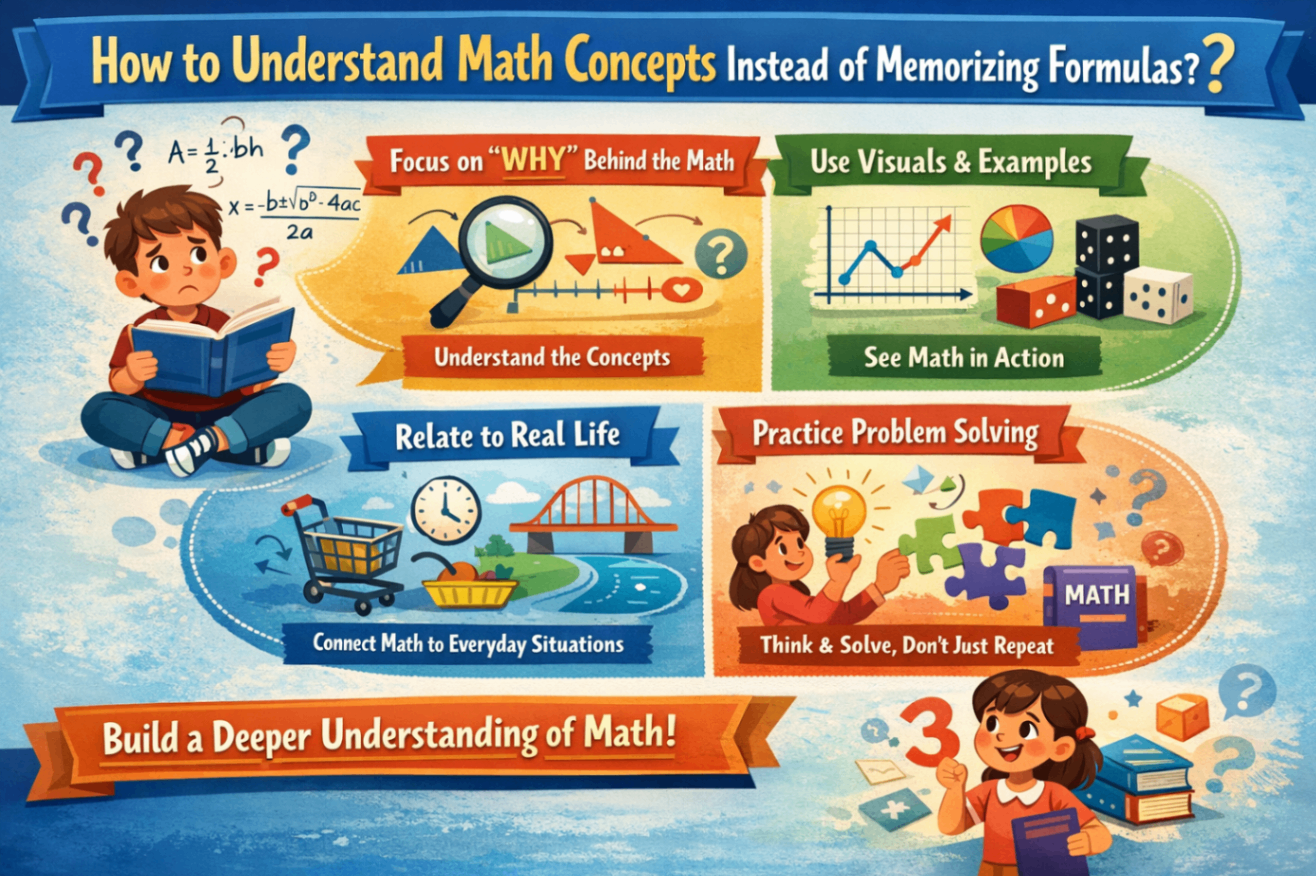
Students who rely solely on memorizing formulas often find themselves stuck when problems appear in unfamiliar forms or when they forget the exact steps under pressure. Learning how to understand math concepts instead of memorizing formulas transforms mathematics from a collection of arbitrary rules into a logical system that makes sense. Research shows that conceptual understanding produces better retention, greater flexibility in problem-solving, and stronger performance on challenging questions. When you grasp why formulas work rather than just how to apply them, you can adapt your knowledge to new situations and even reconstruct forgotten formulas from first principles. This guide presents practical strategies to help you shift from surface-level memorization to the deep understanding that distinguishes confident math students.
Why Memorization Alone Falls Short
Understanding the limitations of pure memorization helps motivate the shift toward conceptual learning. Recognizing these pitfalls is the first step toward a better approach.
The Illusion of Understanding
Memorizing a formula can create a false sense of mastery that crumbles when facing unfamiliar problems. You might recall the quadratic formula perfectly but struggle when a problem requires recognizing when to apply it or manipulating an equation into the right form first. This surface-level knowledge feels secure during practice but often fails during exams when questions test application rather than recall. True understanding means knowing not just what to do but why it works.
Poor Transfer to New Situations
Formulas memorized without understanding remain locked to the specific problem types you practiced. When examiners present the same concept in a different context or combine multiple concepts, memorized knowledge doesn't transfer effectively. Students with conceptual understanding recognize the underlying principles regardless of how problems are dressed up, while memorizers struggle to adapt. Flexibility in applying knowledge is what separates those who excel from those who merely pass.
Rapid Forgetting Over Time
Information memorized through repetition fades quickly without continuous review because it lacks meaningful connections in your brain. Concepts understood deeply become part of your permanent knowledge base because they connect logically to other things you know. The student who understands why the area of a triangle equals half base times height retains this knowledge far longer than one who simply memorized the formula. Understanding creates durable learning that persists.
Increased Anxiety and Frustration
Relying on memorization creates anxiety because you know your knowledge is fragile and could fail at any moment. The pressure of trying to recall exact formulas adds stress during exams when your working memory is already taxed. Students who understand concepts feel more confident because they can reason through problems even if specific details slip their mind. Conceptual knowledge provides a safety net that pure memorization cannot offer.
Build Understanding Through Derivation
Learning where formulas come from transforms them from arbitrary rules into logical conclusions. Derivation is one of the most powerful tools for conceptual understanding.
Trace the Origin of Every Formula
Before accepting any formula, investigate how mathematicians originally developed it and what reasoning led to that specific form. Understanding derivation reveals the logic embedded in each formula and shows why it couldn't be any other way. For example, the area of a circle formula emerges from approximating the circle as a polygon with increasingly many sides until the pattern becomes clear. This knowledge means you can reconstruct the formula if you forget it.
Connect Formulas to Visual Representations
Many mathematical relationships become obvious when you see them visually rather than just symbolically. Drawing diagrams, graphs, and geometric representations reveals why formulas take their particular forms. The Pythagorean theorem, for instance, becomes intuitive when you literally see the squares built on each side of a right triangle. Visual understanding provides a second pathway to recall and verify formulas.
Understand Relationships Between Related Formulas
Mathematical formulas don't exist in isolation but form interconnected webs of related ideas. Recognizing these connections helps you understand and remember each formula by seeing how it relates to others you already know. The formulas for area, perimeter, and volume all share underlying principles about measuring different dimensions of space. Learning to see these family relationships strengthens your grasp of each individual formula.
Practice Deriving Formulas Yourself
Actively working through derivations yourself rather than passively reading them builds much stronger understanding. When you struggle with the logic and arrive at the formula through your own reasoning, you own that knowledge in a way that watching or reading cannot achieve. An AI Math Solver can show you step-by-step derivations and help you verify your own reasoning as you work through understanding why formulas work. Regular derivation practice builds the logical muscles that support all mathematical thinking.
Focus on Core Principles and Patterns
Mathematics is built on a relatively small number of fundamental ideas that appear throughout the subject. Mastering these principles simplifies everything else.
Identify the Big Ideas Behind Topics
Every mathematical topic rests on a few central concepts that drive all the specific procedures and formulas. Identifying these big ideas helps you organize your knowledge around meaningful principles rather than scattered facts. In calculus, the fundamental concept of rate of change underlies derivatives, while accumulation underlies integrals. Understanding these core ideas makes the details fall into place naturally.
Look for Patterns Across Different Problems
Mathematical patterns repeat across seemingly different problem types, and recognizing these similarities deepens understanding significantly. The same underlying principle might appear in geometry, algebra, and statistics wearing different disguises. Training yourself to spot these recurring patterns transforms isolated facts into connected knowledge. Pattern recognition is what experts do that novices don't.
Understand Why Methods Work, Not Just How
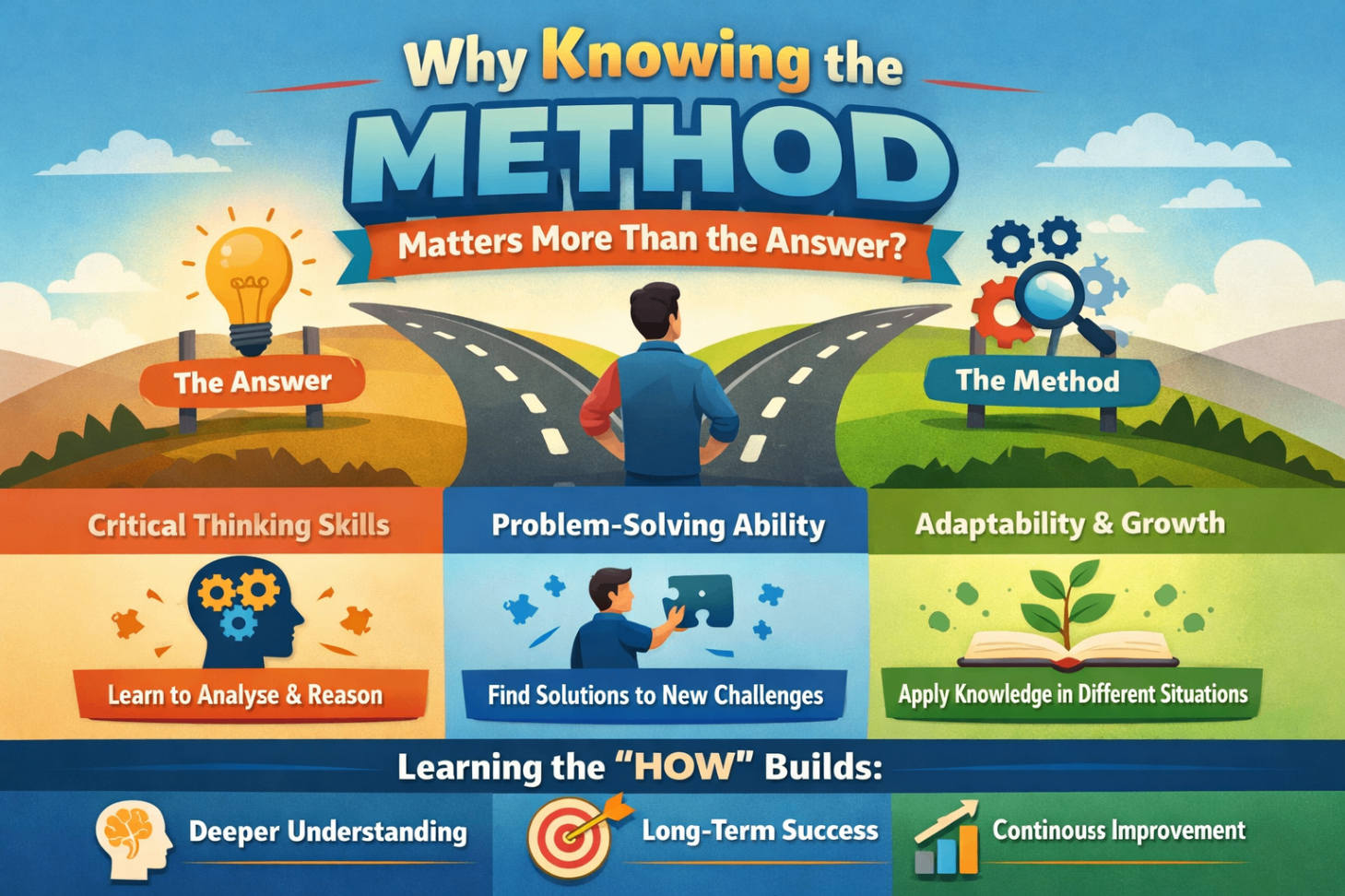
For every procedure you learn, push beyond the steps to understand the reasoning that makes those steps valid. Asking why builds the conceptual foundation that supports reliable application of methods. When you understand why you cross-multiply to solve proportions, you can adapt the method to related situations. The why is what separates understanding from mere procedure following.
Connect New Learning to Prior Knowledge
Every new mathematical concept builds on something you already know, and making these connections explicit strengthens both old and new learning. Actively relate new material to your existing understanding rather than treating it as isolated information. The more connections you build, the more stable and accessible your mathematical knowledge becomes. Integration is the key to lasting learning.
Use Active Learning Strategies
Passive reading and watching don't build deep understanding. Active engagement with material is essential for conceptual learning.
Explain Concepts in Your Own Words
Translating mathematical ideas into your own language forces you to process and understand them rather than just recognize them. If you can't explain a concept simply, you don't truly understand it yet. Practice explaining ideas to yourself, to study partners, or even to imaginary students who need help. Teaching is one of the most effective learning strategies available.
Work Through Problems Without Looking at Solutions
Struggling productively with problems before checking answers builds understanding that passive solution-reading cannot match. The effort of figuring things out yourself, even when you make mistakes, strengthens your grasp of underlying concepts. Resist the temptation to look at solutions too quickly, and give yourself time to think. Productive struggle is where real learning happens.
Create Your Own Examples and Problems
Generating your own examples tests and reinforces your understanding more effectively than just solving given problems. When you can create valid examples of a concept, you demonstrate genuine comprehension of its essential features. Try making up problems similar to those in your textbook and solve them yourself. Creation requires deeper processing than consumption.
Study Without Distractions for Deeper Processing
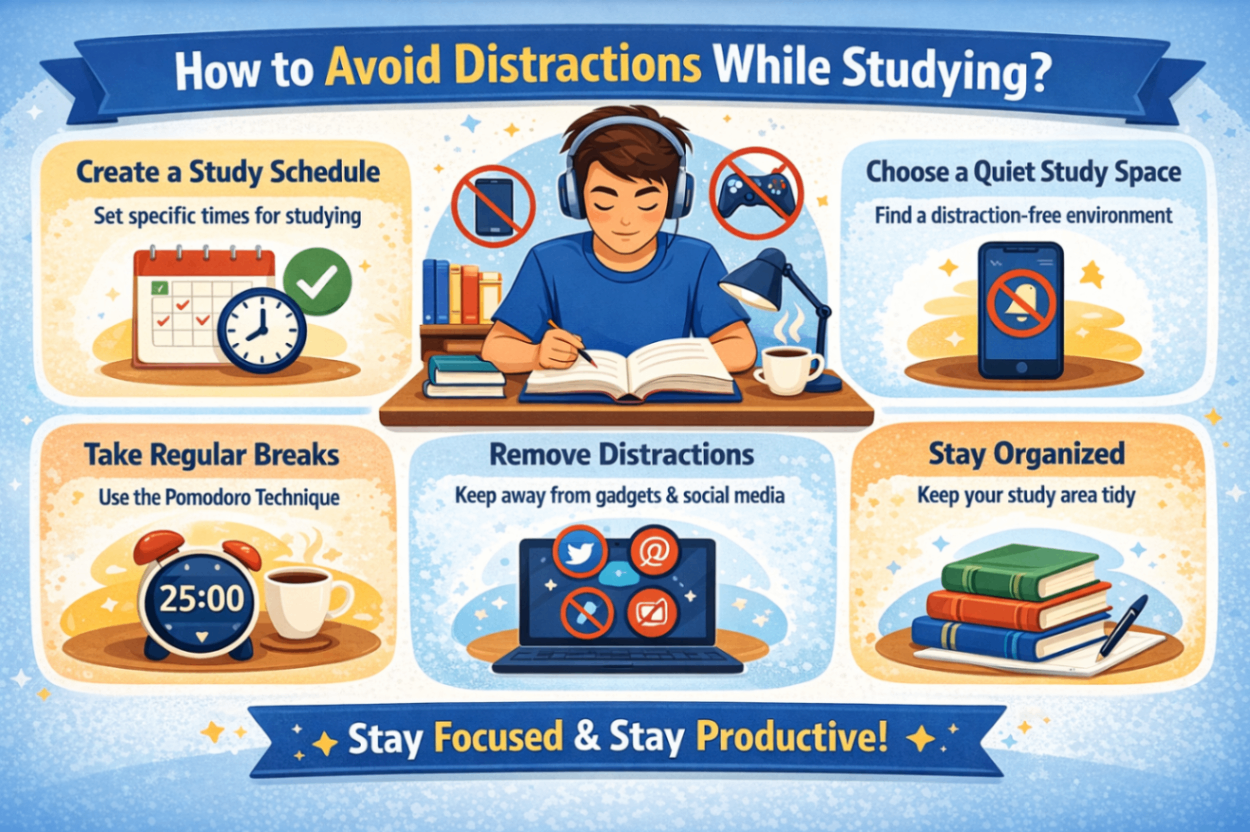
Conceptual understanding requires sustained, focused attention that fragmented study sessions cannot provide. For effective strategies on maintaining focus, explore How to Avoid Distractions While Studying so you can engage deeply with mathematical ideas. Deep processing of concepts requires mental energy that distraction depletes. Protect your study time from interruption to maximize conceptual learning.
Balance Understanding with Strategic Memorization
While understanding should come first, some memorization serves legitimate purposes. The key is making memorization work with understanding, not against it.
Memorize After Understanding, Not Before
Use memorization to consolidate and speed access to knowledge you already understand rather than as a substitute for understanding. When you memorize a formula after understanding its derivation and logic, the memorization sticks better and the knowledge remains flexible. Understanding first, memorization second is the optimal sequence. This order ensures memorization serves rather than replaces comprehension.
Know Which Formulas Truly Require Memorization
Some formulas are so fundamental and frequently used that memorizing them saves significant time and mental effort. Trigonometric identities, the quadratic formula, and basic geometric relationships fall into this category for most students. Identify which formulas appear constantly in your course and prioritize memorizing those specific ones. Strategic memorization conserves cognitive resources for higher-level thinking.
Create Meaningful Memory Aids
When memorization is necessary, use techniques that connect to understanding rather than brute repetition. Mnemonics that relate to the meaning of formulas work better than arbitrary memory tricks. Understanding why a formula has certain features helps you remember those features accurately. Meaningful memorization integrates with rather than substitutes for understanding.
Regularly Test Your Recall and Understanding
Self-testing reveals whether you truly understand concepts or have only memorized surface features. Quiz yourself not just on formulas but on when to use them, why they work, and how they connect to other ideas. Testing identifies gaps in your understanding while the information is still fresh and correctable. Active recall strengthens both memory and comprehension.
Conclusion
Learning how to understand math concepts instead of memorizing formulas fundamentally changes your relationship with mathematics. The strategies presented here, from tracing derivations to focusing on core principles to active learning techniques, work together to build genuine comprehension. This deeper understanding produces knowledge that transfers to new situations, persists over time, and reduces the anxiety that accompanies fragile memorization. Begin applying these approaches to your current math studies, starting with the topics you find most confusing. As conceptual understanding becomes your default approach, you'll discover that mathematics transforms from a subject of arbitrary rules into a logical system that genuinely makes sense.
Frequently Asked Questions
Do I need to understand every formula completely before using it?
Practical constraints sometimes require applying formulas before fully understanding them, and that's acceptable as a starting point. However, make understanding a priority that you return to as soon as possible after initial exposure. Use the formula to solve problems while simultaneously working to understand why it works. Aim for a cycle where application and understanding reinforce each other.
How long does it take to build conceptual understanding compared to memorizing?
Understanding typically requires more time upfront but saves time in the long run through better retention and transfer. While you might memorize a formula in minutes, developing genuine understanding might take hours of active engagement. However, understood knowledge needs far less review and applies to many more situations than memorized knowledge. The initial investment pays continuing dividends.
What if my teacher only teaches procedures without explanation?
Supplement classroom instruction with resources that emphasize understanding, such as textbooks with derivations, educational videos, or tutoring focused on concepts. Ask your teacher why procedures work, as many will explain if directly asked. Form study groups with classmates interested in deeper understanding, and explore the reasoning together. Take responsibility for your own conceptual learning.
Can I succeed in math exams with understanding alone, without memorization?
Some baseline memorization of frequently used formulas improves exam performance by freeing mental resources for problem-solving. However, understanding dramatically reduces the amount of memorization needed because you can reconstruct or verify formulas through reasoning. The optimal approach combines deep understanding with strategic memorization of high-frequency formulas. Both elements contribute to exam success.
How do I know if I truly understand a concept or have just memorized it?
Test yourself by explaining the concept in your own words, applying it to unfamiliar problems, and connecting it to other ideas. If you can only repeat definitions or follow practiced procedures, you've memorized rather than understood. True understanding allows you to adapt, explain, and predict in new situations. Push yourself beyond familiar territory to verify genuine comprehension.