Many students believe the goal of math is simply to arrive at the correct answer as quickly as possible. However, understanding why knowing the method matters more than the answer transforms how you approach mathematics and builds skills that serve you far beyond any single problem. Research shows that students who focus on methods develop flexible thinking, catch errors more easily, and adapt their knowledge to unfamiliar situations. The answer is just one number at the end of your work, but the reasoning process you develop becomes a permanent part of your mathematical toolkit. This guide explains why method matters and shows you how to shift your focus from answers to understanding.
The Real Goal of Mathematical Learning
Understanding the true purpose of math education helps explain why process deserves more attention than results. Reframing your goals changes how you approach every problem.
Answers Are Temporary, Methods Are Permanent
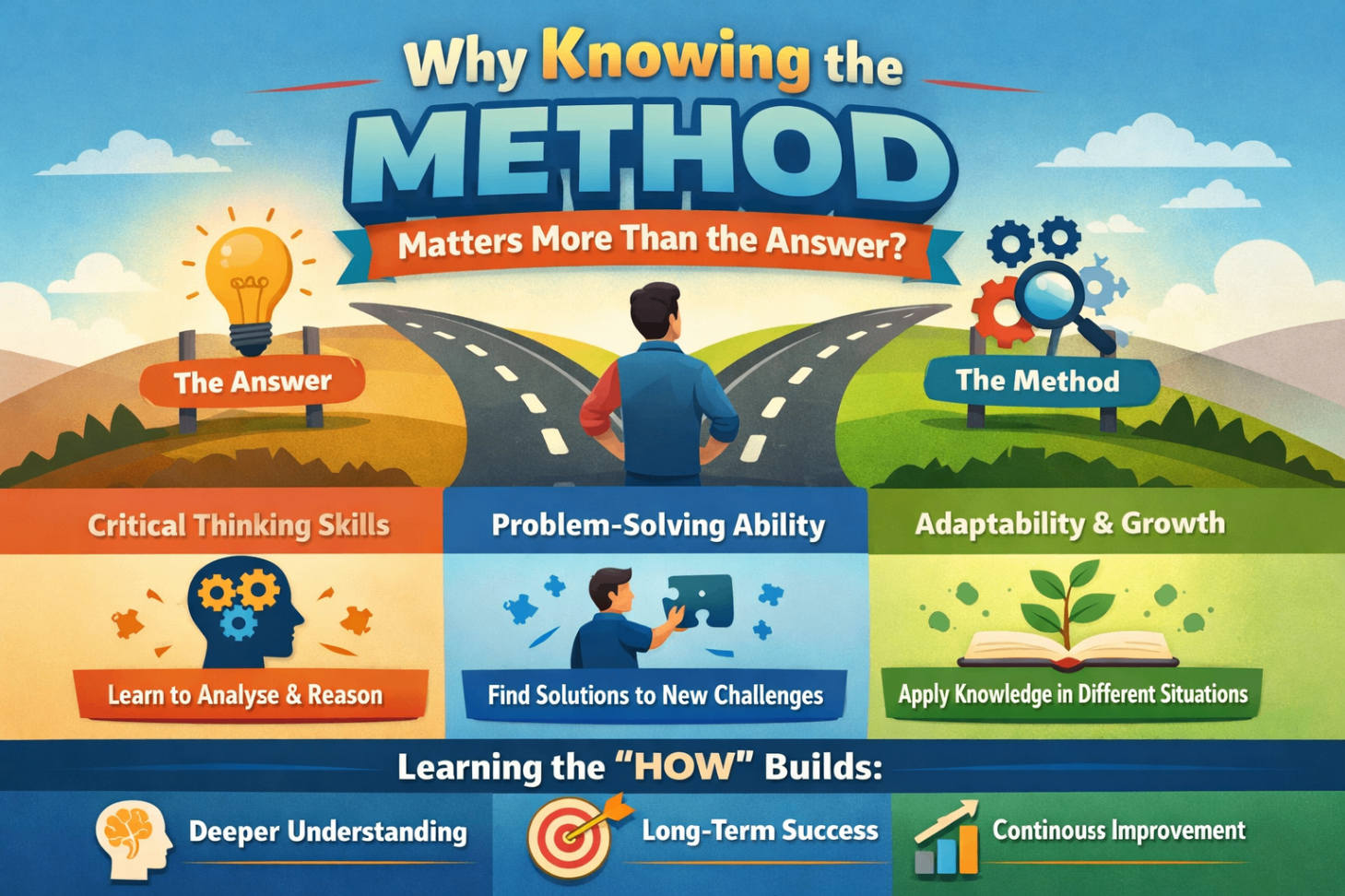
Any specific answer applies only to the exact problem that produced it, but the method applies to countless similar problems. Change one number and the answer changes completely, yet the approach remains the same. When you focus on mastering methods, you build transferable skills rather than collecting isolated facts. The student who understands the process can solve problems they have never seen before.
Math Teaches Thinking, Not Just Calculating
The real output of solving a math problem is not the number you write down but the changes in your mind's ability to reason through challenges. Math education develops logical thinking, pattern recognition, and analytical skills that transfer to countless fields beyond mathematics. These cognitive abilities help you in science, business, technology, and everyday decision-making.
The Process Reveals Your Understanding
Teachers ask you to show your work because the steps reveal whether you truly understand the underlying concepts or simply stumbled upon a correct answer. Getting the right answer through wrong reasoning indicates fragile knowledge that will fail when problems change slightly. Students with correct reasoning but arithmetic errors are often closer to mastery than those who guess correctly without understanding.
Building a Foundation for Advanced Mathematics
Each mathematical concept builds on previous ones, and methods learned today become tools for tomorrow's challenges. Inverse operations in arithmetic become essential for algebraic equations, which then become necessary for calculus. Students who only memorize specific answers find themselves unprepared when courses advance. Understanding methods creates the foundation that makes future learning possible.
Why Correct Answers Can Be Misleading
A right answer does not always indicate real understanding, and this distinction has important implications. Recognizing the limitations of answer-focused thinking helps you develop better learning habits.
Lucky Guesses Create False Confidence
Students sometimes arrive at correct answers through faulty reasoning or fortunate guessing, creating dangerous false confidence. The flawed approach will produce wrong answers on different problems. Without examining the method used, neither student nor teacher knows whether the understanding is solid. Consistent success requires reliable methods, not lucky guesses.
Wrong Methods Eventually Fail
A method that happens to work on simple problems often breaks down when complexity increases. Students who rely on shortcuts without understanding why they work find themselves stuck facing advanced material. The student who understands underlying principles can adapt when problems become harder. Investing in understanding methods pays dividends throughout your mathematical journey.
Partial Credit Rewards Understanding
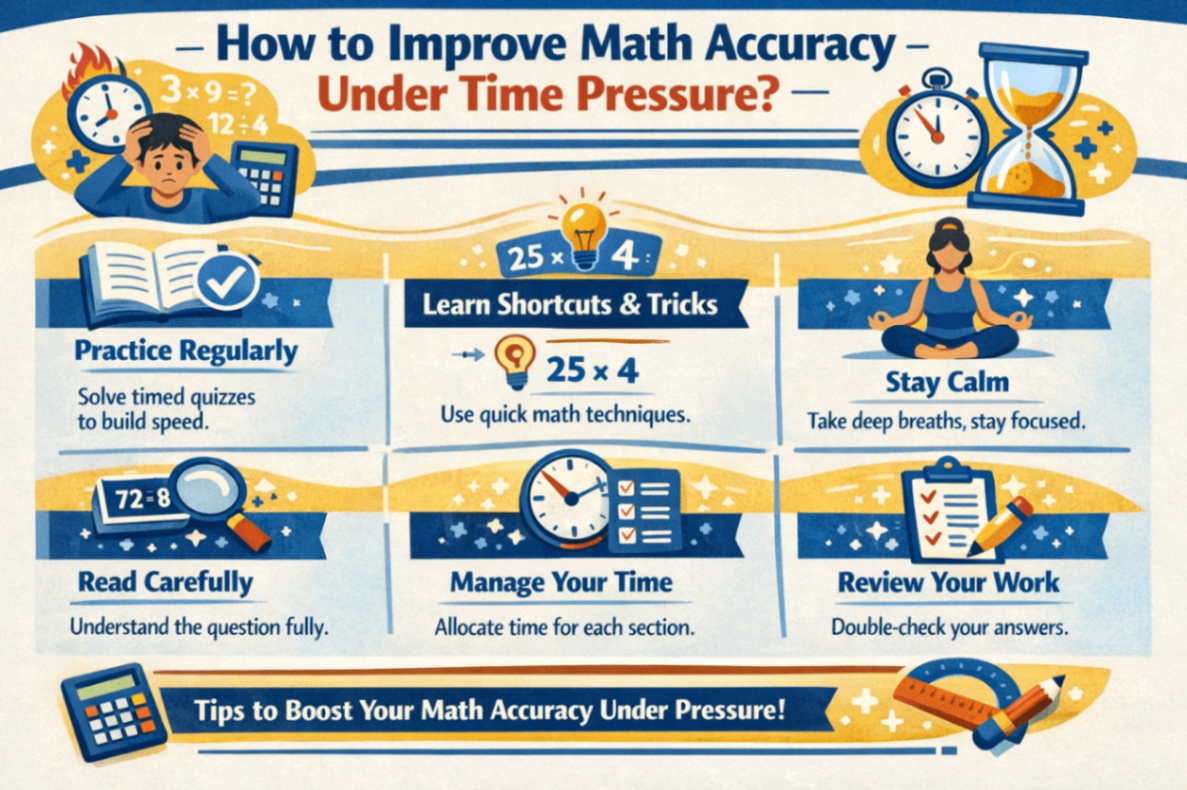
In examinations, showing correct methodology even with calculation errors often earns substantial partial credit. This grading approach recognizes that computational mistakes are minor compared to conceptual errors. Learning How to Improve Math Accuracy Under Time Pressure helps reduce calculation errors, but your method provides the foundation that makes accuracy meaningful.
Understanding Prevents Repeated Errors
When you know why a method works, you can identify and correct errors more effectively. Students who only focus on answers often make the same mistakes repeatedly because they never understood what went wrong. Examining your method when answers are incorrect reveals exactly where your thinking needs adjustment.
How Method-Focused Learning Changes Everything
Shifting your focus from answers to methods transforms your mathematical experience in multiple positive ways. These benefits compound over time as your approach becomes habitual.
Flexibility in Problem Solving
Understanding why methods work allows you to adapt them to new situations rather than waiting for problems that match memorized procedures. Mathematical problems can be approached in multiple ways, and students who understand methods can choose approaches that suit each situation. The problem solver can handle novel challenges while the memorizer is stuck.
Deeper Engagement with Material
Focusing on understanding makes math more interesting because you see the logic and connections between ideas rather than arbitrary rules. When you ask why a method works, you discover the elegant reasoning that underlies mathematics. This engagement transforms math from tedious procedure-following into genuine intellectual exploration.
Better Retention Over Time
Concepts understood deeply stay with you far longer than procedures memorized without comprehension. The logic of methods provides memory hooks that make recall easier and more reliable. Students who understand why formulas work can often reconstruct them when memory fades. Method-focused learning creates durable knowledge that persists across courses and years.
Transfer to Other Domains
Problem-solving approaches learned in mathematics apply to challenges far beyond the math classroom. Analytical thinking, logical reasoning, and systematic approaches transfer to science, engineering, business, and everyday decisions. This transfer happens because you learned thinking skills rather than just specific answers to specific problems.
Practical Strategies for Method-Focused Learning
Moving from answer-seeking to method-understanding requires deliberate practice with specific techniques. These strategies help you develop the habits that support deep mathematical learning.
Always Ask Why It Works
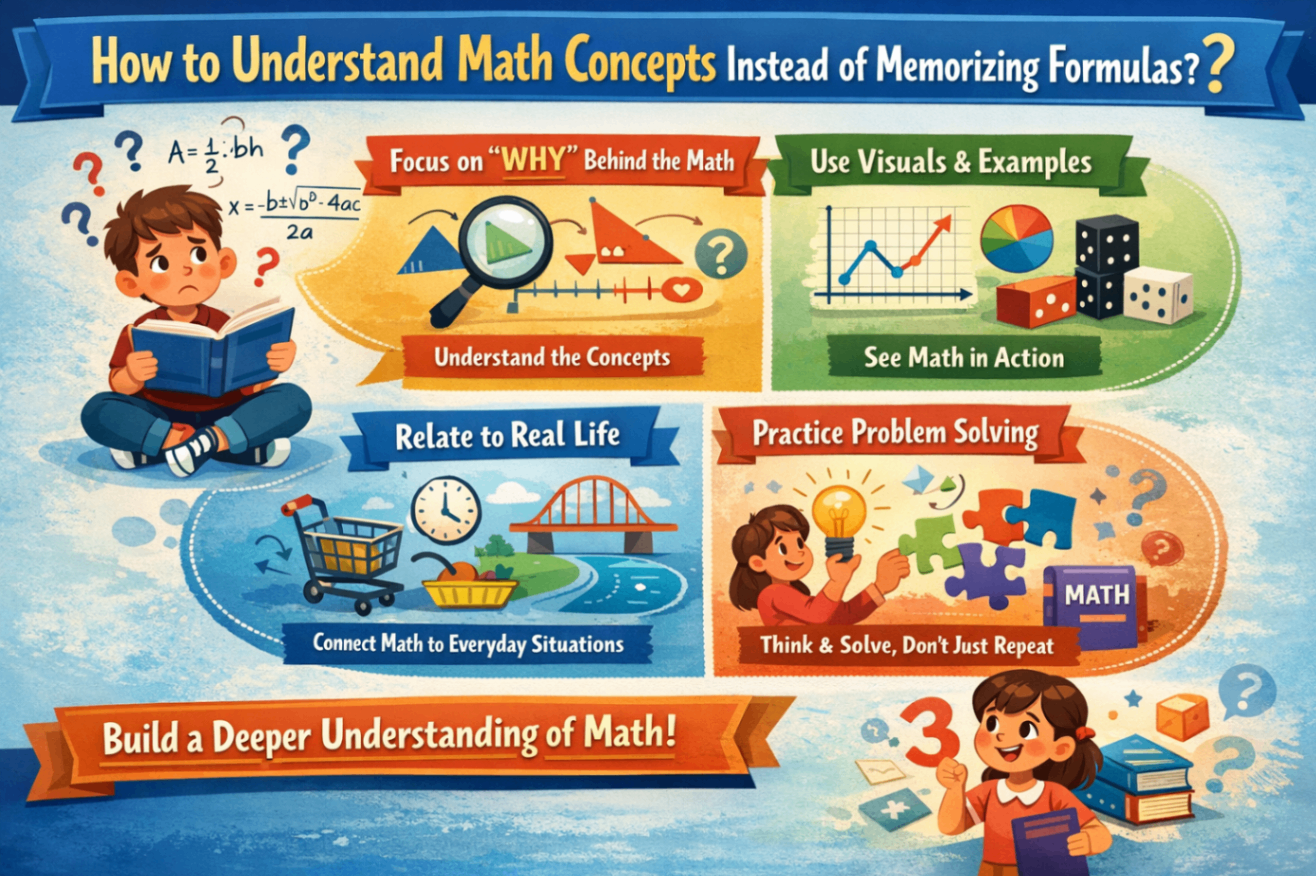
Before accepting any formula or procedure, push yourself to understand the reasoning that makes it valid. Ask what principles justify each step and how the method connects to concepts you already know. An AI Math Solver can show step-by-step reasoning and help you understand the logic behind solutions.
Compare Multiple Solution Approaches
When possible, solve problems using more than one method and compare the approaches. This comparison reveals connections between mathematical concepts and helps you see why different methods lead to the same answer. Understanding multiple paths to solutions builds flexible thinking and deeper comprehension.
Explain Your Reasoning Aloud
Verbalizing your thinking process forces you to articulate the logic behind your methods. If you cannot explain why each step makes sense, you have identified a gap in your understanding. Teaching concepts to others, even imaginary students, reveals whether you truly comprehend the methods.
Analyze Errors for Method Problems
When you get wrong answers, examine your method before simply correcting the calculation. Ask whether your approach was fundamentally sound or whether you used an inappropriate method. Distinguishing between computational errors and conceptual errors guides more effective improvement.
The Balance Between Understanding and Efficiency
While methods matter more than answers, practical constraints sometimes require balancing deep understanding with efficient execution. Finding this balance is part of mathematical maturity.
Master Fundamentals Through Understanding First
Invest time in understanding methods thoroughly when first learning concepts, even if this feels slower initially. Once you understand why procedures work, then practice for speed and automaticity. This sequence ensures that your efficient execution rests on solid comprehension.
Recognize When Memorization Serves Understanding
Some mathematical facts, like multiplication tables or common formulas, are worth memorizing after you understand them. Memorization here serves efficiency rather than replacing understanding. The key is memorizing as a supplement to comprehension, not as a substitute for it.
Practice Application After Developing Understanding
Solving many problems helps consolidate your understanding of methods and builds fluency with their application. Practice is essential but should follow comprehension rather than replace it. The goal of practice is internalizing methods so deeply that applying them becomes natural.
Know When to Seek Deeper Explanation
If a method feels arbitrary or confusing despite repeated exposure, seek additional explanation rather than accepting confusion. Different resources, teachers, or approaches may illuminate what remains unclear. Persistent confusion about why methods work signals incomplete understanding that will cause problems later.
Conclusion
Understanding why knowing the method matters more than the answer fundamentally changes how you experience mathematics. The strategies presented here help you shift focus from seeking answers to developing deep understanding of processes. This approach builds flexible problem-solving abilities that transfer to new mathematical challenges and beyond. Methods understood deeply become permanent tools in your cognitive toolkit, while answers forgotten tomorrow served only that single moment. Begin approaching every math problem as an opportunity to understand methods better, and watch your mathematical confidence and capability grow.
Frequently Asked Questions
If I understand the method but still get wrong answers, what should I do?
When your method is sound but answers are incorrect, the issue is usually computational rather than conceptual. Focus on careful execution, checking your arithmetic, and catching transcription errors. Practice calculations to build accuracy while maintaining your strong methodological understanding.
How do I know if I really understand a method or just think I do?
Test your understanding by explaining the method to someone else or by applying it to problems that look different from your practice examples. If you can justify each step and adapt the approach to unfamiliar situations, your understanding is genuine. Difficulty explaining or adapting indicates surface familiarity rather than deep comprehension.
Won't focusing on methods slow me down on timed tests?
Initially, yes, but understanding methods actually improves speed over time. When you truly understand why procedures work, you make fewer errors and recognize solution paths more quickly. Deep understanding enables efficient execution rather than conflicting with it.
What if my teacher only cares about correct answers?
Even if grading emphasizes answers, your learning benefits from understanding methods. Show your work thoroughly to demonstrate reasoning, which often earns partial credit. More importantly, method-focused learning prepares you for future courses where understanding becomes essential.
How can I develop method understanding when I am already behind?
Start by understanding methods for current material rather than trying to relearn everything at once. Ask why at every step in new lessons and seek explanations when procedures seem arbitrary. Gradually, understanding current methods will illuminate connections to earlier material.