Every student knows the feeling of sitting down to study only to realize thirty minutes have passed scrolling through social media. Learning how to avoid distractions while studying is essential because even brief interruptions fragment your attention and significantly reduce information retention. Research shows that multitasking between studying and other activities worsens performance and memory. Distractions fall into two categories, external ones like noise and notifications and internal ones like stress and wandering thoughts, and both require deliberate strategies to overcome. This guide provides actionable techniques to help you reclaim your focus and make every study session count.
Create an Optimal Study Environment
Your physical surroundings directly influence your ability to concentrate. Designing a study space that supports focus is the foundation of distraction-free learning.
Designate a Dedicated Study Space
Using a specific location exclusively for studying trains your brain to shift into work mode when you arrive there. This space should be separate from where you relax or socialize so your mind associates it with concentration rather than leisure. Keep the area organized and free from clutter, as visual chaos competes for your attention even subconsciously. Over time, this environmental conditioning makes focusing easier because your brain recognizes the cues automatically.
Optimize Lighting, Temperature, and Comfort
Physical discomfort pulls your attention away from academic work toward your body's complaints. Ensure your study space has adequate lighting that reduces eye strain, preferably natural light supplemented by a desk lamp. Set the temperature to a comfortable range where you're alert but not drowsy, and use a chair that supports proper posture. Small environmental adjustments eliminate the physical irritations that gradually erode concentration.
Control Ambient Noise Levels
Background noise affects different students differently, so experiment to discover what works for your concentration. Some learners focus best in complete silence, while others benefit from instrumental music or white noise that masks distracting sounds. If you share living space with noisy roommates or family, noise-cancelling headphones create an acoustic barrier. Choose quieter times of day for your most demanding study tasks.
Keep Necessary Materials Within Reach
Getting up to find a textbook, calculator, or charger interrupts your flow and creates opportunities for distraction along the way. Before beginning each study session, gather everything you'll need including books, notes, stationery, water, and snacks. This preparation eliminates the legitimate reasons to leave your study space that often turn into extended breaks. A well-stocked workspace removes excuses and keeps you anchored to your work.
Manage Digital and Phone Distractions
Technology is both the greatest study aid and the most persistent source of distraction. Controlling your devices rather than letting them control you is critical.
Put Your Phone on Do Not Disturb
Smartphone notifications are designed to capture your attention, and each one pulls you away from studying even if you don't respond. Activate do-not-disturb mode or airplane mode during study sessions to eliminate the constant stream of alerts. Research confirms that even brief interruptions fragment concentration and reduce later recall of studied material. Place your phone face down or in another room entirely to remove the visual temptation of checking it.
Block Distracting Websites and Apps
Self-discipline alone often cannot compete with apps engineered to maximize your engagement and screen time. Install website blockers or app timers that restrict access to social media and entertainment during designated study periods. Use built-in screen time features on both Android and iOS devices to set daily limits on distracting applications. These digital boundaries automate willpower, protecting your focus even during moments of weakness.
Schedule Specific Times for Social Media
Completely banning social media creates a feeling of deprivation that makes you think about it more. Instead, designate specific times for checking platforms, such as fifteen minutes before studying and during planned breaks. Knowing that a social media window is approaching makes it easier to resist the urge during study time. This structured approach satisfies your need to stay connected while preventing social media from consuming study hours.
Use Technology Intentionally for Learning
Not all screen time is equal, and digital tools can enhance studying when used with clear purpose. To explore how can AI help students stay focused and learn efficiently, consider using technology as an active study partner rather than a passive distraction. Purpose-driven technology use means opening only study-related tabs while keeping everything else closed. When digital tools serve your learning goals, they become allies against distraction rather than sources of it.
Overcome Internal Distractions
External distractions get the most attention, but internal disruptions like stress, fatigue, and wandering thoughts can be equally damaging to concentration.
Address Physical Needs Before Studying
Hunger, thirst, tiredness, and physical discomfort are internal distractions that steadily erode concentration regardless of motivation. Eat a balanced meal or snack before studying so hunger doesn't pull your attention away from work. Stay hydrated by keeping water at your desk, as even mild dehydration impairs cognitive function. Taking care of basic physical needs before you begin removes the most common internal interruptions.
Use a Thought Capture System
Wandering thoughts about upcoming tasks, social plans, or worries intrude on study sessions and break concentration repeatedly. Keep a notepad beside your materials and write down any distracting thought immediately when it appears, then return to work. This technique acknowledges the thought without pursuing it, preventing the mental loop of trying to remember something while studying. Review your captured thoughts after the session and address anything that needs attention.
Practice Mindfulness for Better Focus
Mindfulness trains your brain to notice when attention has drifted and gently return it to the task at hand. Even five minutes of focused breathing before studying strengthens your ability to sustain concentration over longer periods. When you notice your mind wandering during study sessions, acknowledge the distraction without judgment and redirect focus. This non-reactive awareness reduces the frustration of losing concentration, which itself becomes a distraction.
Manage Stress and Anxiety Proactively
Academic pressure, personal worries, and general anxiety compete for mental bandwidth that should be devoted to learning. If persistent worries prevent concentration, take five minutes to write down what's bothering you and possible solutions. This brief processing prevents anxious thoughts from cycling endlessly through your mind during study time. For chronic stress, develop regular coping practices like exercise, adequate sleep, and social connection.
Structure Your Study Sessions Strategically
How you organize your study time determines whether distractions find openings or encounter a focused, purposeful routine.
Use Time-Blocking Techniques
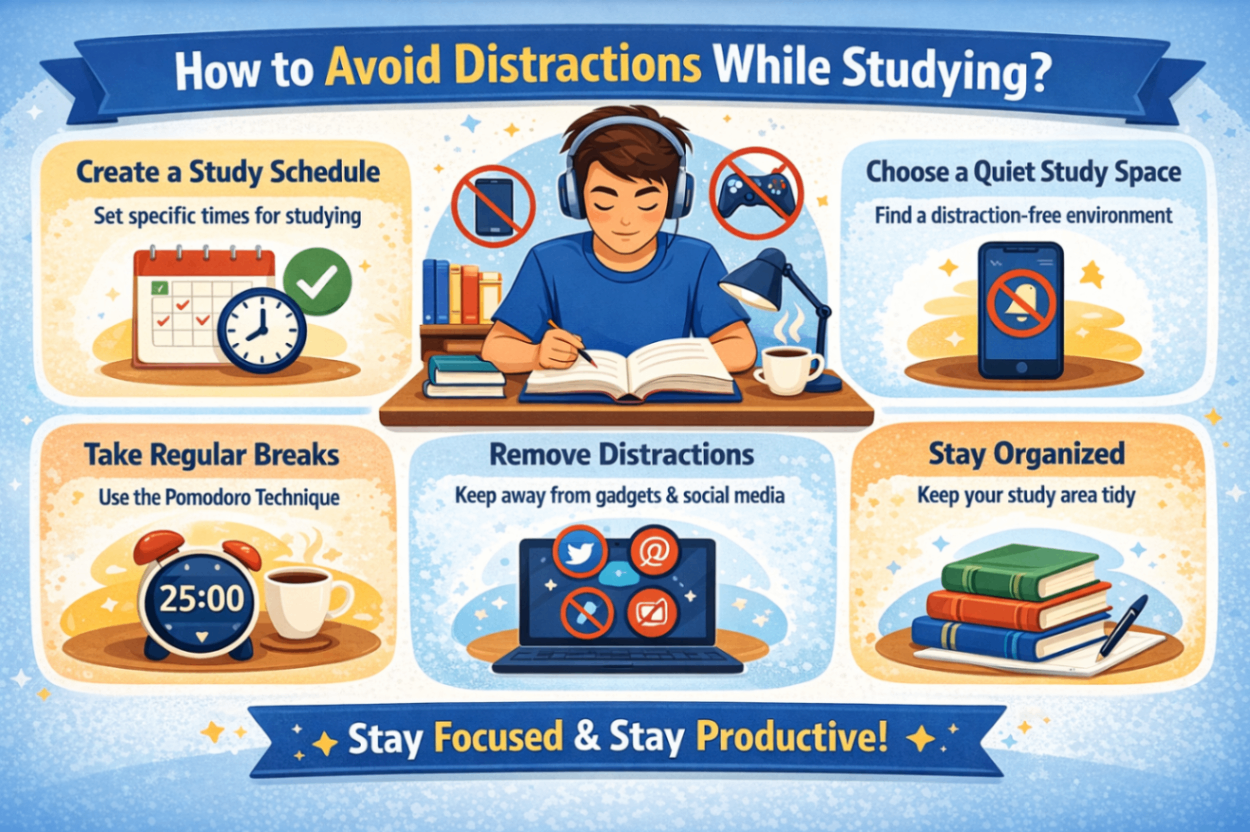
The Pomodoro technique and similar time-blocking methods create structured work intervals with built-in breaks that prevent burnout. Study intensely for twenty-five minutes, then take a five-minute break, repeating this cycle throughout your session. These defined periods create urgency that naturally resists distraction because you know a break is approaching soon. Adjust the intervals to match your personal attention span, as some students concentrate better in forty-minute blocks.
Set Clear Goals for Each Session
Studying without specific objectives invites aimless browsing through notes and easy distraction. Before each session, write down exactly what you plan to accomplish, such as completing specific practice problems or reviewing particular chapters. An AI Study Tool can help you organize material and work through concepts efficiently, keeping sessions goal-oriented and productive. This purpose-driven approach makes it easier to recognize and resist distractions because you know precisely what you should be doing.
Vary Your Study Methods Regularly
Using the same study technique for hours causes mental fatigue that opens the door to distraction. Switch between reading, note-taking, practice problems, and active recall throughout your session to keep your brain engaged. Changing study strategies every twenty to thirty minutes helps maintain focus and refreshes your attention. This variety keeps each phase of studying feeling purposeful rather than monotonous.
Plan Your Breaks Deliberately
Unplanned breaks often extend far beyond their intended duration and dissolve into full distractions. Schedule specific break times, decide in advance what you'll do during them, and set a timer to signal when the break ends. Effective breaks involve physical movement or hydration rather than diving into social media. Structured breaks recharge concentration without creating the momentum of distraction that unplanned pauses generate.
Build Long-Term Focus Habits
Sustainable concentration isn't about willpower in individual moments but about building habits that make focus your default state.
Prioritize Consistent Sleep
Sleep deprivation is one of the most overlooked causes of poor concentration and susceptibility to distraction. Your brain consolidates memories and restores cognitive resources during sleep, making adequate rest essential for studying. Aim for seven to nine hours of quality sleep consistently rather than alternating between late nights and catch-up sleeping. Well-rested students naturally resist distractions more effectively and retain information better.
Establish a Pre-Study Routine
A consistent sequence of actions before studying signals your brain that it's time to focus. This might include organizing your desk, reviewing goals, putting your phone away, and taking three deep breaths. The routine takes only minutes but creates a psychological transition from casual mode to focused study mode. Over weeks of practice, this trigger becomes automatic and significantly reduces the time needed to reach full concentration.
Train Your Attention Gradually
If you currently can't focus for more than ten minutes without checking your phone, that's your starting point rather than a permanent limitation. Gradually extend focused study intervals by adding five minutes each week as your concentration builds. This progressive approach respects current abilities while systematically expanding them. Just as physical fitness improves with consistent training, your attention span grows stronger with regular, increasing demands.
Avoid Cramming and Space Your Learning
Last-minute cramming creates stress that amplifies every distraction and produces shallow learning. Spacing study sessions across multiple days allows your brain to process and consolidate information between them. This distributed practice reduces pressure on any single session, making distractions less likely and focus easier. Students who study consistently in shorter sessions outperform those who cram, even when total study time is the same.
Conclusion
Mastering how to avoid distractions while studying requires addressing both your external environment and internal mental state. The strategies outlined here work together to create conditions where focused study becomes your default rather than a struggle. Start by implementing one or two changes that address your biggest distraction sources, then gradually add more techniques as those become habitual. Building concentration is a skill that strengthens with practice, not a fixed trait you either have or lack. With consistent application of these strategies, productive study sessions become increasingly natural and your academic results reflect that sustained attention.
Frequently Asked Questions
Why can't I focus even when I remove all distractions?
Internal distractions like stress, fatigue, hunger, or unresolved worries may be competing for your attention even in a quiet environment. Address physical needs first by eating, drinking water, and ensuring adequate sleep. If anxious thoughts persist, try writing them down before studying. Building concentration takes practice, so start with shorter focused intervals and gradually increase them.
How do I stop checking my phone every few minutes?
Physical separation is the most effective strategy for breaking the phone-checking habit. Place your phone in another room, in your bag, or give it to someone else during study periods. Combine this with do-not-disturb mode so retrieving it won't reveal a cascade of notifications. Scheduling specific phone-check times during planned breaks satisfies the urge without interrupting focus.
Is listening to music while studying a distraction?
It depends on the type of music and the individual student. Instrumental music, white noise, or ambient sounds often help block environmental distractions without competing for cognitive attention. Music with lyrics typically impairs concentration because your brain processes the words alongside study material. Experiment with different audio environments to discover what supports your personal focus.
How long should I study before taking a break?
Most students concentrate effectively for twenty-five to forty-five minutes before needing a brief five to ten minute break. Start with shorter intervals if your attention span is limited and gradually extend them. The Pomodoro technique's twenty-five minute intervals are a reliable starting point. Pay attention to your personal focus patterns and adjust timing accordingly.
Can social media be completely eliminated during study periods?
Complete elimination works for some students but creates anxiety for others who fear missing important messages. A more sustainable approach involves scheduling specific social media windows around study sessions. Use app timers or website blockers to enforce boundaries during study time, and reassure yourself that nothing urgent will happen during a focused block. Gradually, disconnecting becomes easier and studying becomes more productive.