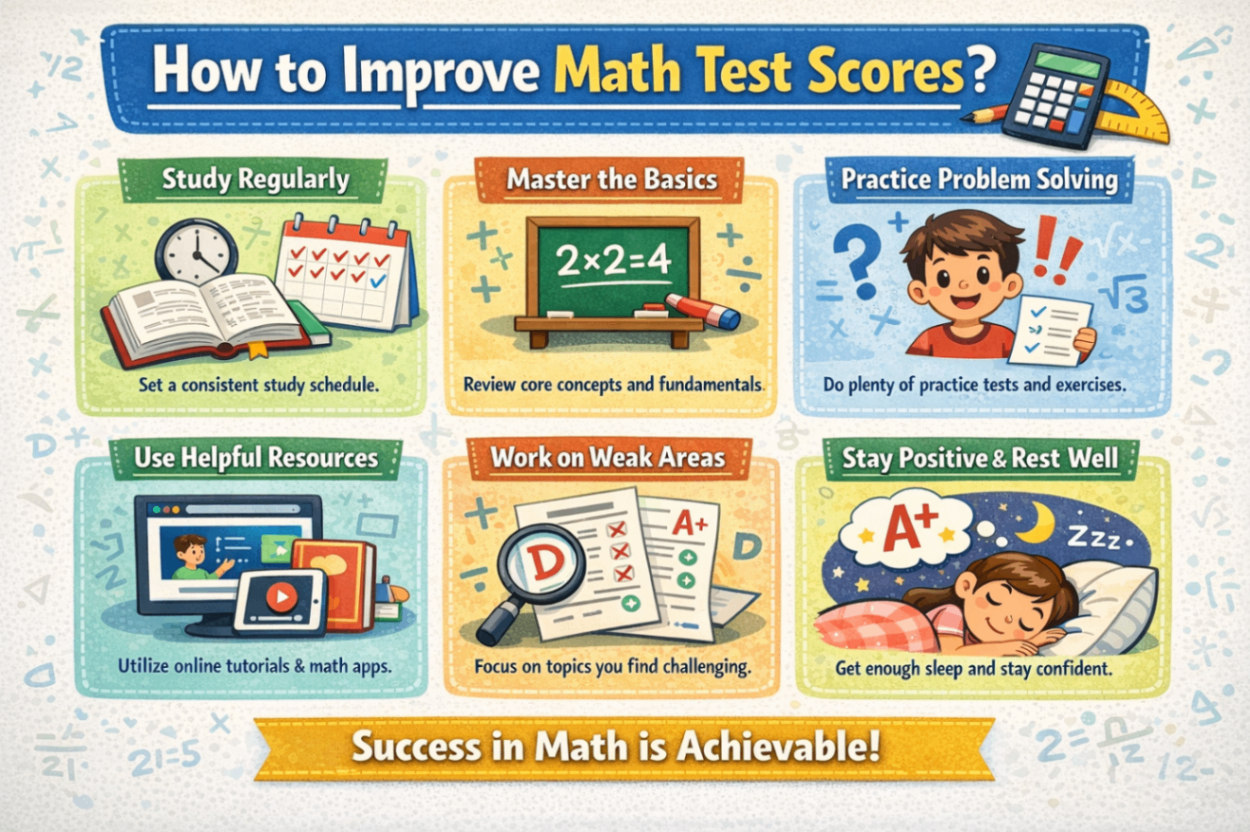
Many students understand math concepts during class but struggle to demonstrate that knowledge on tests. The gap between learning and performance frustrates students, parents, and teachers alike, leaving everyone wondering how to improve math test scores effectively. Research shows that better results require more than just extra practice problems or longer study sessions. Success comes from combining strong conceptual understanding with strategic study habits and effective test-taking techniques. This guide presents proven approaches that address each component of math achievement, helping you transform your understanding into consistently higher scores.
Build a Strong Conceptual Foundation
Surface-level memorization crumbles under test pressure, while deep understanding provides reliable support. Investing in genuine comprehension pays dividends across all your assessments.
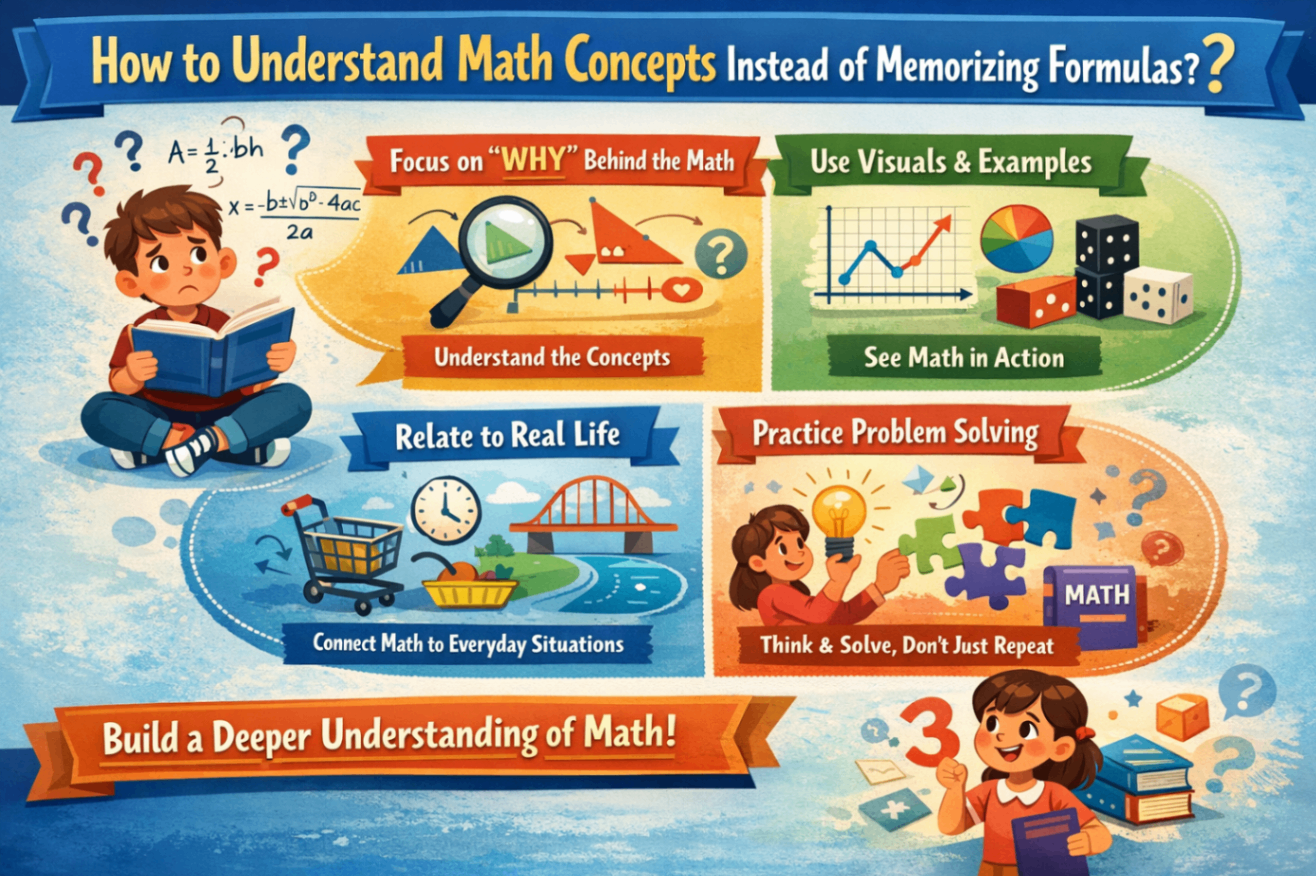
Understand the Why Behind Procedures
Memorizing steps without understanding their purpose leaves you vulnerable when problems appear in unfamiliar forms. Students who grasp why mathematical procedures work can adapt their approach when standard methods don't immediately apply. Understanding that multiplication represents repeated addition helps you tackle word problems requiring recognition of which operation applies. Focus on asking yourself why each step makes sense, not just what the next step is.
Use Visual and Hands-On Learning Tools
Abstract math concepts become clearer when you can see and manipulate them physically. Research confirms that manipulatives like blocks, fraction tiles, and geometric shapes improve understanding and reduce math anxiety in students across all grade levels. Drawing diagrams, creating charts, and building models engages different parts of your brain than purely symbolic work. Visual representations often reveal patterns and relationships that remain hidden in equations alone.
Connect Math to Real-World Applications
Mathematics becomes more meaningful and memorable when you see its relevance to everyday life. Problems involving money, measurements, time, or situations you actually encounter help cement abstract concepts in concrete understanding. When learning percentages, think about sales discounts or test scores rather than just numbers. These connections create multiple mental pathways to access information during tests, making recall more reliable under pressure.
Address Misconceptions Immediately
Small misunderstandings compound into major obstacles if left uncorrected over time. Common misconceptions like believing larger denominators mean larger fractions or thinking subtraction always yields smaller numbers can persist for years. Identify and correct these errors as soon as they appear through careful review of mistakes on homework and quizzes. An AI Math Solver can help you understand step-by-step solutions and identify where your reasoning went wrong, allowing you to correct misconceptions before they affect your test performance.
Develop Effective Study Habits
How you study matters as much as how long you study. Strategic preparation builds the skills and confidence needed for test success.
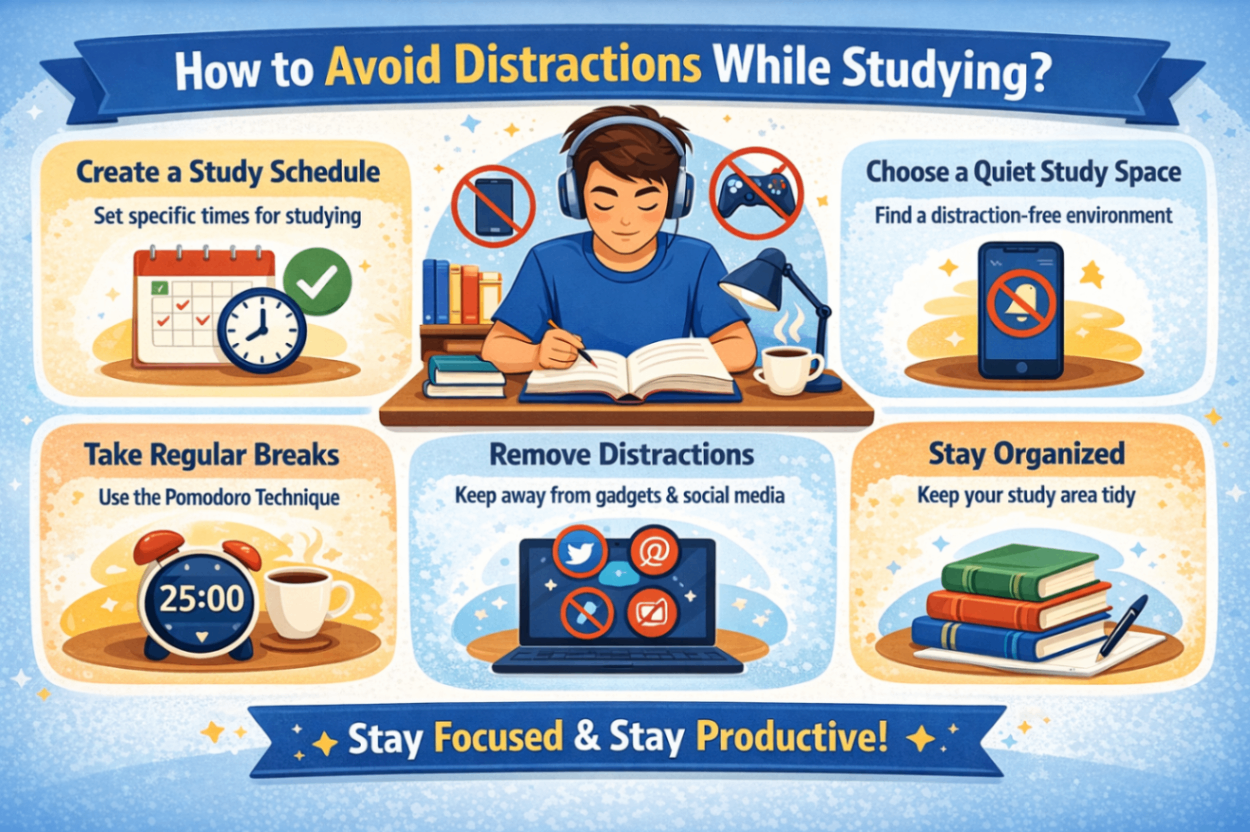
Create a Distraction-Free Study Environment
Your study space significantly impacts how effectively you absorb and retain information. Choose a quiet location with good lighting, gather all necessary materials before beginning, and remove phones or other distractions from reach. Consistent use of the same study space helps your brain shift into learning mode more quickly. Environmental cues become associated with focused work, making concentration easier over time.
Practice Problems Actively and Regularly
Reading through solved examples creates an illusion of understanding that disappears when you face problems independently. Active problem-solving, where you attempt solutions before checking answers, builds the skills tests actually assess. Space your practice across multiple sessions rather than cramming everything into one long session, as distributed practice improves long-term retention. Work through problems similar to those you'll encounter on tests, including word problems that require translating situations into mathematical operations.
Review Mistakes as Learning Opportunities
Your errors contain valuable information about gaps in your understanding or careless patterns to avoid. After completing practice problems, don't just note which ones you missed but analyze why you made each mistake. Did you misunderstand the concept, make a calculation error, or misread the question? Keep a record of common mistakes and review it before tests to prime yourself against repeating them.
Use Varied Resources and Approaches
Different explanations of the same concept often unlock understanding that a single approach cannot achieve. If your textbook explanation doesn't click, try video tutorials, practice apps, or study group discussions. Multiple perspectives on the same material create richer, more flexible understanding that transfers better to novel test questions. Educational technology offers personalized practice that adapts to your specific needs and learning pace.
Master Test-Taking Strategies
Knowing the material is necessary but not sufficient for optimal test performance. Strategic approaches help you demonstrate your knowledge effectively.
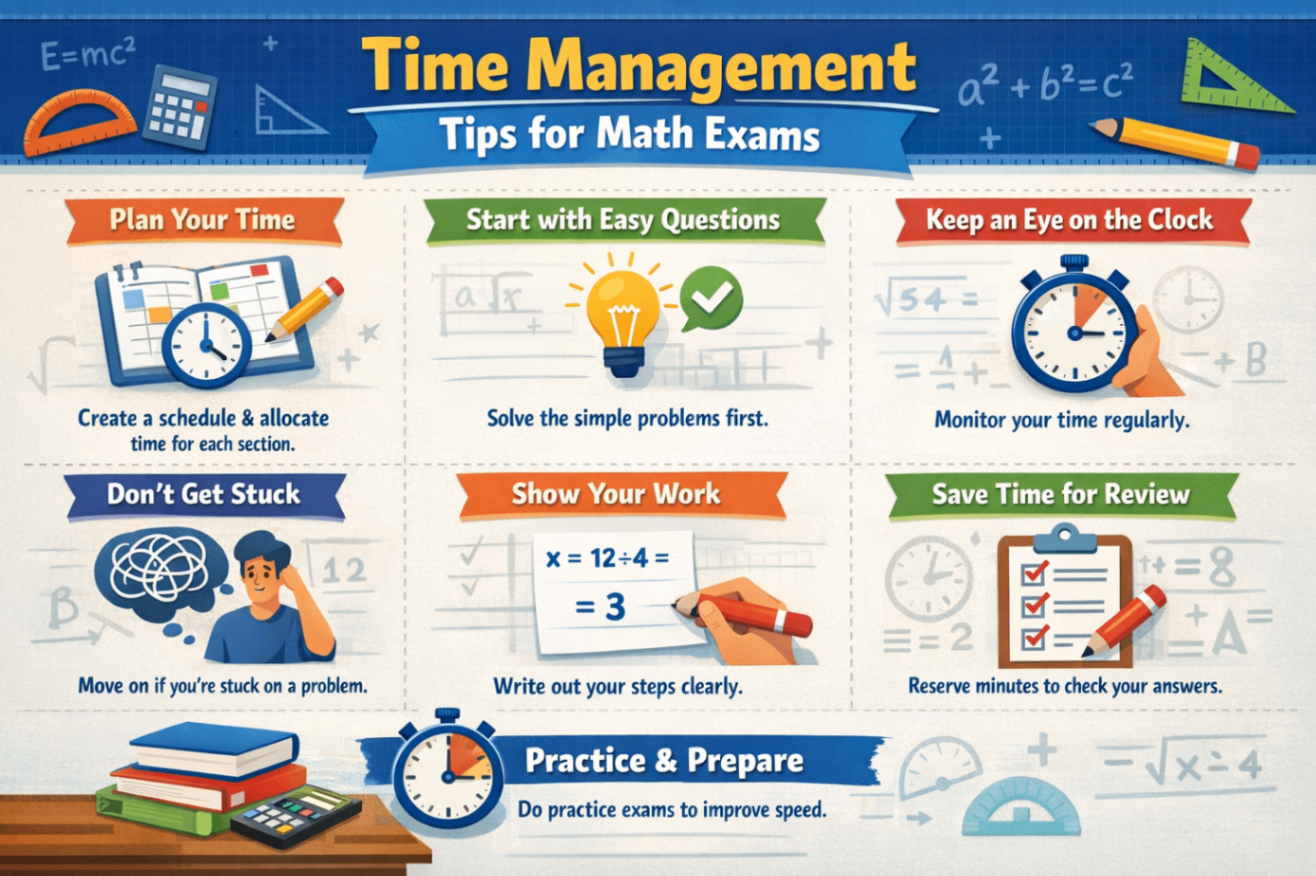
Manage Your Time Strategically
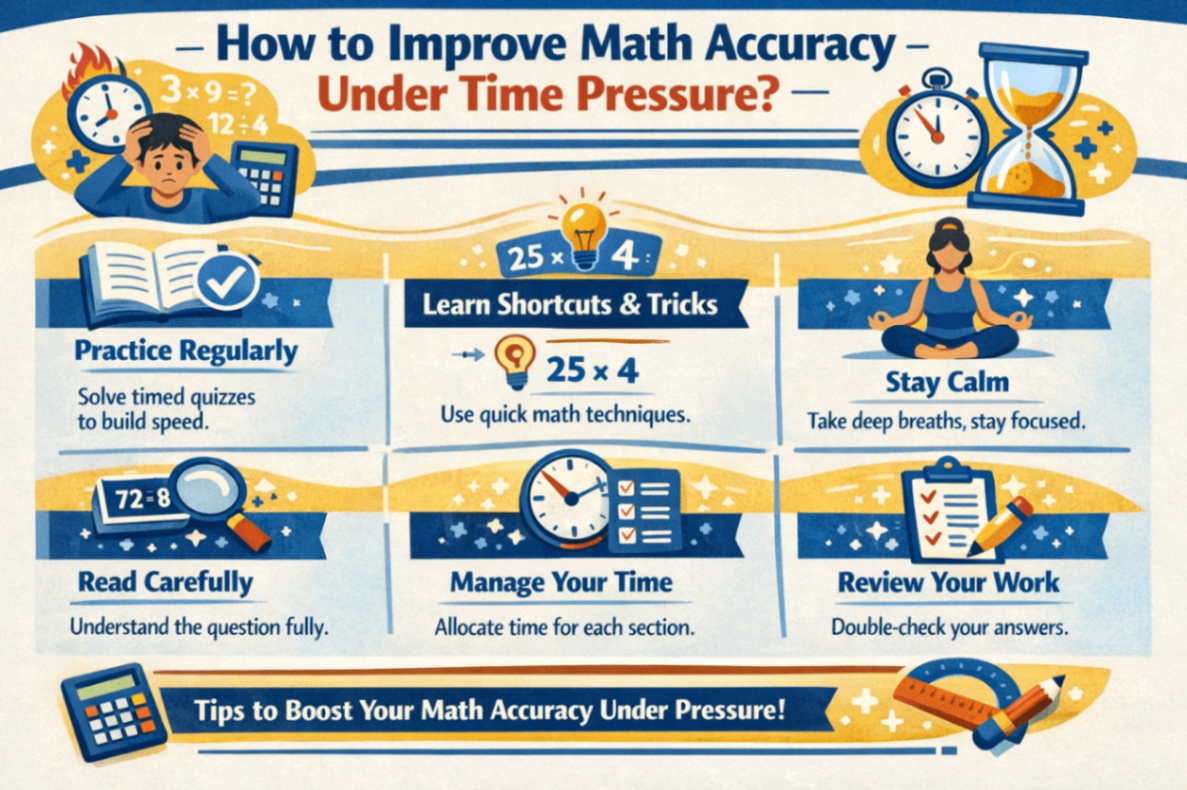
Poor time allocation leaves questions unanswered even when you knew the solutions. Before beginning, scan the entire test to assess question types and difficulty levels, then allocate time based on point values. A question worth five points deserves more time than one worth two points. For detailed guidance on pacing yourself through math assessments, check out these Time Management Tips for Math Exams that help ensure you complete every question.
Read Questions Carefully and Completely
Many test errors stem from answering a different question than the one asked. Read each problem fully before beginning to solve, identifying exactly what information is given and what you need to find. Underline key words and numbers to ensure you don't overlook important details. After solving, verify that your answer actually addresses what the question requested.
Show Your Work Systematically
Organized written work reduces errors and often earns partial credit even when final answers are incorrect. Write each step clearly and logically, making your reasoning visible to both yourself and the grader. This systematic approach helps you catch mistakes during the solving process and makes checking your work easier. Neat presentation also reduces the chance of copying errors between steps.
Use Strategic Guessing When Necessary
When stuck on multiple-choice questions, eliminate obviously wrong answers to improve your odds on educated guesses. Look for answers that don't make sense given the context or that result from common errors you can recognize. If time runs short, never leave questions blank when there's no penalty for wrong answers. Even partial reasoning about a problem often points toward the correct choice.
Overcome Math Anxiety and Build Confidence
Emotional factors significantly impact test performance regardless of actual mathematical ability. Managing anxiety unlocks your true potential.
Recognize and Normalize Math Anxiety
Many students experience stress, nervousness, or mental blocks specifically related to math tests, and this anxiety is both common and manageable. Simply knowing that these feelings are normal and don't reflect your actual abilities can reduce their power over you. Math anxiety often stems from past negative experiences or beliefs about being "bad at math" rather than genuine inability. Separating your emotional response from your mathematical capacity is the first step toward overcoming it.
Practice Relaxation Techniques
Physical relaxation helps calm the mental stress that interferes with clear thinking during tests. Deep breathing exercises, where you inhale slowly for four counts, hold briefly, and exhale for four counts, activate your body's calming response. Practice these techniques during study sessions so they become automatic tools you can deploy during actual tests. Brief relaxation breaks during the exam can reset your focus when anxiety builds.
Build Confidence Through Preparation
Confidence based on genuine preparation feels different from hollow positive thinking. When you've practiced thoroughly with problems similar to those you'll face, you approach the test knowing you've succeeded with this material before. Keep a record of your improvements to remind yourself of your capabilities when doubt arises. Adequate sleep and proper nutrition before tests support the physical and mental state needed for optimal performance.
Develop a Growth Mindset
Believing that mathematical ability can improve with effort fundamentally changes how you approach challenges and setbacks. Students with growth mindsets see difficult problems as opportunities to learn rather than proof of inadequacy. Mistakes become information for improvement rather than evidence of failure. This perspective transforms your relationship with math from a fixed judgment of your intelligence to an ongoing journey of skill development.
Establish Consistent Review and Assessment Practices
Continuous monitoring of your progress identifies problems early and reinforces learning over time.
Test Yourself Regularly
Self-testing reveals what you actually know versus what you think you know, exposing gaps while there's still time to address them. Quiz yourself on concepts before returning to your notes, as the effort of retrieval strengthens memory more than passive review. Use flashcards, practice tests, or simply covering your notes and trying to recall key information. Regular self-assessment builds the retrieval skills you'll need during actual tests.
Analyze Patterns Across Multiple Assessments
Looking at your performance across several tests reveals patterns that single test analysis might miss. Track which types of problems or topics consistently challenge you and prioritize those areas in your studying. Notice whether your mistakes tend to be conceptual, computational, or related to careless errors, then address the root causes. This data-driven approach to improvement targets your efforts where they'll have the greatest impact.
Seek Feedback and Support Proactively
Teachers, tutors, and study partners offer perspectives on your understanding that self-study cannot provide. Ask questions about concepts that confuse you rather than hoping confusion will resolve on its own. Review graded tests with your teacher to understand exactly why you lost points and how to improve. Building relationships with people who can support your learning creates resources you can draw on throughout your mathematical education.
Maintain Skills Between Test Periods
Mathematical skills decay without regular practice, making review essential even when no test is imminent. Briefly revisit previous topics periodically to keep them fresh for cumulative assessments. Spiral review, where you regularly cycle through earlier material while learning new concepts, prevents forgetting what you once knew. Consistent maintenance requires less total time than relearning forgotten material.
Conclusion
Learning how to improve math test scores requires attention to multiple interconnected factors, from building genuine understanding to managing test anxiety. The strategies presented here address each component of mathematical success, giving you a comprehensive toolkit for improvement. Remember that lasting improvement comes from consistent application of these methods over time rather than quick fixes before individual tests. Start by identifying which areas present your greatest opportunities for growth and focus your initial efforts there. With deliberate practice and strategic preparation, you can transform your relationship with math tests from a source of stress into an opportunity to demonstrate your growing capabilities.
Frequently Asked Questions
How long does it take to see improvement in math test scores?
Most students notice meaningful improvement within four to six weeks of consistent, strategic practice, though the timeline varies based on individual starting points and the time invested. Initial gains often come from eliminating careless errors and improving test-taking strategies, while deeper conceptual improvements take longer to develop. Focus on the process of improvement rather than expecting immediate dramatic results, and trust that consistent effort compounds over time.
Should I focus on my weakest topics or strengthen areas where I'm already good?
Balance both approaches, but prioritize weak areas that appear frequently on tests or serve as foundations for other topics. Strengthening weaknesses often yields larger score improvements since there's more room for growth, while maintaining strengths prevents regression. Identify which weak areas have the highest impact on your overall performance and allocate your study time accordingly.
Is it better to study alone or with a group for math?
Both approaches offer distinct advantages, and combining them typically works best. Individual study allows focused practice at your own pace, while group study exposes you to different problem-solving approaches and helps identify blind spots. Use solo time for practicing problems and group time for discussing concepts and explaining solutions to each other.
How many practice problems should I do before a test?
Quality matters more than quantity, so focus on working through problems thoughtfully rather than racing through high volumes. Aim to practice enough that you've encountered multiple examples of each problem type likely to appear on the test. If you're consistently solving problems correctly without difficulty, you're ready. If you're still making errors, continue practicing until patterns become automatic.
What should I do the night before a math test?
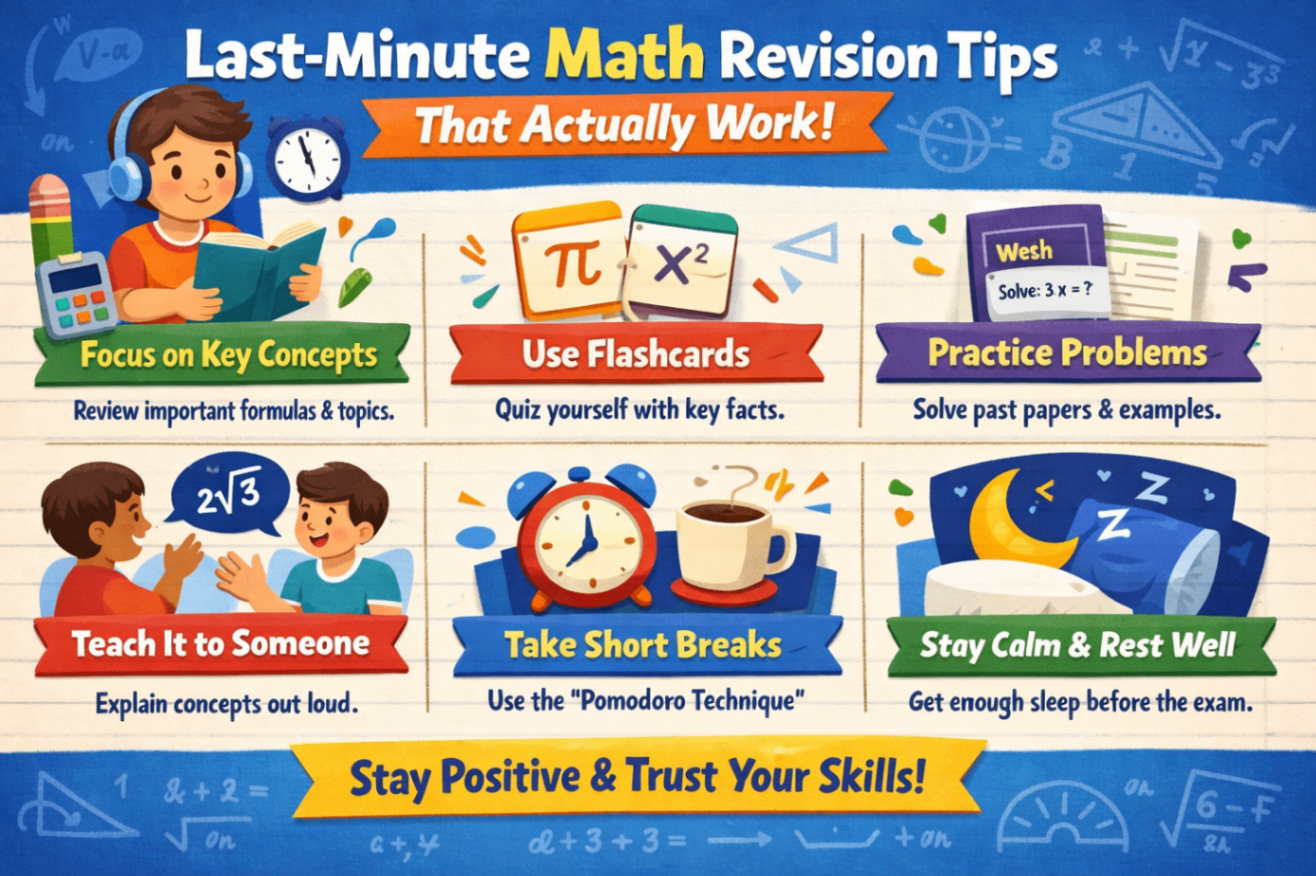
Avoid cramming new material the night before, as this creates stress without significant learning benefit. Instead, briefly review your formula sheet or summary notes, work through a few moderate practice problems to build confidence, and then prioritize getting adequate sleep. A rested brain performs significantly better than an exhausted one that studied an extra hour. Prepare your materials and plan your morning to reduce test-day stress.