Table of contents
- Understanding the Psychology of Homework Motivation
- Create an Optimal Study Environment
- Break Work Into Manageable Chunks
- Use Time Management Techniques
- Implement Reward Systems
- Establish Productive Routines and Habits
- Take Strategic Breaks
- Connect Homework to Meaningful Goals
- Seek Support and Accountability
- Maintain a Positive Mindset
- Conclusion
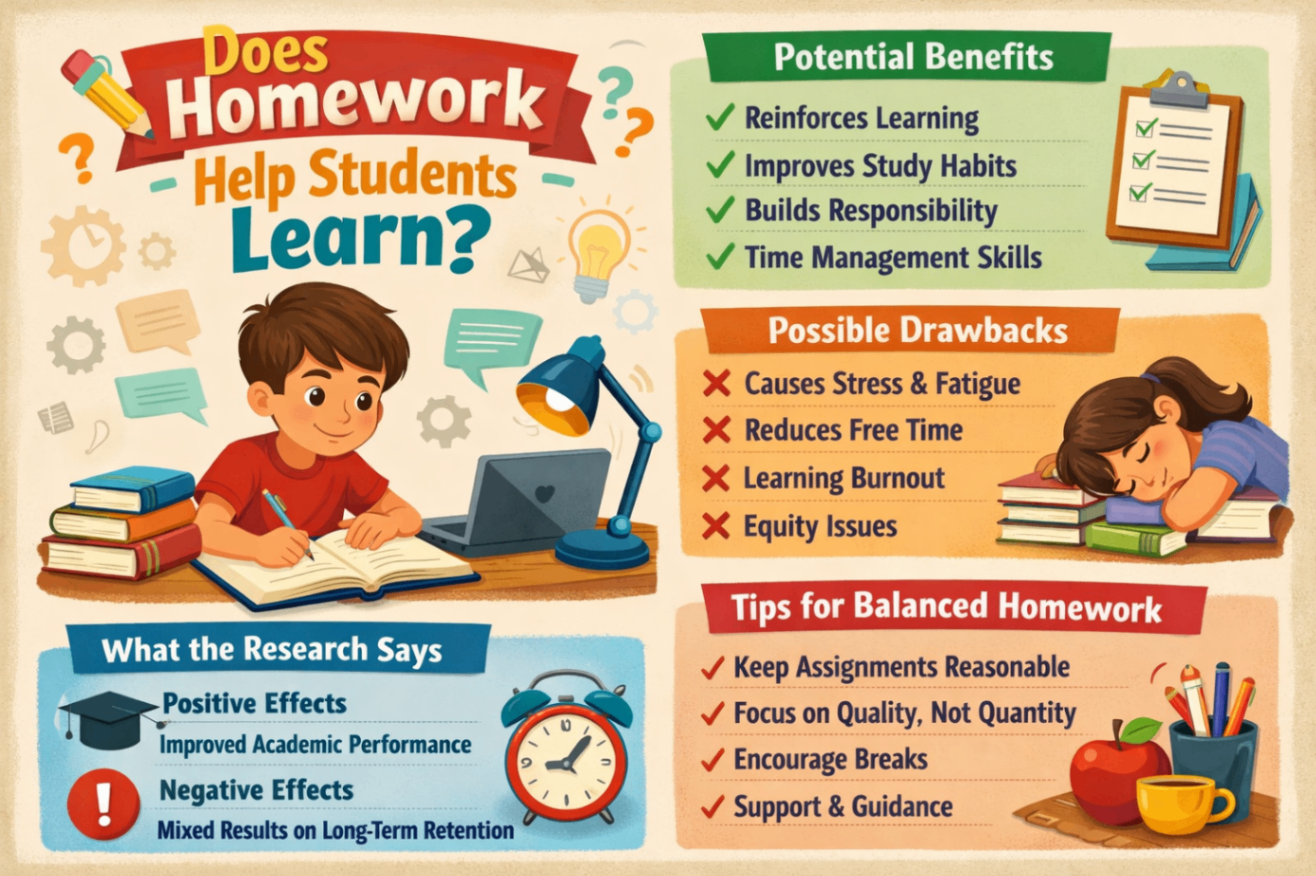
Staring at an unopened textbook while scrolling through social media, knowing you should start homework but feeling absolutely no desire to begin—this familiar struggle affects students at every level. The question of how to motivate yourself to do homework goes beyond simple willpower, touching on psychology, environment, habits, and understanding what truly drives human behavior. Whether facing a mountain of assignments, grappling with difficult subjects, or simply battling the temptation of more enjoyable activities, finding motivation for homework represents one of the most common academic challenges students encounter. The good news is that motivation isn't purely an inborn trait that some possess and others lack—it's a skill you can develop through specific strategies grounded in psychological research. Understanding how do you motivate yourself to do homework involves recognizing the difference between intrinsic motivation (internal drive from genuine interest) and extrinsic motivation (external rewards or consequences), then applying practical techniques that work with your brain's natural tendencies rather than against them. Understanding Does Homework Help Students Learn provides important context about homework's actual benefits, potentially increasing your intrinsic motivation by recognizing how assignments support long-term learning. This comprehensive guide presents proven ways to motivate yourself to do homework tips that address the root causes of procrastination while building sustainable habits for consistent academic success.
Understanding the Psychology of Homework Motivation
Before diving into specific strategies, understanding what motivation actually means and why it sometimes disappears helps you address the real problems rather than just fighting symptoms.
Intrinsic Versus Extrinsic Motivation
At its core, motivation refers to our internal willingness to engage in meaningful actions, with academic motivation specifically comprising the attitudes, values, and beliefs that encourage engagement with schoolwork. Motivation comes from two main sources: intrinsic motivation happens when you do something because you genuinely like it or find it interesting, such as reading about topics that fascinate you or solving puzzles for the challenge. Extrinsic motivation occurs when you're motivated by external rewards or to avoid adverse outcomes, like studying hard to get good grades for college admission. Research through self-determination theory shows people are most driven to learn when their psychological needs for autonomy (feeling in control), competence (feeling capable), and relatedness (feeling connected to meaningful goals) are fulfilled. Meeting these core needs helps nurture a lifelong love of learning rather than viewing education as mere obligation.
Why Homework Motivation Disappears
Students tend to lose interest and motivation for many reasons including feeling that they're not in a supportive environment, feeling that they're just going through the motions, or simply feeling burnt out from everything they're doing in their busy lives. Procrastination isn't just an issue of laziness or lack of motivation—it often stems from feeling overwhelmed by assignment size, not understanding where to start, fearing failure or imperfection, or simply finding work boring compared to available alternatives. The word procrastination comes from Latin words pro (forward) and crastinus (of tomorrow), literally meaning pushing something to tomorrow. Even Greek philosophers like Socrates and Aristotle were concerned about this problem, showing that homework avoidance represents a timeless human challenge rather than personal failing.
Create an Optimal Study Environment
Your physical environment dramatically affects motivation and productivity. Small changes to your surroundings can make homework feel significantly more manageable.
Designate a Specific Study Space
Creating the right environment is crucial for effective studying, with a distraction-free study area essential because it helps you focus and minimizes chances of your mind wandering. Choose a quiet location where interruptions are minimal, like a quiet corner in your room or a peaceful library. Interestingly, physical separation from relaxation areas helps signal your brain that it's time to get to work. When you study at the same time in the same place every day, it becomes automatic like brushing your teeth or eating breakfast. Your brain begins associating that space with focused work, making it easier to shift into productive mode. Avoid studying in bed or locations you associate with relaxation—these environmental cues undermine concentration by sending conflicting signals to your brain.
Optimize Your Study Space
Ensure good lighting to avoid straining your eyes, which helps you stay alert. Your study area should be well-lit, preferably with natural light when possible. Choose comfortable seating that supports good posture—uncomfortable positions create physical distractions that drain mental energy and motivation. Take a few minutes to tidy up before you start working, keeping your desk clear of unnecessary items and making sure you have all supplies you need within reach. A clean and organized workspace can do wonders for your productivity, as when your study area is cluttered, it can be distracting and overwhelming. A tidy space helps clear your mind, making it easier to focus on homework.
Remove Distractions Systematically
Social media, TV, and other distractions can steal your attention and motivation. Turn off notifications, put your phone on sleep mode or in another room, use apps to block distracting websites, and eliminate things that compete for your attention. These steps make focusing much easier since willpower alone rarely suffices when attractive alternatives are readily accessible. If you find yourself constantly checking devices or getting sidetracked, recognize these as symptoms of deeper motivation issues rather than simple discipline problems. Address root causes—perhaps assignments feel too difficult, you don't understand their purpose, or you're genuinely exhausted from overcommitment.
Break Work Into Manageable Chunks
Large assignments can feel overwhelming, triggering avoidance rather than action. Breaking work into smaller pieces makes starting feel less daunting while providing frequent accomplishment that sustains motivation.
Apply Chunking Strategies
Instead of tackling everything at once, break work into smaller, more manageable steps. For example, if you have to write an essay, start by brainstorming ideas, then outline key points, and finally write one section at a time. Similarly, if studying for a test, divide material into sections and focus on one topic per session. For a history report, you could break it down into steps like research three sources, create outline, write introduction, write body paragraphs, write conclusion, and edit final draft. Focus on just one step at a time—this way you won't need to motivate yourself to write the whole report at one go. By completing small steps, you maintain a sense of progress and avoid feeling stuck.
Set Clear, Specific Goals
Setting clear and measurable goals for your homework can make a big difference in how motivated and focused you feel. Start by being specific with your goals—instead of a vague aim like "work on history," set a precise goal like "read and summarize one chapter of the history textbook tonight." This clarity makes your task more manageable and less daunting. Breaking down larger projects into smaller parts makes them seem less overwhelming. If you have a big project, plan to complete just one section at a time. Each small goal you meet builds your confidence and motivates you to tackle the next, transforming what seemed like a colossal task into a series of manageable steps.
Use Time Management Techniques
Structured approaches to time help you work efficiently while preventing burnout that destroys motivation.
The Pomodoro Technique
Study for 25 minutes with complete focus, then take a 5-minute break. This technique maximizes efficiency with structured study methods, maintaining high concentration during work intervals while preventing mental fatigue through regular breaks. After completing four 25-minute sessions, take a longer 15-20 minute break. This rhythm works with your brain's natural attention patterns rather than demanding sustained focus for hours. The frequent breaks act as the charger, replenishing your mental reserves, making assignments more sustainable rather than representing exercises in willpower endurance.
Time Blocking
Allocate specific time slots for homework in your daily schedule. When you study at the same time every day, it becomes automatic, transforming homework from activity requiring motivation into established routine. Set small goals like committing to studying for 15 minutes at a specific time each day, building consistency that becomes self-reinforcing.
The Two-Minute Rule
If a task takes less than two minutes, do it immediately rather than adding it to your list. This prevents small tasks from accumulating into overwhelming backlogs while building momentum that carries over to larger assignments.
Implement Reward Systems
Linking homework completion to rewards leverages extrinsic motivation effectively, making the process feel more like a game than a burden.
Create Immediate Rewards
For example, tell yourself that after completing your homework, you'll watch an episode of your favorite show or enjoy a snack. Rewards help you stay motivated because they give you something to look forward to. Make sure the reward matches the effort—finishing one math problem might earn you a five-minute break, while completing an entire assignment could mean a bigger reward like game night with friends. Depending on how big or long the assignment is, give yourself a reward that you think best fits. For example, if you have a 6-page report to write, give yourself 30 minutes to do whatever you want after each page you finish. These planned rewards are a great way to motivate yourself, with incentives turning the procedure into something enjoyable rather than pure obligation.
Avoid Reward Sabotage
Don't let the reward become a distraction. Stick to the plan—no Netflix until the homework is done. Precommitment helps here: decide on your reward before starting, make it genuinely appealing, then protect your work time from reward intrusion until you've earned it.
Establish Productive Routines and Habits
Motivation can come and go, but habits stick. Building routines reduces your reliance on fleeting motivation while making homework completion more automatic.
Build Consistency Through Routine
Consistency is key—when you study at the same time every day, it becomes automatic like brushing your teeth or eating breakfast. Set small goals like committing to studying for 15 minutes at a specific time each day. This consistency transforms homework from sporadic battle into a predictable routine requiring less mental energy to initiate. Start with incredibly small commitments that feel almost too easy—even just five minutes daily. Once the habit forms, gradually increase duration. The key is establishing the pattern rather than achieving specific productivity levels initially.
Find Your Peak Productivity Time
Some students work best in the late afternoon, others concentrate better in the morning. Identify when your energy and focus naturally peak, then schedule difficult homework during these windows. Save easier, more mechanical tasks for lower-energy periods.
Take Strategic Breaks
Breaks aren't procrastination when planned intentionally—they're essential tools for maintaining focus and preventing burnout that destroys motivation.
The Importance of Rest
Taking breaks may not seem like it would help with homework, but it can actually make the process less daunting and more productive. Allowing yourself a few minutes to step away from work gives you time to clear your head and come back with fresh ideas. You'll also be less likely to make mistakes when taking regular breaks. Picture your brilliant mind as a battery—continuous work drains your brain of energy needed for motivation. Breaks act as the charger, replenishing your mental reserves. Step away, stretch, take a walk, or indulge in a quick hobby. Spend some time relaxing, and you'll find renewed focus and energy as you return.
Balance Work and Wellbeing
Students need to get enough exercise, and getting exercise can improve cognitive function, which might be hindered by sedentary activities such as homework. Physical activity, adequate sleep, proper nutrition, and social interaction aren't luxuries competing with homework—they're necessities that enable the focus and energy homework requires. When tools like AI Homework Helper can clarify confusing concepts quickly, you preserve mental energy for actual learning rather than spinning your wheels on comprehension struggles that breed frustration and destroy motivation.
Connect Homework to Meaningful Goals
Understanding why assignments matter increases intrinsic motivation by making work feel purposeful rather than arbitrary.
Link to Long-Term Aspirations
Understanding why you're pursuing your studies is essential, as it links your schoolwork to your bigger life goals, making daily tasks feel more valuable. For example, if you know that doing well in math can help you land a dream job in engineering, you're likely to find math homework more engaging. You can motivate yourself to complete your homework by thinking about how your accomplishment will positively benefit your future. Think along lines of: "If I stop procrastinating on this homework assignment and finish it now, I'll get a better grade in class. If I get better grades, my overall GPA will be higher, and I will look better on my college applications."
Remember the Bigger Picture
Homework isn't just about getting good grades—it's building skills that will serve you in the future including time management, discipline, and critical thinking. Every assignment represents an opportunity to prepare for your dreams and develop capabilities that extend far beyond specific subject matter.
Seek Support and Accountability
You don't have to face homework challenges alone—leveraging support from others provides encouragement and accountability that multiply motivation.
Study Groups and Partners
Teaming up with a classmate can make homework less isolating and more enjoyable. You can encourage each other, compare notes, and clarify doubts together. Studying with friends who are equally driven creates a supportive environment that fuels motivation, with collective energy of a group with common purpose being contagious. However, make sure your time together is productive and not just social. If your group doesn't create a focused and concrete plan for the study session beforehand, you may end up procrastinating more than studying. Set clear agendas and time limits to maximize productivity.
Accountability Systems
When you tell others about tasks you intend to finish, you'll be more likely to follow through with your plans through a principle called accountability—you want to be seen as someone who keeps your word. You could even ask a friend to be your accountability buddy, texting each other at the beginning of each day about what you plan to work on.
Ask for Help When Stuck
Struggling with homework is tough, but you don't have to do it alone. Whenever you're stuck, don't be afraid to ask for assistance from teachers, family, friends, or school counselors. Seeking help when you need it isn't a sign of weakness but of strength—it shows you're willing to do whatever it takes to succeed.
Maintain a Positive Mindset
Your attitude toward homework significantly affects your ability to find motivation and sustain effort through challenges.
Reframe Your Perspective
The key is to approach homework with a positive attitude rather than seeing it as a burden. The type of attitude you have in the morning will affect the rest of your day more than you think—having a morning routine that keeps your mind at peace and positive gives you motivation throughout the day. Find a show or movie that makes you want to conquer the world, preferably featuring a character doing something you want to do. For example, if you want motivation to be an academic success, watch a show following a student who strives for excellence, which then inspires you to be the same.
Practice Self-Compassion
Be kind to yourself—it's okay to struggle with motivation. Acknowledge it, relax, and move forward. Take breaks when needed, and don't beat yourself up for procrastinating. What matters most is that you keep trying and gradually build better habits.
Conclusion
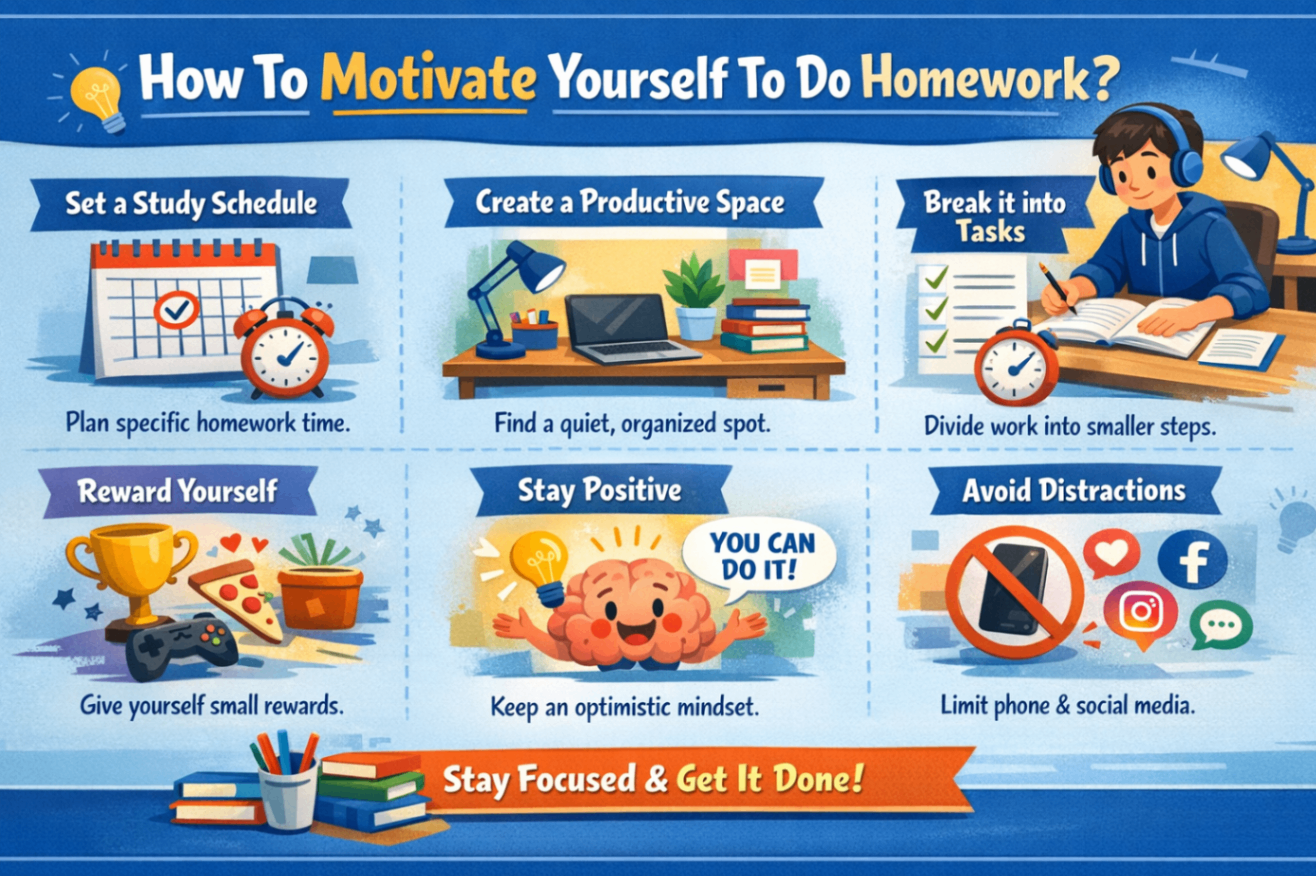
Understanding how to motivate yourself to do your homework involves recognizing that motivation stems from both internal and external sources, then strategically applying techniques that work with your brain's natural tendencies. When you study at the same time every day in a designated space free from distractions, it becomes automatic, while breaking large assignments into smaller, manageable steps makes starting feel less daunting and provides frequent accomplishments that sustain momentum. How do you motivate yourself to do homework when facing particularly difficult subjects or overwhelming workloads? Through structured approaches like the Pomodoro Technique for focused work intervals, reward systems that give you something to look forward to, and connecting assignments to meaningful long-term goals that make daily work feel purposeful rather than arbitrary. Remember the essential how to motivate yourself to do homework tips: create optimal study environments, establish productive routines that reduce reliance on fleeting motivation, take strategic breaks that recharge rather than derail, seek support from study groups and accountability partners, and maintain positive attitudes by being kind to yourself when struggling. Rather than seeing homework as a burden, students must learn to ignite intrinsic drive to learn for learning's sake, understanding that homework builds essential skills including time management, discipline, and problem-solving that serve you far beyond specific assignments. With the right mindset and techniques, motivation need not be elusive but can become a wellspring you call upon at will, transforming homework from dreaded chore into manageable part of your routine that supports your long-term academic and personal success.
Frequently Asked Questions
What do I do when I have absolutely no motivation to do homework?
Start with the smallest possible step—don't try to motivate yourself to complete entire assignments, but rather just take out your materials and sit in your study space. It doesn't require much willpower to put homework on your desk, but once it's there, you'll be much closer to actually starting. Set a timer for just 5 minutes of work with permission to stop afterward. Often, starting is the hardest part, and once you begin, continuing feels easier. If you still can't start, examine why—perhaps the assignment feels too hard (get help), you don't understand its purpose (ask your teacher), or you're genuinely exhausted (rest first).
How can I make boring homework more motivating?
Connect boring assignments to larger goals that matter to you—understanding why you're doing work makes it feel more purposeful. Break monotonous tasks into short intervals with rewards after each segment. Change your environment or study with friends to make the experience more pleasant. Use the Pomodoro Technique with 25-minute work periods followed by 5-minute breaks doing something you enjoy. Create challenges or competitions with yourself, like timing how fast you can complete sections accurately. Listen to background music if it helps rather than hinders. Remember that developing discipline to complete unenjoyable necessary tasks represents valuable life skills beyond the specific assignment.
Should I use my phone as a reward for doing homework?
Phone rewards can be effective if used strategically, but they're double-edged swords since phones provide such compelling distractions. If using your phone as a reward, be very specific about when and for how long—for example, 10 minutes of social media after completing 30 minutes of focused work. Keep your phone in another room during work periods to avoid temptation. Consider using apps that lock your phone for set periods or reward you for staying off it. Better yet, use rewards that don't involve screens, like physical activity, snacks, or social interaction, which provide mental breaks without the addictive pull of digital content that makes returning to work difficult.
How do I motivate myself when I don't understand the homework?
Lack of understanding is a major motivation killer. First, acknowledge that struggling doesn't mean you're incapable—it means you need different approaches or additional support. Break the confusing material into smaller pieces and tackle them individually. Use multiple resources—if your textbook isn't clear, try online videos, different explanations, or study guides. Ask for help from teachers, tutors, or classmates who understand the material. Sometimes explaining where you're confused to someone else helps clarify your thinking. Use tools strategically—AI homework helpers can provide step-by-step explanations when you're stuck, but ensure you're learning concepts rather than just getting answers.
How can I build long-term homework motivation instead of just relying on last-minute panic?
Develop intrinsic motivation by connecting schoolwork to personal interests and long-term goals that genuinely matter to you. Establish consistent routines where homework happens at the same time and place daily, reducing reliance on moment-to-moment motivation. Build habits through small, manageable commitments that gradually increase. Track progress visually through charts or apps to see improvement over time. Create accountability through study partners or sharing goals with others. Reward consistent effort rather than just final outcomes. Most importantly, address root causes of procrastination—if assignments consistently feel overwhelming, you may need to improve time management, seek additional academic support, or discuss workload with teachers. Sustainable motivation comes from feeling capable, autonomous, and connected to meaningful purposes rather than operating purely on fear of consequences.