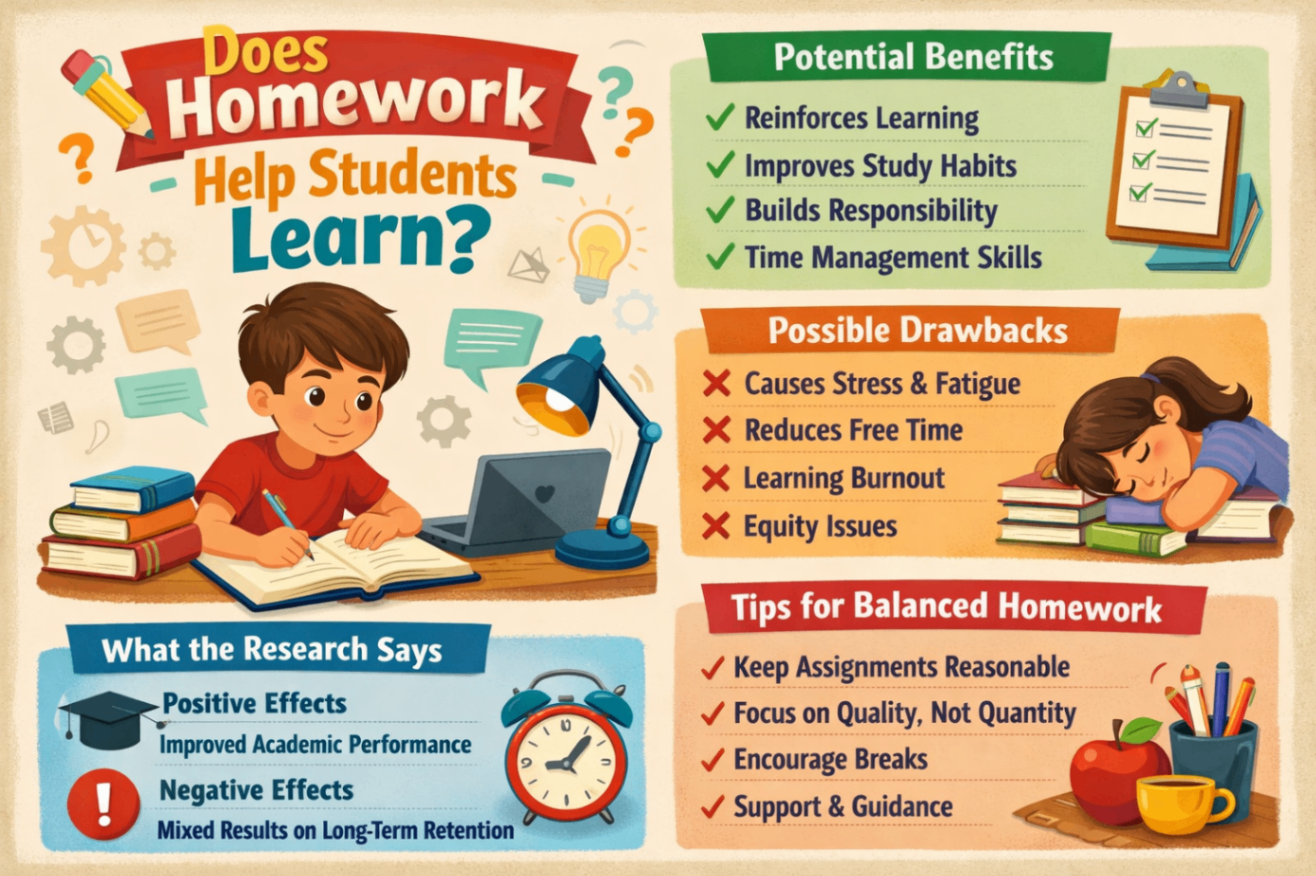
The homework debate continues to spark passionate discussions among educators, parents, and students as schools reassess traditional approaches to at-home assignments. Does homework actually help students learn, or does it merely create unnecessary stress while consuming valuable time that children could spend on other developmental activities? This question matters profoundly as educational systems worldwide grapple with balancing academic rigor against student wellbeing, particularly in an era where mental health concerns and workload stress affect learners at unprecedented rates. Research reveals a nuanced answer rather than a simple yes or no—homework's effectiveness depends dramatically on grade level, assignment quality, duration, frequency, and how assignments are designed and implemented. While studies show that homework does help students learn when designed thoughtfully and assigned appropriately, excessive or poorly constructed assignments can actually undermine learning while creating significant stress. Understanding why does homework help students learn in some contexts while hindering progress in others enables educators, parents, and students to approach homework strategically, maximizing benefits while minimizing drawbacks that affect motivation and mental health.
What Research Says About Homework and Learning
Scientific studies examining homework's impact on student achievement reveal complex relationships between assignments and academic outcomes that vary significantly across grade levels and contexts.
The Grade-Level Effect
Research indicates the academic impact of homework for students in grades 1-4 is limited with a small effect size, but it grows steadily through upper elementary school and into high school, rising by 95 percent for grades 5-8 and 129 percent for grades 9-12 respectively. This progressive increase reflects students' maturing ability to work independently and tackle more sophisticated assignments as their skills improve. Research shows that homework is especially valuable for academic gains in middle and high school students, while the homework research on elementary school students is more mixed. For younger children, play and exploratory activities often contribute more to development than structured homework, suggesting that assignment approaches should differ dramatically across age groups.
Frequency Versus Duration
A recent study highlights that the frequency of homework is more important than its duration, with daily homework assignments most effective for improving mathematics achievement, while science performance benefited most from homework assigned three to four times a week. This finding challenges assumptions that longer assignments produce better results, instead suggesting that regular, shorter tasks optimize learning. Short-duration homework tasks lasting up to 15 minutes were shown to be just as effective as longer assignments, suggesting that regular, concise homework can promote learning without overwhelming students with excessive work. Quality clearly trumps quantity when designing effective homework that reinforces learning without creating unnecessary burden.
Academic Achievement Correlations
Research by the Institute for the Study of Labor concluded that increased homework led to better grade point averages and higher probability of college attendance for high-school boys, with boys who attended college doing more than three hours of additional homework per week in high school compared to boys who didn't attend college. These correlations demonstrate homework's connection to academic success at higher grade levels. However, correlation doesn't automatically prove causation—students committed to college attendance might naturally complete more homework, or homework might actually develop skills and knowledge that improve college readiness. The relationship likely flows in both directions, with motivated students completing more assignments while assignments themselves build capabilities supporting success.
How Does Homework Help Students Learn
Understanding the mechanisms through which homework supports learning clarifies when and why assignments prove effective versus when they waste time or create frustration.
Reinforcement and Practice
Students typically retain only 50 percent of the information teachers provide in class, and they need to apply that information in order to truly learn it, with at-home assignments helping students learn the material taught in class. Homework provides essential opportunities to practice skills and review concepts beyond initial classroom exposure, moving information from short-term to long-term memory through repeated engagement. Practice assignments work particularly well for subjects requiring procedural fluency like mathematics, where drilling multiplication tables or solving equations repeatedly builds automaticity. Math is a ladder of skills, and you can't do the harder math like fractions and decimals if you don't have your multiplication tables memorized, illustrating how fundamental practice through homework enables more advanced learning.
Developing Self-Regulation Skills
Beyond academic content, homework builds executive function capabilities including time management, organization, self-discipline, and personal responsibility. Students learn to track assignments, allocate time across subjects, resist distractions, and complete work without immediate supervision—all skills essential for college and career success. The process of managing homework deadlines and balancing multiple assignments develops organizational abilities and planning skills that extend far beyond academics. These metacognitive capabilities often matter as much as content knowledge for long-term success across life domains.
Encouraging Independent Thinking
Homework is one way that students can learn to work independently and develop self-discipline and problem-solving abilities, challenging them to find solutions without immediate guidance from teachers. This independence prepares students for higher education where professors expect autonomous learning and professional contexts where initiative and self-direction determine outcomes. Struggling productively with challenging problems—experiencing confusion, trying different approaches, persisting through difficulty—builds resilience and confidence that students can overcome intellectual obstacles independently. This psychological benefit of homework often proves as valuable as the content reinforcement itself.
Creating Home-School Connections
Research from Johns Hopkins University found that an interactive homework process known as TIPS (Teachers Involve Parents in Schoolwork) improves student achievement, with students in the TIPS group earning significantly higher report card grades after 18 weeks than non-TIPS students. When homework engages families meaningfully, it strengthens learning while building home-school partnerships. Teachers set up homework assignments so that the student is in charge—it's always the student's homework—but a good activity can engage parents in a fun, collaborative way, with data showing that more kids finish their work, more kids interact with a family partner, and more parents say they learned what's happening in the curriculum. This collaborative learning benefits children while keeping parents informed about academic progress.
Why Homework Quality Matters More Than Quantity
Not all homework produces equal learning benefits—assignment design fundamentally determines whether homework helps or hinders student development.
Well-Designed Versus Busywork Assignments
Homework assignments like problem-solving, essay writing, or research help to improve performance on tests by guaranteeing students have enough exposure to the content. Effective homework targets specific learning objectives, provides appropriate challenge levels, and connects to classroom instruction in meaningful ways. Conversely, homework that simply keeps students busy without clear learning purposes wastes time and creates resentment. Repetitive worksheets, copying definitions, or assignments that don't align with instructional goals fail to produce learning benefits while consuming hours that students could spend on more productive activities.
The 10-Minute Rule
Most teachers of young children make assignments very short, often following an informal rule of 10 minutes per grade level. This guideline suggests first-graders receive approximately 10 minutes of homework, fourth-graders about 40 minutes, and high schoolers roughly two hours nightly. Research indicates homework should be limited to 1.5 to 2.5 hours per night for high school students and less than an hour per night for middle school students. Beyond these durations, diminishing returns set in as fatigue undermines learning and excessive workload creates stress that interferes with retention and motivation.
Meaningful Practice Versus Rote Repetition
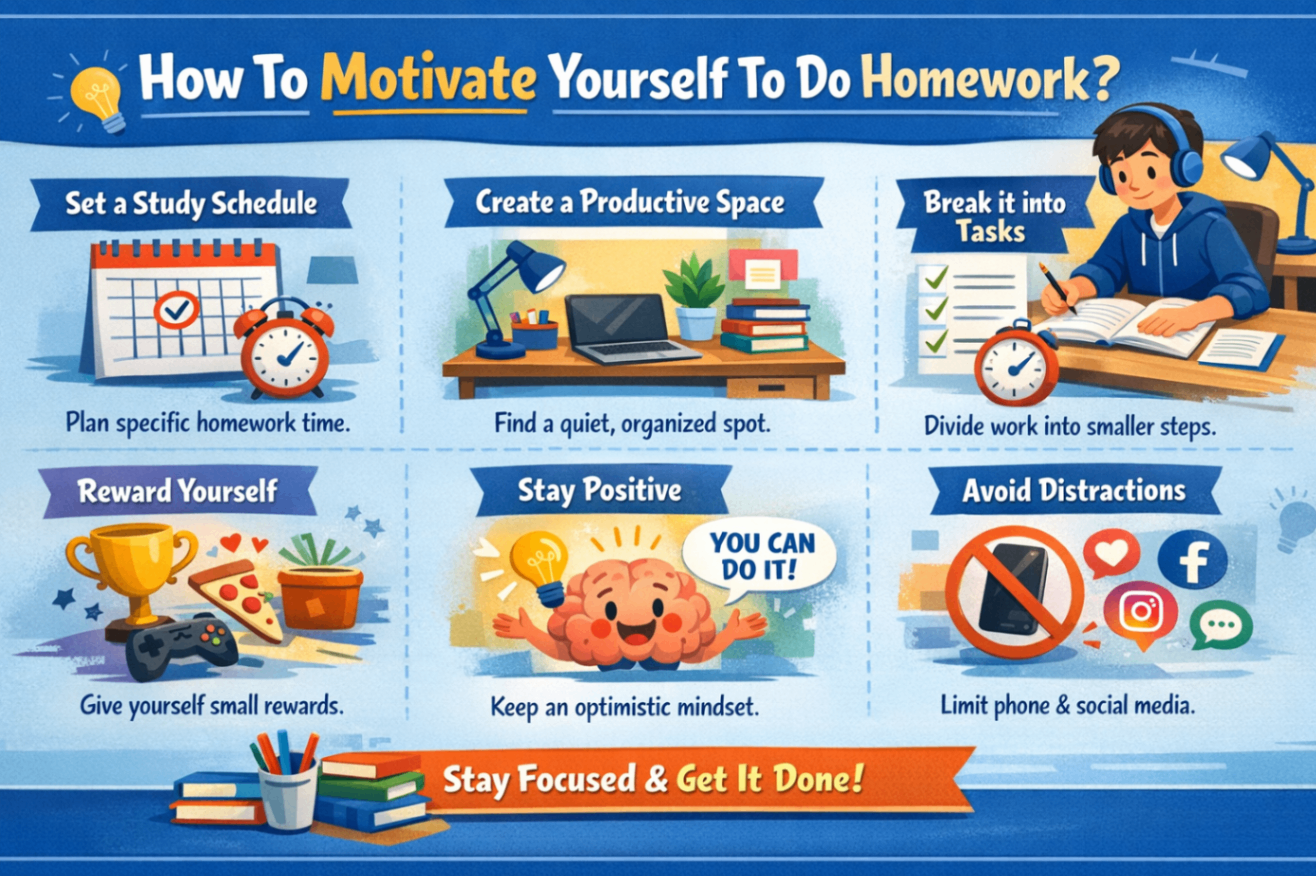
If more families understood homework as meaningful practice, they might be more inclined to make time for it in the evenings. Assignments that require thinking, application, creativity, or problem-solving engage students more effectively than mechanical repetition that can be completed mindlessly. For students struggling with motivation, understanding How To Motivate Yourself To Do Homework can help transform homework from dreaded obligation into manageable tasks by applying psychological strategies that build engagement.
The Dark Side: When Homework Hurts Learning
While homework can support learning under optimal conditions, excessive or poorly designed assignments create significant problems that undermine the educational benefits homework should provide.
Stress and Mental Health Impacts
In a 2025 Challenge Success survey of more than 28,000 students, homework and overall workload ranked as one of the top sources of stress for middle and high school students, surpassing time management issues, sleep, or even worries about their future. This stress burden creates anxiety that interferes with learning while damaging student wellbeing. Some adolescents often sacrifice sleep to meet homework demands, resulting in anxiety and depression. Sleep deprivation undermines cognitive function, memory consolidation, and emotional regulation—ironically making students less able to learn from the homework they're losing sleep to complete.
Inequitable Access and the Homework Gap
Not every student has equal access to a quiet study area, internet access, or instructional resources, with students from underprivileged families finding it difficult to finish homework, resulting in unjustified variations in academic achievement. This digital divide means homework exacerbates rather than reduces educational inequities. Students lacking internet connectivity, computers, or quiet spaces face disadvantages through no fault of their own. Parents working multiple jobs or lacking English proficiency can't provide homework assistance that advantaged families offer, creating unequal playing fields where academic outcomes reflect home resources rather than student ability or effort.
Reduced Time for Other Essential Activities
Excessive homework crowds out time for activities equally important for development—unstructured play, physical exercise, creative pursuits, family interaction, and adequate sleep. Students need to get enough exercise, and getting exercise can improve cognitive function, which might be hindered by sedentary activities such as homework. The opportunity cost of homework includes foregone experiences that build social skills, creativity, physical health, and emotional wellbeing. When homework monopolizes after-school hours, students miss developmental opportunities that contribute as much to long-term success as academic content mastery.
Cheating and Superficial Engagement
Students now have simple access to internet solutions, essay-writing services, and artificial intelligence capabilities, facilitating copying responses instead of interacting with the learning process. Technology makes homework completion possible without genuine engagement, undermining the practice and thinking that homework should promote. When students feel overwhelmed or perceive assignments as pointless, they resort to shortcuts that defeat homework's purpose. For challenging assignments, tools like AI Homework Solver should support understanding rather than replace thinking, helping students grasp concepts rather than simply obtaining answers.
Modern Alternatives and Homework Innovations
By 2025, education is changing to fit several learning environments and technological developments, with many institutions using alternate strategies to replace or augment conventional homework. These innovations attempt to preserve homework's benefits while addressing its drawbacks.
Project-Based Learning
Teachers inspire students to create long-term projects spanning several disciplines rather than offering standard homework, promoting critical thinking, creativity, and teamwork while making learning more interesting. Projects allow students to explore topics deeply, apply knowledge across subjects, and produce work they find personally meaningful.
Flipped Classrooms
Under a flipped learning approach, students review courses at home using online texts, interactive modules, or video lectures, then use class time for active application, discussion, and problem-solving with teacher guidance. This model reverses traditional instruction-at-school, practice-at-home arrangements.
Experiential Learning
Many colleges are moving toward experiential learning where students apply ideas in real-world situations, with field excursions, internships, and community initiatives offering practical knowledge often more useful than conventional assignments. These authentic experiences connect academic concepts to real contexts while building skills traditional homework doesn't address.
Best Practices for Effective Homework
When homework is assigned, following evidence-based practices maximizes learning benefits while minimizing negative impacts on student wellbeing.
Design With Clear Learning Objectives
Every assignment should target specific learning goals with obvious connections to classroom instruction. Teachers should articulate why assignments matter and how they support learning, helping students understand purpose rather than viewing homework as arbitrary busywork.
Differentiate for Diverse Learners
One-size-fits-all assignments ignore that students work at different paces and possess varying skill levels. Providing choice in assignments or adjusting expectations based on individual needs ensures homework challenges appropriately without overwhelming or boring students.
Provide Timely, Meaningful Feedback
The consensus is clear: quality matters more than quantity, with short, well-designed assignments far more effective than lengthy, poorly constructed ones, which risk undermining learning altogether. Feedback transforms homework from completion exercise into learning opportunity by helping students understand mistakes and improve performance.
Coordinate Across Teachers
In secondary schools where students have multiple teachers, coordination prevents cumulative workload from becoming excessive. When all teachers independently assign substantial homework, total burden quickly becomes unsustainable even if individual assignments are reasonable.
Conclusion
Does homework help students learn? The research-backed answer is: it depends. Increasing the frequency of homework, not the duration—meaning more homework of shorter duration—may be especially effective in improving student outcomes. When thoughtfully designed with clear learning objectives, appropriate for grade levels, limited in duration, and assigned regularly in short intervals, homework does actually help students learn by reinforcing classroom instruction, building independent work habits, and providing essential practice. As students mature and develop the ability to prepare more elegant and qualified homework as their skills such as problem-solving, critical thinking, cooperative learning, attention, and concentration improve, the academic value of homework begins to take shape. However, why does homework help students learn becomes irrelevant when assignments are excessive, poorly designed, or disconnected from meaningful learning goals—such homework creates stress, exacerbates inequities, crowds out other essential activities, and may actually undermine academic motivation and achievement. The efficacy of homework is ultimately not a yes-or-no question, with the secret being to make sure assignments fit the changing terrain of education, meet various learning demands, and clearly fulfill an instructional goal. How does homework help students learn when properly implemented? Through deliberate practice, development of self-regulation skills, and opportunities to apply knowledge independently—but only when assignments respect student wellbeing, maintain reasonable duration, and genuinely serve educational purposes rather than perpetuating homework for homework's sake.
Frequently Asked Questions
Does homework really help elementary school students learn?
Research indicates the academic impact of homework for students in grades 1-4 is limited with a small effect size of 0.21, suggesting homework benefits are minimal for younger students. However, homework for elementary students can build foundational habits like responsibility and routine. Most teachers of young children make assignments very short, often following an informal rule of 10 minutes per grade level. The key is keeping assignments brief, engaging, and developmentally appropriate rather than expecting significant academic gains at this age.
How much homework actually helps versus creating stress?
Research indicates homework should be limited to 1.5 to 2.5 hours per night for high school students and less than an hour per night for middle school students. Beyond these durations, stress and fatigue undermine learning benefits. Short-duration homework tasks lasting up to 15 minutes were shown to be just as effective as longer assignments, suggesting that brief, frequent assignments work better than lengthy tasks that overwhelm students and consume excessive time.
Does homework benefit all students equally?
Contrary to previous research, recent studies found that all students, regardless of socioeconomic background, experienced similar benefits from homework when assignments are well-designed. However, not every student has equal access to a quiet study area, internet access, or instructional resources, with students from underprivileged families finding it difficult to finish homework. The "homework gap" means that while quality assignments can benefit all students theoretically, practical barriers prevent equitable access to homework benefits.
What makes homework effective for learning?
Students typically retain only 50 percent of the information teachers provide in class, and they need to apply that information in order to truly learn it, with at-home assignments helping students learn the material taught in class. Effective homework is purposeful rather than busywork, appropriately challenging without overwhelming, connected to classroom instruction, and provides opportunities for meaningful practice. The frequency of homework is more important than its duration, with daily homework assignments most effective for mathematics, demonstrating that regular, brief assignments work better than occasional lengthy tasks.
Should schools eliminate homework entirely?
Most education experts don't advocate eliminating homework entirely, but rather redesigning it for maximum effectiveness with minimal stress. Homework is essential as long as teachers have done their homework too, meaning assignments must be thoughtfully designed with clear learning purposes. The efficacy of homework is not a yes-or-no question, with the secret being to make sure assignments meet various learning demands and clearly fulfill an instructional goal. Rather than eliminating homework, schools should focus on quality over quantity, ensure assignments serve clear purposes, respect student wellbeing, and adapt practices based on grade level and individual needs.