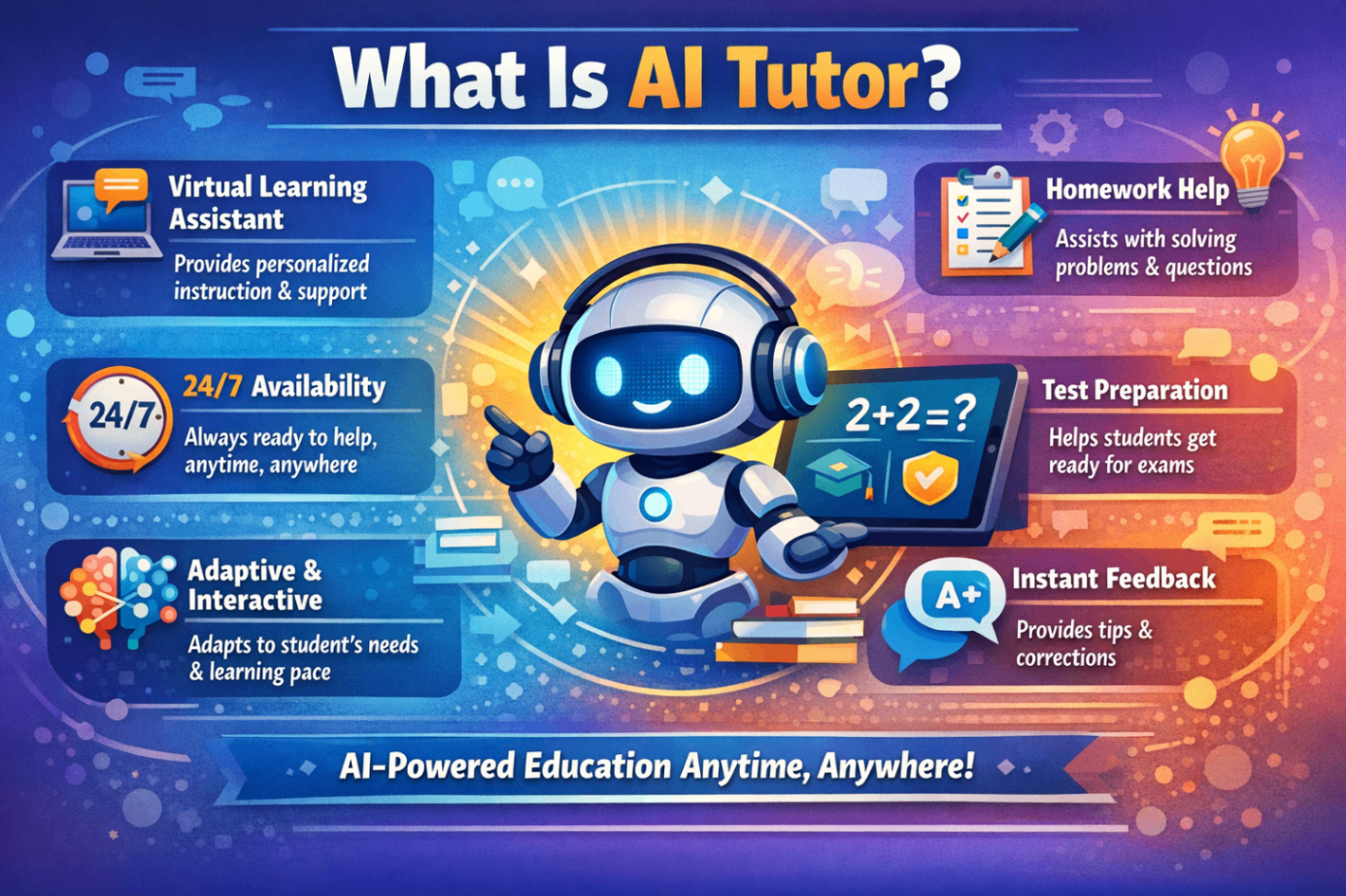
Artificial intelligence is transforming education at an unprecedented pace, fundamentally reshaping how students learn, teachers instruct, and institutions operate. As the AI in education market reaches $7.57 billion in 2025 and projects toward $80.2 billion by 2030, educators worldwide are discovering that AI technologies offer far more than automation—they provide personalized learning experiences, intelligent support systems, and data-driven insights previously impossible to achieve at scale. Understanding the benefits of using AI in education helps stakeholders make informed decisions about technology integration while maximizing positive impacts on learning outcomes. From adaptive learning platforms that adjust to individual student needs to AI-powered administrative systems that free teachers from routine tasks, the applications span every aspect of education. Research demonstrates that students in AI-powered learning environments achieve 54% higher test scores, show 30% better learning outcomes, and experience 10x more engagement compared to traditional methods. What are the benefits of AI in education extends beyond simple metrics to encompass accessibility improvements, research acceleration, and the democratization of quality instruction for learners regardless of geographic or economic circumstances. Understanding what is ai tutor provides insight into one of the most visible applications transforming how students receive academic support. This comprehensive guide explores the benefits of ai in personalized education, applications across educational levels, advantages for teachers and institutions, and evidence-based outcomes that reveal AI's actual impact on learning.
Personalized Learning at Scale
One of the most transformative benefits of AI in education involves its ability to deliver truly personalized instruction adapted to each learner's unique needs, pace, and preferences—capabilities human teachers struggle to provide given typical class sizes.
Adaptive Content Delivery
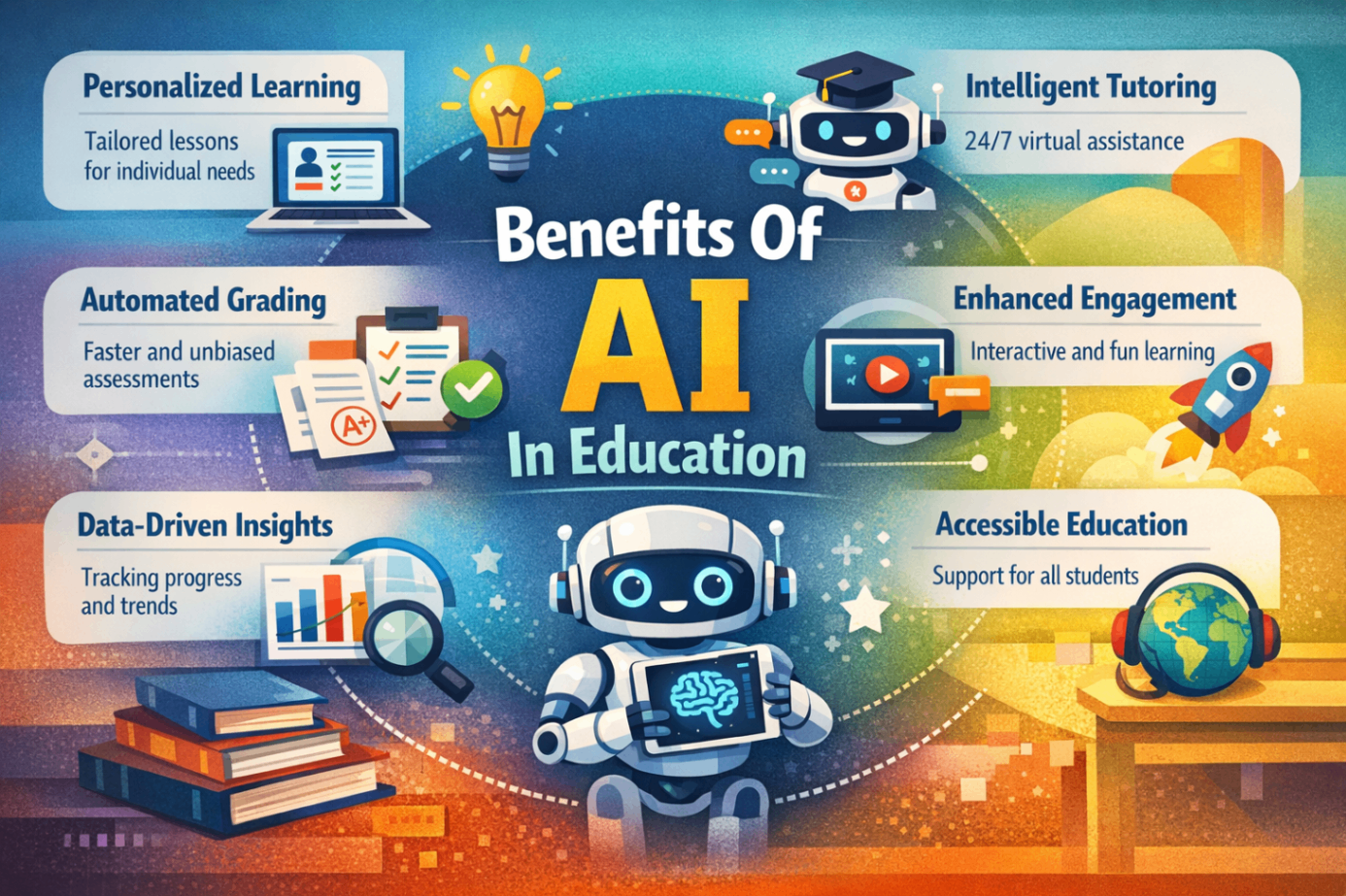
AI enables personalized learning by adapting educational content and pace to individual student needs, helping each learner master subjects more effectively than a one-size-fits-all approach. Platforms like DreamBox and Smart Sparrow analyze student responses in real time to adapt lessons dynamically, enabling every student to master concepts at their own speed. Arizona State University applies machine learning algorithms to offer personalized curricula, adapting to each student's learning pace and needs, leading to higher engagement and better performance. These adaptive systems continuously assess performance, identify knowledge gaps, and adjust difficulty levels to maintain optimal challenge without overwhelming or boring students.
Targeted Skill Development
When students struggle with specific concepts—whether verb tenses in language learning or algebraic equations in mathematics—AI systems create extra exercises targeting precisely those challenges. This pinpointed practice proves far more efficient than broad review covering material students already understand, optimizing learning time by focusing where it matters most. Tools like Generative AI are creating educational materials tailored to individual learning preferences, generating quizzes and learning materials that align with a student's unique learning style, especially beneficial for students with special needs. This customization extends beyond difficulty adjustment to match presentation formats with learning preferences—visual versus verbal explanations, worked examples versus discovery learning, and incremental versus accelerated progression.
Real-Time Progress Monitoring
AI systems track student performance continuously, building comprehensive profiles that inform instructional decisions. Modern AI-powered testing platforms like GRE's adaptive assessment actually respond to performance in real time, with each answer shaping the next question. If a student nails a tough problem, they get something more challenging; struggle a bit and the system adjusts accordingly. This dynamic assessment provides a far more nuanced understanding of student capabilities than traditional testing, revealing not just whether students know material but how deeply they understand it, where their thinking breaks down, and what instructional approaches might address their specific needs.
Enhanced Accessibility and Inclusion
AI technologies dramatically expand educational access for students with disabilities and learning differences, creating more equitable learning environments while reducing workload on accessibility support staff.
Support for Students With Disabilities
AI tools make education more inclusive by converting visual information into audio descriptions for visually impaired students and providing real-time transcription for deaf and hard-of-hearing students. Microsoft's Seeing AI app and Google's Live Transcribe create more equitable learning environments, ensuring students with sensory impairments access the same educational content as their peers. Text-to-speech and speech-to-text technologies enable students with reading difficulties or physical limitations to engage with written content more effectively. AI-powered translation tools help non-native English speakers access educational materials in their preferred languages, removing language barriers that previously limited learning opportunities.
Personalized Accommodations
Unlike rigid accommodation systems requiring extensive setup and documentation, AI systems can provide just-in-time support tailored to individual needs. Students requiring extended time, modified formats, or alternative presentation methods receive these accommodations automatically based on their interaction patterns and preferences. This dynamic accommodation proves particularly valuable for students with learning differences like dyslexia or ADHD, where needs vary by context, energy level, and content type. AI systems recognize when students need additional support versus when they're functioning well independently, adjusting assistance accordingly rather than applying blanket modifications.
Increased Teacher Effectiveness and Time Savings
While some fear AI might replace teachers, evidence shows it enhances educator effectiveness by automating routine tasks and providing insights that inform better instructional decisions.
Automated Administrative Tasks
AI automates grading, scheduling, and report generation, significantly reducing the workload on educators. Tools like Gradescope provide consistent and objective grading of assignments, while AI scheduling software helps optimize class timetables and resource allocation. This automation frees teachers from time-consuming administrative duties, allowing more focus on what matters most—direct student instruction and relationship building. Automating administrative tasks such as lesson planning, grading, and maintaining student records should free up teachers' time to spend more time building relationships with students and fostering their social and emotional growth, which has proven to result in many benefits including better grades and higher achievement. Research shows 50% of educators are utilizing AI technologies to assist with creating lesson plans, while nearly half use AI tools to aid in research.
Enhanced Instructional Planning
Teachers leverage AI for research and content gathering, with 44% using AI for this purpose, 38% creating lesson plans, 38% summarizing information, and 37% generating classroom materials. These applications address real professional needs, making instructional planning more efficient while improving quality through data-driven insights about what works. AI can also help researchers collect and analyze data to enhance curriculum effectiveness and spot areas that need improvement. By analyzing which instructional approaches produce best results for different student populations, AI informs evidence-based teaching practices that maximize learning outcomes.
Predictive Analytics for Early Intervention
Georgia State University uses AI to analyze thousands of student records daily to track over 40,000 students' progress toward graduation, with their system spotting potential issues—like a student registering for the wrong sequence of courses or missing a prerequisite—before they become real problems. An AI-powered grade prediction technology identified and saved over 34,700 failing students, showcasing its significant impact on student success. These predictive capabilities enable proactive intervention rather than reactive response, addressing struggles before they compound into persistent problems that undermine confidence and motivation. Teachers receive alerts when students show warning signs, enabling timely support that prevents failure.
Improved Learning Outcomes and Student Engagement
Beyond anecdotal reports, quantitative research demonstrates measurable improvements in academic performance and student motivation when AI technologies are implemented effectively.
Higher Achievement Metrics
Students in AI-powered learning environments achieve 54% higher test scores, show 30% better learning outcomes, and experience 10x more engagement compared to traditional methods. AI also improves completion rates by 70% and reduces dropout rates by 15% while simultaneously increasing student motivation. These dramatic improvements reflect AI's ability to maintain optimal challenge levels, provide immediate feedback, and adapt to individual needs. Universities using AI tools experience a 12% increase in graduation rates, showcasing the positive impact of AI on education outcomes. According to recent data, 37% of institutions have experienced higher levels of student satisfaction due to using AI-powered academic advising. These institutional benefits demonstrate that AI impacts not just individual learning but systemic educational effectiveness.
Increased Engagement Through Interactivity
AI has revolutionized language learning by creating adaptive experiences that respond to individual learning patterns rather than using outdated repetitive methods. Duolingo's adaptive system serves over 500 million users by adjusting lessons based on specific struggles like pronunciation or verb tenses, while Busuu uses AI to connect learners with native speakers for real conversations. Students report that AI tools make learning more interactive and engaging through gamification, immediate feedback, and content that adapts to maintain interest without overwhelming. The 10x increase in engagement reflects how AI transforms passive content consumption into active, responsive learning experiences.
Benefits of AI in Higher Education
College and university settings see particularly dramatic benefits from AI integration given the complexity of managing large student populations with diverse needs and backgrounds.
Personalized Academic Advising
Traditional academic advising struggles with student-to-advisor ratios that make personalized guidance difficult. AI-powered advising systems provide 24/7 access to course planning support, degree progress tracking, and career guidance tailored to individual interests and goals. These systems answer routine questions instantly, freeing human advisors to focus on complex situations requiring professional judgment. Universities use AI chatbots to handle routine student inquiries about everything from registration deadlines to campus parking free up staff to focus on more complex student needs. This combination of AI efficiency with human expertise for nuanced situations optimizes resource allocation while improving service quality.
Research Acceleration
AI assists academic research by analyzing large datasets, identifying trends, and generating insights. Tools like IBM Watson Discovery provide researchers with advanced analytics capabilities, helping them uncover new findings and accelerate the research process. AI tools like Elsevier's SciVal analyze research trends and help scholars identify promising areas of study, while Microsoft Academic Graph maps relationships between millions of academic papers to help researchers spot connections they might have missed. Platforms like Writefull help scholars improve their academic writing by learning from millions of published papers to suggest more precise language and field-specific terminology. These research support tools dramatically reduce literature review time while improving analysis quality, enabling scholars to focus energy on original contributions rather than administrative research tasks.
Mental Health Support
AI-powered chatbots and virtual assistants provide immediate support and essential information, making mental health services more accessible to a wider audience. Students benefit from AI-powered chatbots mainly in three key areas: assistance with homework and studying, personalized learning experiences, and skill development. For academics, it is especially the time-saving assistance and improved pedagogy that proves valuable. The availability of 24/7 mental health support through AI systems addresses the limitation of counseling services with restricted hours and long waiting lists. While AI cannot replace human therapists for serious mental health concerns, it provides valuable first-line support and directs students to appropriate resources when professional intervention is needed.
Enhanced Language Learning Capabilities
AI has transformed language acquisition by providing interactive practice, immediate pronunciation feedback, and conversational opportunities that traditional methods struggle to deliver at scale.
Conversational Practice Without Human Partners
AI language tutors engage in back-and-forth discussions like real teachers, making language learning interactive and immersive through scenario-based learning and role-playing exercises. Instead of just memorizing vocabulary lists, students practice handling real conversations, customer interactions, or professional communications through AI-powered simulations. This conversational practice addresses one of language learning's biggest challenges—getting sufficient speaking practice. Human conversation partners aren't always available, but AI systems provide unlimited practice opportunities without judgment, enabling learners to make mistakes and try again without embarrassment.
Pronunciation and Grammar Correction
AI provides immediate feedback on pronunciation, grammar, and vocabulary usage, correcting errors in real-time while explaining why corrections are necessary. This instant feedback loop accelerates learning by preventing errors from becoming ingrained habits, addressing mistakes immediately while the context remains fresh in students' minds. For educators looking to implement AI tools effectively, platforms like Tutor AI demonstrate how intelligent systems can provide subject-specific support across diverse learning needs while maintaining accessibility and ease of use.
Challenges and Considerations
While AI benefits are substantial, responsible implementation requires addressing legitimate concerns about equity, privacy, and maintaining appropriate human involvement in education.
Equity and Access Concerns
AI algorithms may inadvertently exhibit bias, disadvantaged students from underrepresented groups and provide less accurate feedback, which can negatively impact their learning outcomes. This underscores the importance of using diverse and representative data sets during development and procurement of AI tools to ensure systems work equitably for all student populations. Additionally, implementing AI requires infrastructure and resources that not all schools possess equally. Without deliberate efforts to ensure equitable access, AI risks widening rather than narrowing achievement gaps between well-resourced and under-resourced schools.
Privacy and Data Security
The extensive data collection necessary for AI-driven educational tools raises concerns about privacy and the possibility of data breaches or misuse of sensitive student information. Educational institutions must implement robust data protection measures, ensure compliance with privacy laws like FERPA, and maintain transparency about what data is collected and how it's used.
Maintaining Human Connection
Relying more and more on AI may reduce the teacher-to-student interactions and relationships and take away from the social-emotional aspects of learning. If those interactions diminish, students' social skills and interpersonal development will suffer. Teachers need to be aware of this and take care to identify and respond to the social and emotional needs of their students. Nearly half of respondents (48.2%) expressed reservations about the accuracy of AI-generated content, while others pointed out the risks of technological dependence, which may undermine critical thinking and human interaction. These concerns require thoughtful integration strategies that position AI as teacher support rather than teacher replacement.
Conclusion
The benefits of AI in education span every aspect of learning from personalized instruction and enhanced accessibility to improved teacher effectiveness and measurable achievement gains. What are the benefits of using AI in education includes students in AI-powered learning environments achieving 54% higher test scores while experiencing 10x more engagement, completion rates improving by 70%, and universities seeing 12% increases in graduation rates. The benefits of using AI in education extend to teachers through automated administrative tasks that free time for relationship building, AI-powered research and lesson planning tools used by 50% of educators, and predictive analytics that enable early intervention for struggling students. Benefits of AI in higher education prove particularly dramatic with personalized academic advising, research acceleration through AI analysis tools, and mental health support through 24/7 chatbots serving wider audiences. Benefits of AI in personalized education fundamentally transform learning through adaptive content delivery adjusting to individual needs in real-time, targeted skill development focusing practice where students actually struggle, and dynamic assessment providing nuanced understanding of capabilities beyond traditional testing. While challenges including equity concerns, privacy considerations, and maintaining human connection require thoughtful attention, evidence overwhelmingly demonstrates that strategic AI integration enhances rather than replaces human teaching while making quality education accessible to learners previously underserved by traditional approaches. As AI technology continues advancing and educational institutions refine implementation strategies, the potential for technology to democratize access to excellent instruction while supporting teachers and improving outcomes promises to reshape education for coming generations.
Frequently Asked Questions
How does AI improve student learning outcomes?
AI improves learning outcomes through several mechanisms: personalized content that adapts to individual needs maintains optimal challenge levels, immediate feedback corrects misunderstandings before they solidify, data-driven insights identify knowledge gaps requiring attention, and engagement strategies maintain motivation through interactive experiences. Research shows students in AI-powered learning environments achieve 54% higher test scores and show 30% better learning outcomes compared to traditional methods, with completion rates improving by 70% and dropout rates reducing by 15%. These improvements reflect AI's ability to provide every student with instruction calibrated to their specific level, pace, and learning style—personalization human teachers cannot achieve with typical class sizes.
Will AI replace human teachers?
No, AI will not replace human teachers but rather enhance their effectiveness. While AI excels at delivering personalized content, providing instant feedback, automating administrative tasks, and analyzing learning data, it lacks the emotional intelligence, mentorship capabilities, and human connection essential for holistic education. Relying more and more on AI may reduce teacher-to-student interactions and relationships and take away from social-emotional aspects of learning that teachers provide. The most effective model combines AI for routine tasks and adaptive practice with human teachers for guidance, encouragement, complex problem-solving support, and social-emotional development—creating blended learning environments that leverage both technology efficiency and human wisdom.
What are the main benefits of AI for teachers?
Teachers benefit from AI primarily through time savings and enhanced instructional support. AI automates grading, scheduling, and administrative tasks, freeing educators to focus on direct student instruction and relationship building. Research shows 50% of educators use AI to assist with creating lesson plans, 44% for research and content gathering, 38% for summarizing information, and 37% for generating classroom materials. Predictive analytics help identify struggling students early, enabling proactive intervention. AI analysis of curriculum effectiveness reveals which teaching approaches work best for different students, informing evidence-based practice. These benefits enable teachers to work more effectively while reducing burnout from administrative burden.
Is AI in education accessible to all students?
Currently, AI in education faces accessibility challenges despite its potential to enhance equity. While AI tools can make education more inclusive through features like text-to-speech for visually impaired students and real-time transcription for deaf students, implementation requires infrastructure not all schools possess. AI algorithms may inadvertently exhibit biased, disadvantaged students from underrepresented groups, which underscores the importance of using diverse data sets during development. Ensuring AI benefits reach all students requires deliberate policies promoting equitable access regardless of socioeconomic status, addressing the digital divide, and monitoring for algorithmic bias. When implemented thoughtfully with equity as a priority, AI can democratize access to quality instruction.
What should educators consider before implementing AI?
Educators should consider several factors: clear learning objectives that AI tools support, data privacy and security protections for student information, bias and equity implications ensuring tools work fairly for all students, appropriate balance between AI and human interaction, professional development so teachers understand AI capabilities and limitations, and evidence of effectiveness through research or pilot programs. Implementation should begin with specific, well-defined problems AI can solve rather than adopting technology for its own sake. Comprehensive training for both educators and students fosters proper use, while clear guidelines prevent over-reliance that might undermine critical thinking skills. Starting with pilot programs allows institutions to evaluate effectiveness before widespread adoption.