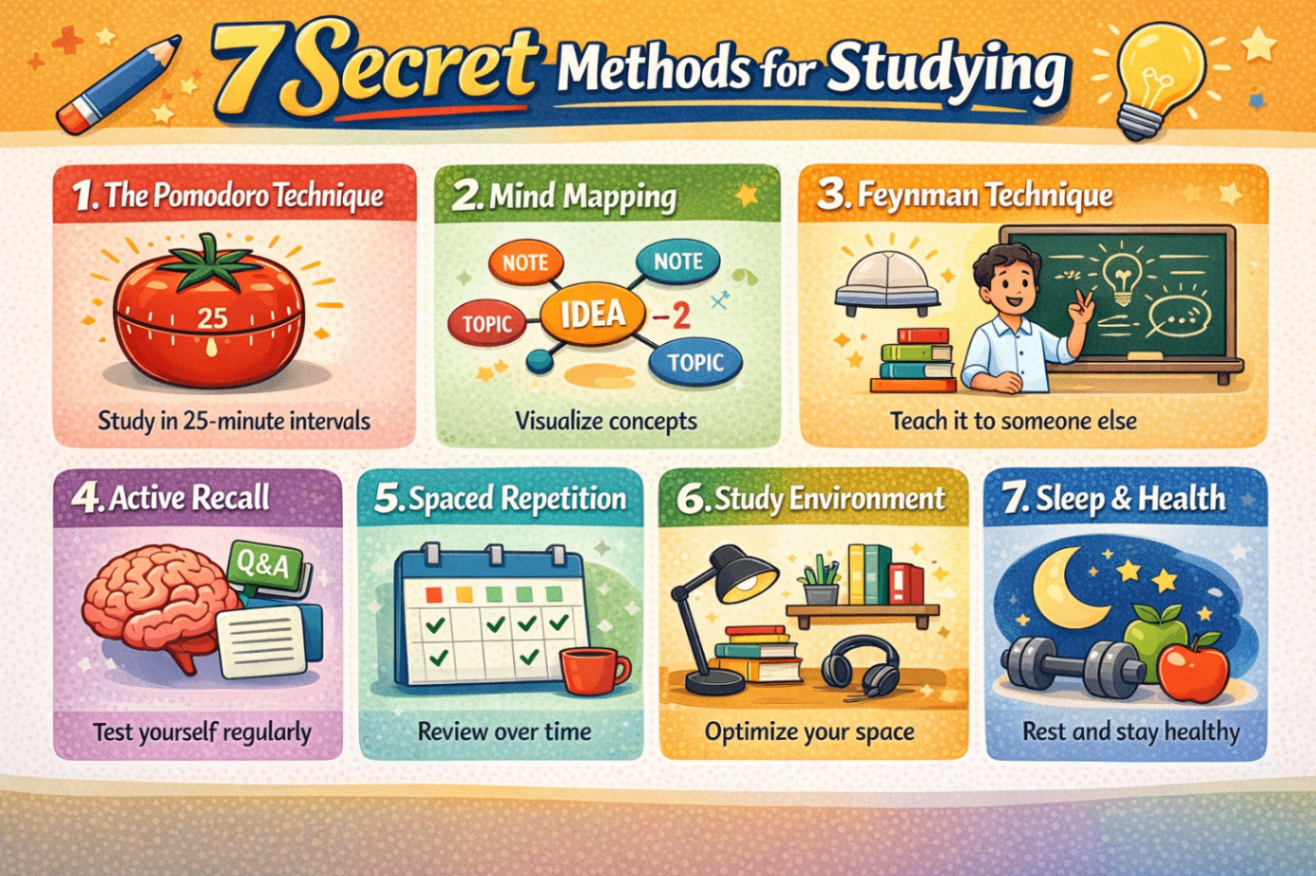
Are you tired of spending hours studying only to forget everything by exam day? Understanding the 7 secret methods for studying can transform your academic performance and help you retain information more effectively. These proven techniques go beyond traditional highlighting and note-taking to create lasting knowledge. Whether you're preparing for finals or tackling challenging coursework, these study methods will revolutionize how you approach learning. This comprehensive guide reveals what are the 7 secret methods for studying that top students use to achieve academic excellence. The difference between average and exceptional students often comes down to study strategies rather than raw intelligence. By implementing these science-backed techniques, you can maximize your learning potential, reduce study time, and achieve better results on every exam you face.
Method 1: Active Recall
Active recall is the foundation of effective studying and one of the most powerful techniques for long-term retention.
What is Active Recall?
Active recall involves actively stimulating your memory during the learning process rather than passively reviewing notes. Instead of re-reading textbooks, you force your brain to retrieve information, strengthening neural pathways and improving retention.
How to Implement Active Recall
Create flashcards with questions on one side and answers on the other. After reading a chapter, close your book and write down everything you remember. Test yourself regularly rather than simply reviewing highlighted passages.
The Science Behind Active Recall
Research shows that actively retrieving information strengthens memory connections in your brain. Each time you successfully recall something, the neural pathway becomes stronger, making future retrieval easier and faster.
Common Active Recall Mistakes to Avoid
Many students think they're using active recall when they're actually just recognition. Looking at an answer and thinking "I knew that" is not the same as retrieving it from memory. Always attempt to recall information before checking your answers.
Tools for Active Recall Practice
Digital flashcard apps like Anki and Quizlet make active recall practice convenient and portable. Physical flashcards work equally well and allow for tactile learning. Practice tests and self-quizzing are also excellent active recall tools.
Method 2: Spaced Repetition
Spaced repetition is a game-changing technique among the 7 secret methods for studying for exams that prevents the dreaded post-test memory wipe.
Understanding the Spacing Effect
Instead of cramming information in one session, spaced repetition involves reviewing material at gradually increasing intervals. This approach capitalizes on how our brains naturally consolidate memories over time.
Creating a Spaced Repetition Schedule
Review new material within 24 hours of first learning it, then again after three days, one week, and two weeks. Digital tools and apps can automate this process, sending reminders when it's time to review specific concepts.
Why Cramming Doesn't Work
Cramming might help you pass tomorrow's test, but the information rarely transfers to long-term memory. Spaced repetition builds durable knowledge that stays with you throughout your academic career and beyond.
The Forgetting Curve Explained
German psychologist Hermann Ebbinghaus discovered that we forget approximately 70% of new information within 24 hours without review. Spaced repetition strategically times reviews to intercept this forgetting curve, dramatically improving retention rates.
Best Apps for Spaced Repetition
Applications like Anki use algorithms to optimize your review schedule automatically. These tools track your performance and adjust intervals based on how well you remember each piece of information, creating a personalized learning experience.
Method 3: Mind Mapping
Mind mapping transforms complex information into visual diagrams that make understanding and retention significantly easier. Many students discover how can ai help students create more effective mind maps and study materials.
Benefits of Visual Learning
Visual representations help your brain organize and connect related concepts. Mind maps create a web of understanding that makes it easier to see relationships between different topics and recall information during exams.
How to Create Effective Mind Maps
Start with a central concept in the middle of your page. Branch out with main topics, then add subtopics and supporting details. Use colors, symbols, and images to make your mind map more memorable and engaging.
When to Use Mind Mapping
Mind mapping works exceptionally well for subjects requiring understanding of relationships and hierarchies, such as biology, history, and literature. Use this technique when studying complex systems or preparing for essay-based exams.
Digital vs. Handwritten Mind Maps
Both approaches offer unique advantages. Handwritten mind maps engage motor memory and allow complete creative freedom. Digital mind maps are easier to edit, share, and reorganize as your understanding evolves.
Connecting Ideas Across Subjects
Mind maps excel at revealing connections between different subjects and topics. By linking related concepts visually, you develop a deeper understanding and can approach exam questions from multiple angles.
Method 4: The Pomodoro Technique
The Pomodoro Technique addresses one of the biggest challenges students face: maintaining focus during long study sessions.
How the Pomodoro Technique Works
Study in focused 25-minute intervals called "pomodoros," followed by 5-minute breaks. After completing four pomodoros, take a longer 15-30 minute break. This structured approach prevents burnout and maintains high concentration levels.
Benefits of Time-Blocked Studying
Breaking study sessions into manageable chunks helps you maintain intense focus without feeling overwhelmed. The frequent breaks give your brain time to process information and prevent mental fatigue.
Customizing Your Pomodoro Sessions
Some students find 25 minutes too short or too long. Experiment with different intervals to find what works best for your attention span. The key is maintaining focused work followed by genuine rest periods.
What to Do During Breaks
Effective breaks involve stepping away from your study material completely. Stretch, grab a healthy snack, take a short walk, or do light exercise. Avoid scrolling through social media, as this can extend your break indefinitely.
Tracking Your Pomodoro Progress
Keep a log of completed pomodoros to track your productivity patterns. Many students discover they're most focused during certain times of day. Use this data to schedule your most challenging subjects during peak concentration periods.
Method 5: The Feynman Technique
Named after Nobel Prize-winning physicist Richard Feynman, this technique is one of the most effective 7 secret methods for studying for exams.
Teaching to Learn
The Feynman Technique involves explaining concepts as if you're teaching them to someone with no background knowledge. This process reveals gaps in your understanding and forces deeper comprehension.
Steps to Apply the Feynman Technique
Choose a concept and explain it in simple language without jargon. Identify areas where your explanation falters—these are knowledge gaps. Return to your source material, study those specific areas, and try explaining again.
Why Simplification Enhances Understanding
If you cannot explain something simply, you don't understand it well enough. The process of simplification forces you to break down complex ideas into fundamental components, creating stronger neural connections.
Using Analogies and Examples
Great explanations rely on relatable analogies and concrete examples. Practice comparing complex concepts to everyday situations. This skill improves both your understanding and your ability to communicate ideas on exams.
Recording Your Explanations
Consider recording yourself explaining concepts. Listening back reveals unclear explanations and areas needing improvement. This technique also creates valuable review material for future study sessions.
Method 6: Optimize Your Study Environment
Your physical environment significantly impacts your ability to focus and retain information.
Creating a Distraction-Free Zone
Find a quiet space away from televisions, high-traffic areas, and other disruptions. Silence phone notifications and consider using website blockers during study sessions. A dedicated study space helps your brain associate that location with focused work.
The Importance of Physical Comfort
Invest in a comfortable chair with proper back support and ensure adequate lighting to prevent eye strain. Physical discomfort distracts your brain from learning and reduces the effectiveness of your study time.
Separating Study and Living Spaces
Avoid studying in bed or on the couch where you typically relax. Your brain associates these spaces with rest, making it harder to maintain focus. Using an AI Study Tool can help you stay productive regardless of location by providing structured guidance.
The Role of Background Music
Some students focus better with background music while others need complete silence. If you choose music, opt for instrumental tracks without lyrics. Classical music, lo-fi beats, and nature sounds are popular choices for study sessions.
Organizing Your Study Materials
A cluttered workspace creates mental clutter. Keep only essential materials within reach during study sessions. Organize notes, textbooks, and supplies before beginning to minimize interruptions and maintain focus throughout your session.
Method 7: Practice with Past Papers
Going straight to past exam papers is a counterintuitive but highly effective study strategy.
Why Practice Tests Work
Past papers familiarize you with exam format, question types, and difficulty levels. This preparation eliminates surprises on test day and helps you apply knowledge to specific scenarios.
How to Use Past Papers Effectively
Don't save practice tests for the week before your exam. Start working through them early in your study process to identify knowledge gaps and target your review sessions accordingly.
Building Exam Confidence
Regular practice with authentic exam materials builds confidence and reduces test anxiety. You'll enter the exam room knowing exactly what to expect and how to approach different question types.
Timing Your Practice Sessions
Complete practice papers under timed conditions to build exam stamina and pacing skills. This preparation helps you allocate time appropriately across different sections and avoid running out of time on test day.
Analyzing Your Mistakes
After completing practice papers, thoroughly review every mistake. Understanding why you got questions wrong is more valuable than simply noting the correct answer. Look for patterns in your errors to identify areas requiring additional study.
Conclusion
Mastering the 7 secret methods for studying requires consistent practice and personalization. What works best varies from student to student, so experiment with these techniques to discover your optimal combination. Active recall and spaced repetition form the foundation of effective learning, while techniques like mind mapping and the Feynman method deepen understanding. Remember that effective studying isn't about spending more hours with your books—it's about studying smarter. By implementing these proven methods, you'll retain more information, perform better on exams, and develop learning skills that benefit you throughout life. Start with one or two techniques, master them, and gradually incorporate others into your routine. The most successful students combine multiple methods into a personalized study system. Track your progress, adjust your approach based on results, and remain patient as these techniques become habitual. With consistent application, these 7 secret methods for studying will transform your academic performance and make learning more enjoyable and effective.
Frequently Asked Questions
What are the 7 secret methods for studying?
The 7 secret methods for studying include active recall, spaced repetition, mind mapping, the Pomodoro Technique, the Feynman Technique, optimizing your study environment, and practicing with past papers. Each method targets different aspects of learning and memory retention for comprehensive academic improvement. When combined strategically, these techniques create a powerful study system that maximizes retention and understanding.
How long does it take to see results from these study methods?
Most students notice improvements within two to four weeks of consistent practice. Active recall and spaced repetition often show the quickest results, with many students reporting better quiz scores within the first week. Long-term benefits compound over time as these methods become habitual. The key is consistency—practicing these techniques regularly yields far better results than sporadic implementation.
Can I combine multiple study methods together?
Absolutely. The most effective approach combines several methods simultaneously. For example, use active recall flashcards with spaced repetition scheduling, or create mind maps during Pomodoro sessions. Combining techniques creates a comprehensive study system tailored to your needs. Many top students use all seven methods in rotation, selecting specific techniques based on the subject matter and type of exam they're preparing for.
Which study method is best for exam preparation?
For exam preparation, practicing with past papers combined with active recall delivers the strongest results. These methods familiarize you with test formats while strengthening memory retrieval. Adding spaced repetition ensures you retain information through exam day and beyond. However, the best method depends on your subject and exam type—essay exams benefit from the Feynman Technique, while multiple-choice tests respond well to active recall practice.
Are these study methods effective for all subjects?
Yes, these methods work across all subjects, though some techniques suit certain subjects better. Mind mapping excels in subjects with complex relationships, while the Feynman Technique works exceptionally well for science and mathematics. Experiment to find which methods best suit each subject you're studying. Language learning benefits particularly from spaced repetition, while history and literature respond well to mind mapping and the Feynman Technique combined.