Table of contents
- What Is Goodwill In Accounting Terms
- What Is Goodwill In Accounting Example
- What Is Goodwill Classified As In Accounting
- How to Calculate Goodwill: The Formula and Process
- Types of Goodwill in Accounting
- What Is Goodwill Impairment In Accounting
- What Is Negative Goodwill In Accounting
- What Is the Opposite of Goodwill In Accounting
- The Strategic Importance of Goodwill in Business
- Conclusion
Goodwill represents one of the most intriguing concepts in accounting, capturing the intangible value that makes a business worth more than the sum of its parts. When companies acquire other businesses, they often pay premiums above the fair market value of identifiable assets—this premium reflects goodwill. Understanding what is goodwill in accounting proves essential for anyone involved in business acquisitions, financial reporting, or investment analysis, as this intangible asset can account for millions or even billions of dollars on corporate balance sheets. The concept bridges the gap between what can be counted and measured—like equipment, inventory, and cash—and what cannot be easily quantified, such as brand reputation, customer loyalty, talented employees, and strategic market positioning. This guide explores the goodwill definition, how it's calculated and recorded, different types of goodwill, and critical concepts like impairment that affect how this intangible asset is valued over time.
What Is Goodwill In Accounting Terms
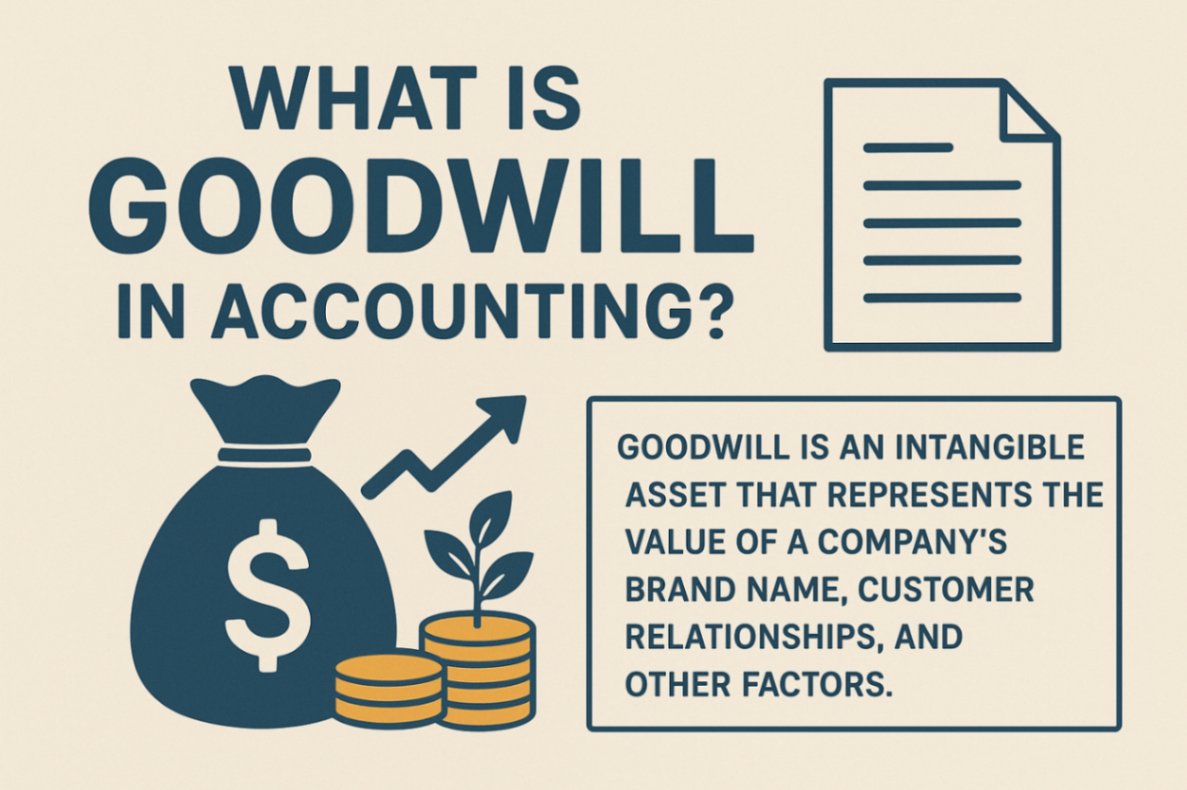
In accounting, goodwill is an intangible asset amount that represents the excess amount a company pays for another company during an acquisition. More specifically, goodwill reflects the premium that the buyer pays in addition to the net value of identifiable assets and liabilities acquired.
The Core Definition of Goodwill
Goodwill is an intangible asset that arises when a company looking to acquire another company is willing to pay a price premium over the fair market value of the company's net assets. This definition highlights several critical aspects: goodwill only emerges from business acquisitions, represents intangible value beyond measurable assets, and requires that the purchase price exceed the fair value of net identifiable assets. Goodwill is recognized only through an acquisition; it cannot be self-created. A business cannot generate goodwill internally through its own operations and record it on the balance sheet. Even if a company builds an excellent reputation, develops loyal customers, and creates a strong brand over many years, these achievements don't result in recorded goodwill unless another company purchases the business and pays for that intangible value.
What Goodwill Represents
The elements or factors that a company is paying extra for or that are represented as goodwill are things such as a company's good reputation, a solid customer or client base, brand identity and recognition, an especially talented workforce, and proprietary technology. These intangible factors collectively contribute to a company's ability to generate future profits above what the physical and identifiable intangible assets alone could produce. Understanding what is accrual accounting helps provide context for how goodwill fits into the broader accounting framework where timing of recognition and measurement principles govern financial reporting.
Why Goodwill Matters in Financial Reporting
Goodwill is an intangible asset that is listed under non-current assets on the balance sheet or statement of financial position. This classification reflects that goodwill is expected to provide economic benefits over an extended period. For investors analyzing financial statements, goodwill often represents a substantial portion of total assets, particularly for companies that grow through acquisitions rather than organic development. Both Generally Accepted Accounting Principles and International Financial Reporting Standards require you to show goodwill annually on your financial statements. This mandatory reporting ensures transparency about how much premium was paid in acquisitions and whether that premium maintains its value over time.
What Is Goodwill In Accounting Example
Practical examples help illustrate how goodwill works in real business transactions. Understanding the calculation process clarifies this abstract concept.
Basic Goodwill Example
If you buy a company for five hundred thousand dollars in cash, and the fair value of its identifiable net assets is four hundred thousand dollars, the remaining one hundred thousand dollars is goodwill. This straightforward scenario demonstrates the fundamental calculation: purchase price minus net asset value equals goodwill.
Detailed Calculation Example
Acorn Corporation acquires Brittle Corporation for ten million dollars. The fair market value of Brittle's identifiable net assets is seven million, which are tangible assets of six million, intangible assets of one million, and liabilities of zero. In this case, goodwill equals the three million dollar excess of purchase price over fair value of identifiable net assets.
Recording Goodwill in Financial Statements
When recording this transaction, Acorn Corporation records a three million dollar goodwill asset on its balance sheet as part of its acquisition accounting. The journal entry would include debits to various acquired assets including goodwill, and credits to cash or other consideration paid.
Real-World Example: Major Acquisitions
Consider large corporate acquisitions where goodwill comprises the majority of the purchase price. When Company A acquires Company B for ten million dollars and Company B's net assets are valued at six million, the difference of four million is recorded as goodwill on Company A's balance sheet. In many startup and technology acquisitions, goodwill can represent more than half the total deal value because buyers are purchasing growth potential, market access, and talent rather than physical assets.
What Is Goodwill Classified As In Accounting
Understanding the classification and treatment of goodwill provides insight into how this asset appears in financial statements and how it differs from other assets.
Balance Sheet Classification
Goodwill is classified as an intangible asset on the balance sheet, since it can neither be seen nor touched. More specifically, it appears in the long-term or non-current assets section, grouped with other intangible assets though typically reported as a separate line item given its significance.
Goodwill Versus Other Intangible Assets
While goodwill shares the balance sheet with other intangibles like patents, trademarks, and copyrights, important distinctions exist. Other intangibles can usually be separated and sold individually, but that's not the case with goodwill—goodwill is an inseparable asset. You cannot sell goodwill independently from the business; it remains inherently tied to the overall enterprise. Goodwill and intangible assets are usually listed as separate items on a company's balance sheet. This separation reflects their different natures: identifiable intangibles have specific attributes that can be valued separately, while goodwill represents the residual intangible value not attributable to any specific asset.
Treatment Under Accounting Standards
Under US GAAP and IFRS, goodwill is never amortized for public companies, because it is considered to have an indefinite useful life. This treatment differs from most intangible assets, which are amortized over their expected useful lives. The rationale is that goodwill doesn't diminish in a predictable pattern—it might increase, decrease, or remain stable depending on business performance. However, private companies in the United States may elect to amortize goodwill over a period of ten years or less under an accounting alternative. This option simplifies accounting for private companies that don't face the same public reporting scrutiny as their public counterparts.
How to Calculate Goodwill: The Formula and Process
Calculating goodwill follows a systematic process that ensures the premium paid in acquisitions is properly captured and reported.
The Basic Goodwill Formula
The fundamental formula for calculating goodwill is straightforward: Goodwill equals Purchase Price minus Fair Value of Net Identifiable Assets. This calculation captures the excess payment above what the identifiable assets and liabilities justify.
Step-by-Step Calculation Process
First, determine the purchase price by identifying the total amount the acquirer paid for the business, including cash, stock, and assumed liabilities. Second, calculate the fair value of identifiable assets and liabilities by listing and assessing the fair market values of all tangible assets, identifiable intangible assets, and liabilities to determine the net identifiable assets. The fair value adjustment process requires professional judgment and often involves accounting expertise. Assets listed at historical cost on the seller's books must be adjusted to current fair market values. Fair value accounts receivable is lower than book value due to uncollectible accounts, fair value inventory is lower than book value due to obsolescence, and fair value of property, plant, and equipment is higher than book value due to depreciation being greater than the decline in fair value.
Recording the Goodwill Transaction
After calculating goodwill, it must be properly recorded in the acquiring company's books. Record this transaction in your accounting software to reflect the new assets, liabilities, and the goodwill you have acquired. The journal entry typically debits all acquired assets including goodwill, credits all assumed liabilities, and credits cash or other consideration paid. For students and professionals working through complex goodwill calculations, tools like Accounting Assignment Help can provide step-by-step guidance on acquisition accounting and the technical aspects of fair value adjustments.
Types of Goodwill in Accounting
Accounting recognizes different categories of goodwill based on how and when it arises, each with distinct characteristics and implications.
Internally Generated Goodwill
Internally generated goodwill refers to the value that a company creates through its own efforts and operations—it is not acquired from external sources but is developed over time as a result of the company's successful business practices, brand building, customer relationships, and market positioning. Despite its real economic value, internally generated goodwill cannot be recorded on financial statements. While a business can invest to increase its reputation, by advertising or assuring that its products are of high quality, such expenses cannot be capitalized and added to goodwill. This restriction prevents companies from arbitrarily inflating their asset values based on subjective internal assessments.
Purchased or Acquired Goodwill
Acquired goodwill emerges from business combinations and represents the only type of goodwill that appears on financial statements. Purchased goodwill develops when one business acquires another for a value higher than the fair market value of its identifiable net assets. This external transaction provides an objective, verifiable basis for recording goodwill since a willing buyer and seller agreed on the premium.
Institutional Versus Personal Goodwill
There are two types of goodwill: institutional (enterprise) and professional (personal). Institutional goodwill may be described as the intangible value that would continue to exist for the business without the presence of a specific owner, while professional goodwill may be described as the intangible value attributable solely to the efforts of or reputation of an owner of the business. This distinction matters particularly in professional service firms, medical practices, and small businesses where success depends heavily on individual practitioners or owners. Understanding whether goodwill is institutional or personal affects business valuation, sale negotiations, and post-acquisition planning.
What Is Goodwill Impairment In Accounting
Goodwill impairment represents one of the most significant concepts in ongoing goodwill accounting, with substantial financial statement implications.
Understanding Impairment
Impairment of goodwill is the condition that exists when the carrying amount of a reporting unit that includes goodwill exceeds its fair value. A goodwill impairment loss is recognized for the amount that the carrying amount of a reporting unit, including goodwill, exceeds its fair value. In simpler terms, impairment occurs when the goodwill recorded on the balance sheet no longer reflects the premium value paid. This might happen if the acquired business underperforms expectations, loses key customers, faces increased competition, or experiences other adverse changes that diminish the intangible value originally purchased.
Annual Impairment Testing
Goodwill shall not be amortized; instead, goodwill shall be tested at least annually for impairment at a level of reporting referred to as a reporting unit. This mandatory annual review ensures that goodwill remains fairly stated on the balance sheet rather than becoming increasingly disconnected from economic reality. This assessment is normal for identifying whether goodwill listed on the balance sheet has declined due to poorer profits, loss of a significant customer, or an economic downturn. Companies must evaluate both quantitative factors like financial performance and qualitative indicators such as market conditions, competitive environment, and internal business developments.
Recording Impairment Losses
When impairment is identified, companies must write down goodwill to its reduced value. If the goodwill is found to have a carrying value that is less than the accounting value, the difference is reflected as a goodwill impairment loss in the income statement. These write-downs often involve substantial amounts and significantly impact reported earnings. The value of goodwill is highly subjective, especially since it does not independently generate cash flows. Consequently, when a write-down occurs, it tends to be for a significant amount, and perhaps for the entire amount of a goodwill asset. These large impairments often signal serious problems with acquisitions or changing business conditions.
Impairment Example
For example, if the carrying or book value of goodwill is two crore, but then the value drops to one point five crore, the impairment is recognized as a zero point five crore expense. This expense reduces net income in the period recognized, potentially significantly impacting financial results and investor perceptions.
What Is Negative Goodwill In Accounting
While positive goodwill represents premiums paid above fair value, negative goodwill occurs in the opposite scenario—a true bargain purchase.
Definition and Occurrence
Negative goodwill arises when an acquirer pays less for an acquiree than the fair value of its assets and liabilities. This situation seems counterintuitive—why would a seller accept less than their business's identifiable net assets are worth? Yet it occurs in specific circumstances.
When Negative Goodwill Occurs
Negative goodwill might arise in distressed sales where owners need liquidity urgently, in situations where sellers don't fully understand their business's fair value, in forced liquidations, or when regulatory or legal issues cloud the transaction. The seller might accept a discounted price to complete the transaction quickly or because limited buyers exist for the specific business.
Accounting Treatment
The accounting treatment for negative goodwill, also called a bargain purchase gain, differs from positive goodwill. Rather than recording an asset, the excess of fair value over purchase price is typically recognized as a gain in the income statement. Accounting standards require reassessment of the fair value calculations to ensure the bargain purchase is real before recognizing this gain.
What Is the Opposite of Goodwill In Accounting
Understanding goodwill's counterpoint helps clarify the concept through contrast.
Negative Goodwill as the Opposite
The most direct opposite of goodwill is negative goodwill or bargain purchase gain, as described above. Where goodwill represents paying a premium, negative goodwill represents receiving a discount below fair value—the mirror image of the typical acquisition scenario.
Badwill: An Alternative Term
Some practitioners use the term "badwill" to describe negative goodwill, though this isn't an official accounting term. The concept remains the same: the acquiring company pays less than the fair value of identifiable net assets, resulting in an immediate gain rather than an intangible asset.
Goodwill Impairment as Functional Opposite
From a different perspective, goodwill impairment serves as the functional opposite of goodwill creation. Where initial goodwill recording reflects optimistic expectations and premium valuations, impairment acknowledges that those expectations haven't materialized and the premium paid wasn't justified. Impairment reverses the accounting effect of the original goodwill by reducing the asset and recognizing a loss.
The Strategic Importance of Goodwill in Business
Beyond accounting technicalities, goodwill holds strategic significance for companies, investors, and business analysts.
Goodwill and Acquisition Strategy
Companies that grow through acquisitions accumulate substantial goodwill on their balance sheets. Companies that have a high amount of goodwill almost always have a competitive advantage, stronger partnerships, and leverage in obtaining financing due to their perceived reputation in the marketplace. However, this also means acquisition-heavy companies face ongoing impairment risks if their deals don't perform as expected. Goodwill-intensive balance sheets warrant careful analysis. High goodwill relative to tangible assets might indicate a company built on brands, customer relationships, and intellectual capital—potentially very valuable but also more vulnerable to disruption. Conversely, it might suggest a company overpaid for acquisitions, raising concerns about management's capital allocation skills.
Investor Considerations
Investors should scrutinize goodwill for several reasons. First, goodwill represents cash that has left the company—money paid to sellers that no longer provides liquid resources for operations or dividends. Second, goodwill impairment remains a constant risk that can unexpectedly impact earnings. Third, high goodwill might signal accounting risks if the company delays necessary impairments or overvalues reporting units. Understanding the composition of goodwill—which acquisitions it relates to, how long ago they occurred, and whether the acquired businesses meet performance expectations—helps investors assess whether goodwill likely retains its value or faces impairment risk.
Management Implications
For business managers, goodwill requires ongoing attention. Post-acquisition integration must justify the premium paid by realizing synergies, retaining key customers and employees, and achieving projected financial performance. Failure to manage acquired businesses effectively can necessitate embarrassing and costly impairment charges that damage credibility with investors and boards. Managers must also understand how goodwill affects financial metrics. Return on assets and return on equity calculations include goodwill in the denominator, potentially depressing these ratios compared to companies that grow organically without recording goodwill. This effect should factor into strategic decisions about growth through acquisition versus internal development.
Conclusion
Understanding what is goodwill in accounting reveals a concept that bridges tangible and intangible value, capturing the premium companies pay to acquire businesses beyond their identifiable assets. Goodwill represents reputation, customer loyalty, workforce talent, and strategic positioning—valuable elements that can't be physically touched or precisely measured until validated through acquisition transactions. The definition of goodwill as the excess of purchase price over fair value of net identifiable assets provides a straightforward calculation, yet the concept's implications extend deeply into financial reporting, business valuation, and investment analysis. Whether examining a basic goodwill example where an acquirer pays above net asset value, understanding what goodwill is classified as on the balance sheet, or evaluating goodwill impairment risks that emerge when acquired businesses underperform, this intangible asset demands careful attention from accountants, investors, and business leaders. While negative goodwill occasionally occurs in bargain purchases, typical goodwill reflects optimistic valuations of intangible advantages that distinguish successful businesses from mere collections of assets.
Frequently Asked Questions
What is the simple definition of goodwill in accounting?
Goodwill in accounting terms represents the premium amount a company pays to acquire another business above the fair market value of that business's identifiable net assets. It captures intangible value from factors like brand reputation, customer relationships, talented employees, and market position that make the business worth more than its physical assets and identifiable intangibles suggest. Goodwill only appears on the balance sheet when a company purchases another business—it cannot be created internally even if a company develops strong intangible value through its operations.
How do you calculate goodwill in a business acquisition?
To calculate goodwill, subtract the fair value of net identifiable assets from the purchase price paid. First, determine the total consideration paid including cash, stock, and assumed liabilities. Second, identify all acquired assets at fair market value including both tangible assets and identifiable intangibles like patents or customer contracts. Third, subtract all assumed liabilities at fair value. Finally, subtract this net identifiable asset value from the total purchase price—the excess represents goodwill that will be recorded as an intangible asset on the acquirer's balance sheet.
What is goodwill impairment and when does it occur?
Goodwill impairment occurs when the recorded value of goodwill on the balance sheet exceeds its current fair value, indicating the premium paid in acquisition no longer reflects actual intangible value. Companies must test goodwill for impairment at least annually by comparing the carrying amount of reporting units containing goodwill against their fair values. Impairment typically results from acquired businesses underperforming expectations, losing key customers, facing increased competition, or experiencing adverse market conditions. When impairment is identified, companies must write down goodwill and recognize an impairment loss in the income statement, often for substantial amounts.
Can a company have negative goodwill on its balance sheet?
Negative goodwill, also called bargain purchase gain, occurs when a company acquires another business for less than the fair value of its identifiable net assets. This unusual situation might arise in distressed sales, forced liquidations, or when sellers don't fully understand their business's value. Rather than recording negative goodwill as an asset, accounting standards typically require the excess of fair value over purchase price to be recognized as a gain in the income statement after carefully reassessing all fair value calculations to confirm the bargain purchase is legitimate.
What's the difference between goodwill and other intangible assets?
The key distinction is that goodwill cannot be separated from the business and sold independently, while other intangible assets like patents, trademarks, customer lists, or technology can typically be identified, valued, and transferred separately. Goodwill represents the residual intangible value not attributable to any specific asset, capturing factors like reputation and synergies that only exist when all business elements work together. Additionally, goodwill is never amortized but instead tested annually for impairment, whereas most other intangible assets are amortized over their expected useful lives. Finally, goodwill only arises through acquisitions, while companies can internally develop or separately acquire other intangible assets.