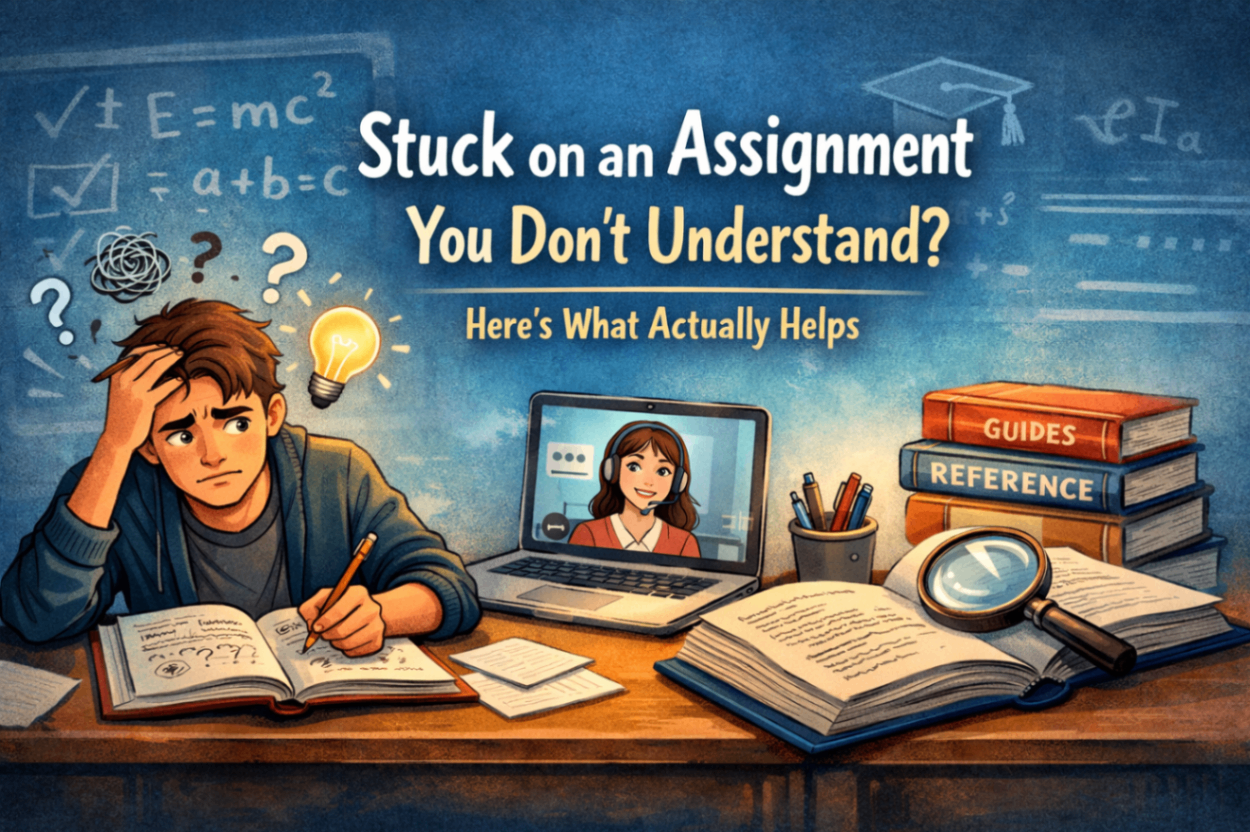
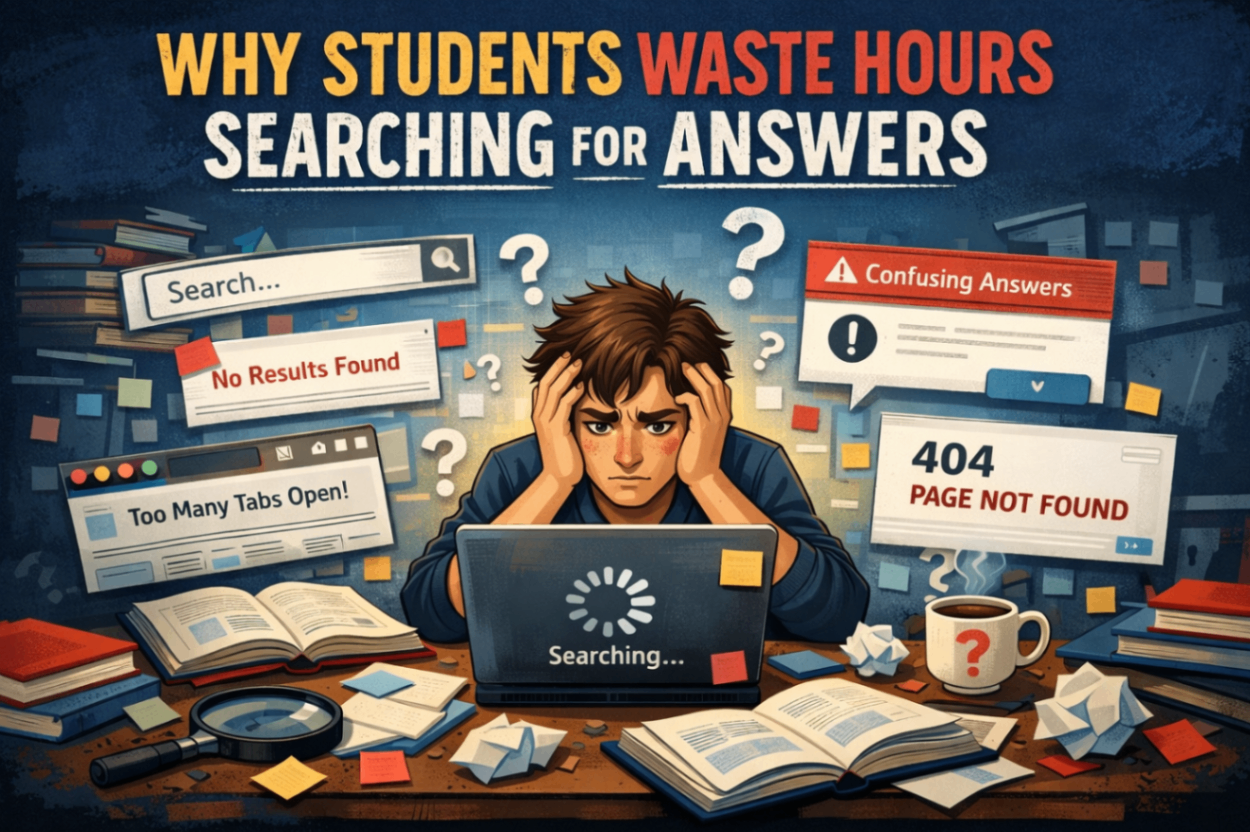
It's eleven o'clock. You have to turn in your homework tomorrow. For more than an hour, you've been looking at your screen. You've looked for the same answer in five different ways. You've opened a lot of tabs. And you still don't know what to do. Does this sound familiar? You're not the only one. This happens to students every day. And it's not because they're not trying. It's because the way most students search for answers simply doesn't work. There are tools like an AI Answer Generator that help with this problem, but most students don't know about them yet. Let's take a closer look at why students spend hours looking for answers and what's really going on.
Search Engines Were Never Designed for Studying
General Searches Return General Results
The most common mistake students make today is thinking that a general-purpose search engine can help them with a specific academic problem. When a student types a homework question into a search bar, they get a list of links that are ranked. These links can be blog posts, forum threads, explainer videos, or ads, and there's no way to know if any of them are correct, relevant, or at the right level for their class. Students spend more time judging sources than learning from them. This loop of clicking, skimming, closing tabs, and searching again is one of the main reasons why students spend hours looking for answers without ever getting anywhere.
Students Don't Know How to Search Effectively
Most students are never taught how to find academic information online, but it is a skill. When you search for something vague, you get thousands of results that are all over the place in terms of depth. Students depend on trial and error to find the right answer to a specific question when they don't know how to filter, refine, and evaluate sources.
Bad search habits make things worse for themselves. The longer a search goes on, the more a student doubts even the right answers they've already found. This makes them keep looking when they should have stopped.
The Knowledge Gap Problem
Searching for Answers You Don't Have the Foundation For
One of the most common reasons students waste hours looking for answers is that they don't have the basic knowledge they need to understand the answer. If a student didn't fully understand something from a previous lesson because they were in a hurry, missed class, or didn't study it well, then every new idea that builds on it becomes much harder to understand.
You end up doing five searches instead of just one. One for the first question. Four more for things you needed to know first. This is one of the most common reasons why students spend hours looking for answers without even knowing what's going on.
Context-Dependent Topics Make Single Searches Impossible
Academic subjects seldom exist independently. You might need a formula from two weeks ago to solve a chemistry problem. A question about literature may need information from a previous chapter to make sense. When students don't have that background, they're not just looking for one answer; they're looking for a bunch of answers at the same time without even knowing it. Most students don't even know this is happening, which makes it much harder to figure out what's wrong or fix it.
The Distraction and Pressure Loop
How Homework Searching Turns Into Scrolling
The internet isn't a good place to study. It is made to keep you on it for as long as possible. One minute you're looking for help with an essay. Then you watch something that has nothing to do with it. It's been half an hour, and the homework hasn't moved. This isn't about not having willpower. When you use a platform made for browsing to do something that needs a lot of focus, this is what happens. They don't get along. If you have to work on more than one subject at a time, read How to Solve Mixed-Subject Homework Without Using Multiple Apps to learn how a more organized approach can help.
Academic Pressure Makes Bad Habits Worse
Students' ability to search strategically goes down a lot when they're worried about grades or working against a deadline. Stress makes it harder to think clearly, which leads to quick, poorly worded questions and quick decisions about sources. Ironically, the more stressed a student is, the more chaotic their search is, which makes them lose more time. When they're under a lot of stress, students also tend to rely a lot on peer forums where anyone can post an answer. The trouble is that these answers are often wrong, don't make sense, or are written for a level that is very different from what the student needs. Students can't afford to waste time reading through confusing answers when there was a clear answer all along.
Conclusion
Students don't usually waste hours looking for answers just because they're lazy or distracted. They come from a basic mismatch between the tools students use and what they need to do to solve academic problems. This is made worse by gaps in their basic knowledge, bad search habits, and the pressure-driven need to keep looking even when they have already found a good answer. The first step to studying more purposefully, with tools and habits that are actually made for the job, is to notice these patterns.
Frequently Asked Questions
1. Why do students spend so much time searching for answers instead of studying?
Students usually use general search engines that give them results that are too broad and not always accurate. Without specialized academic tools, they end up looking at a lot of unreliable sources, asking the same question over and over, and wasting a lot of time.
2. How do knowledge gaps cause students to waste more time on homework?
Students can't understand a new answer without looking for background information first if they don't have any basic knowledge. Instead of getting one clear answer, this leads to a chain of searches, which makes each task take longer.
3. Does internet searching lead to distraction during homework?
Yes. Search engines and general websites are made to keep people interested and show them content that isn't related to what they're looking for. Students looking for academic help can easily get sucked into videos or social media, which makes study sessions turn into useless scrolling time.
4. Does academic pressure make students search less efficiently?
Of course. Stress and anxiety about deadlines make it harder for students to search for information in a smart way. When students are under pressure, they write vague questions, make quick decisions about sources that aren't reliable, and often keep looking even after they've found an answer that works.
5. Are peer forums reliable for homework answers?
Not all the time. Answers on peer forums are often wrong, written at the wrong level of education, or not supported by other answers in the same thread. One of the main reasons students spend hours looking for answers that should only take a few minutes to find is that they rely on these platforms.